Only Looks Expensive
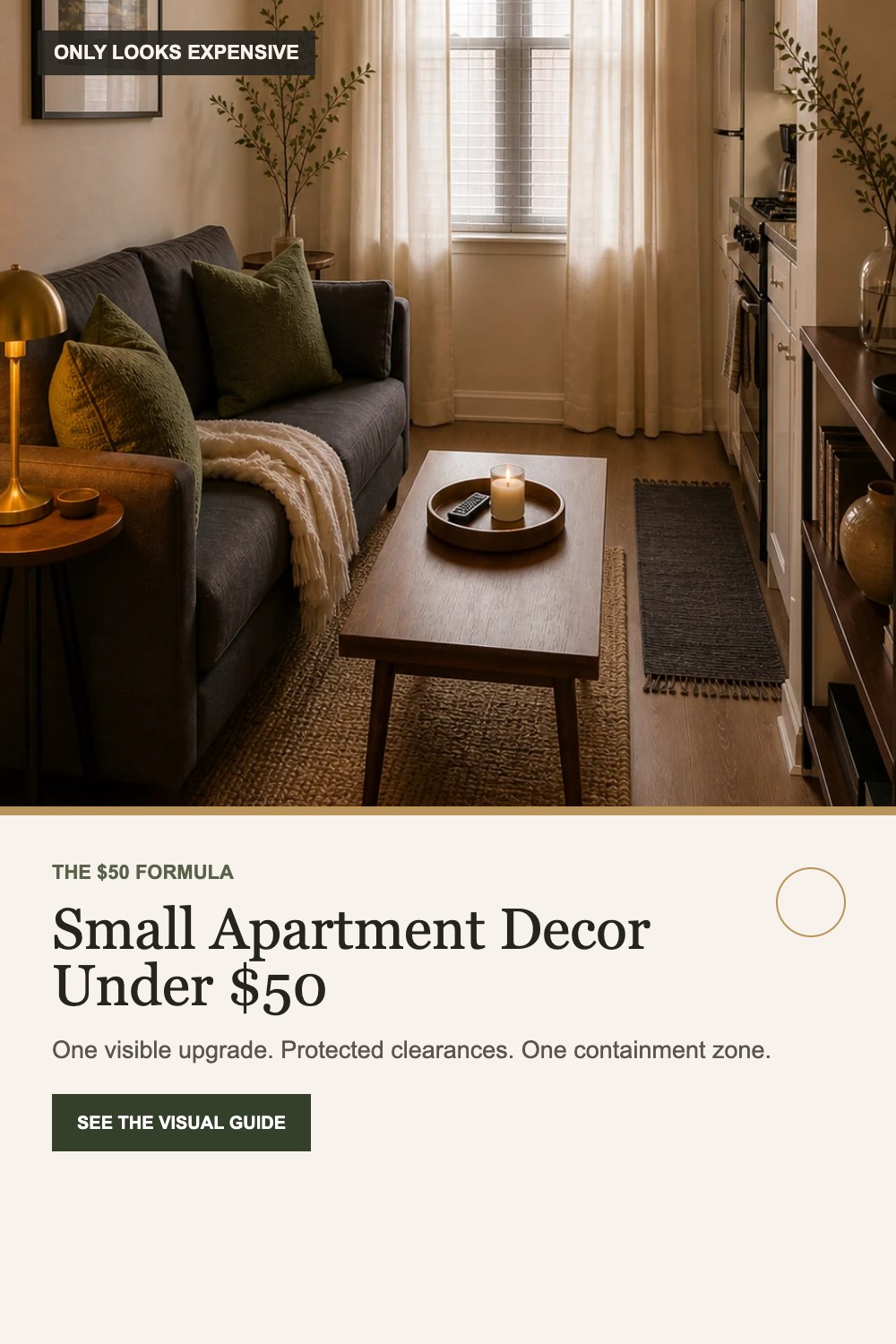
Small apartment decor under $50
A tiny budget and a tiny room punish the same mistake: spreading resources across too many small objects. Use the money on one visible field, then use measurements and containment to make the room easier to live in.
This post contains affiliate links. If you buy through them, we may earn a commission at no extra cost to you.

Buy one visible upgrade. Create the rest with space.
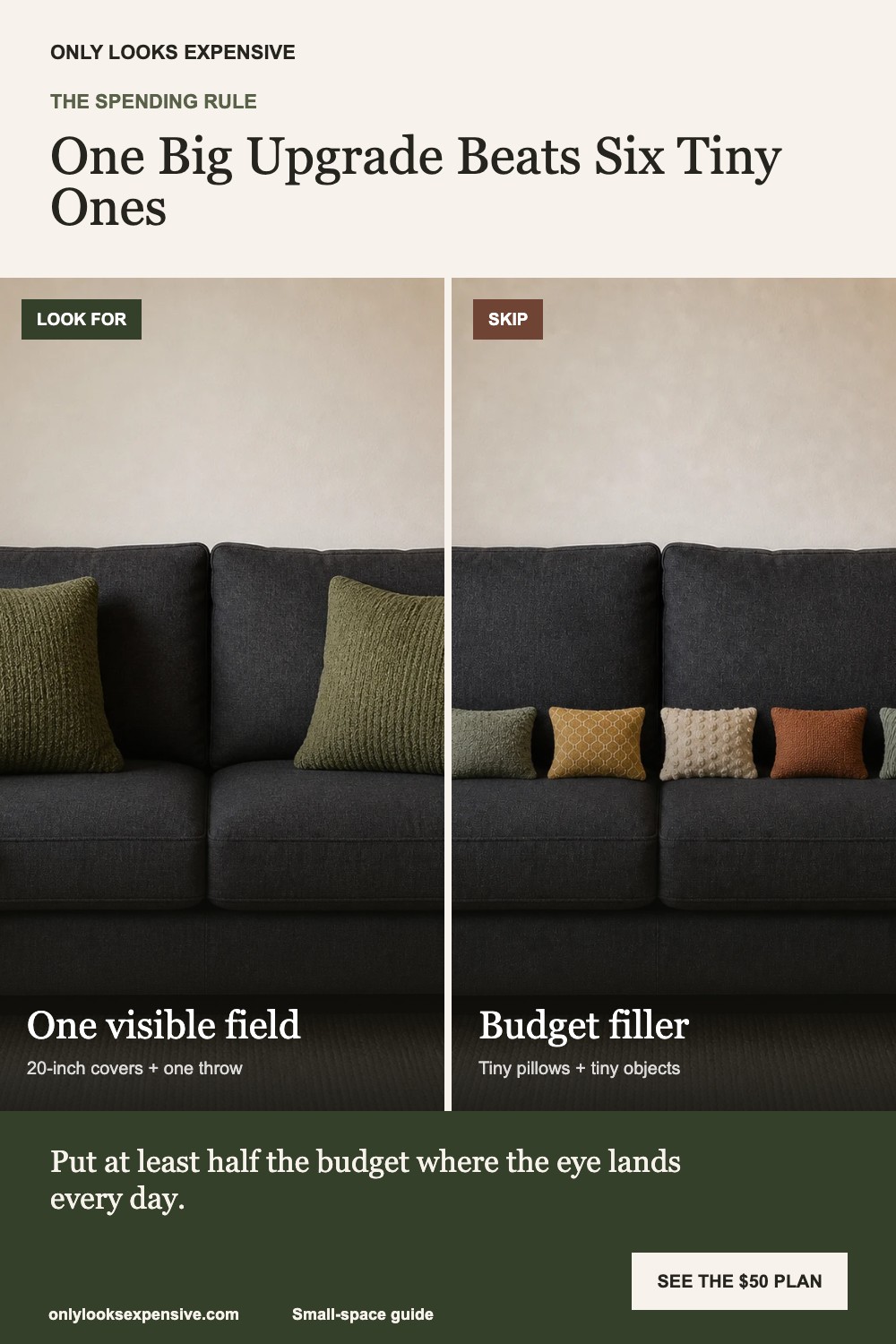
Two correctly scaled pillow covers can change more of the sofa than six miniature objects change the room. A warm bulb can improve every finish in its pool. A tray can make the remote, keys, and candle read as one group.
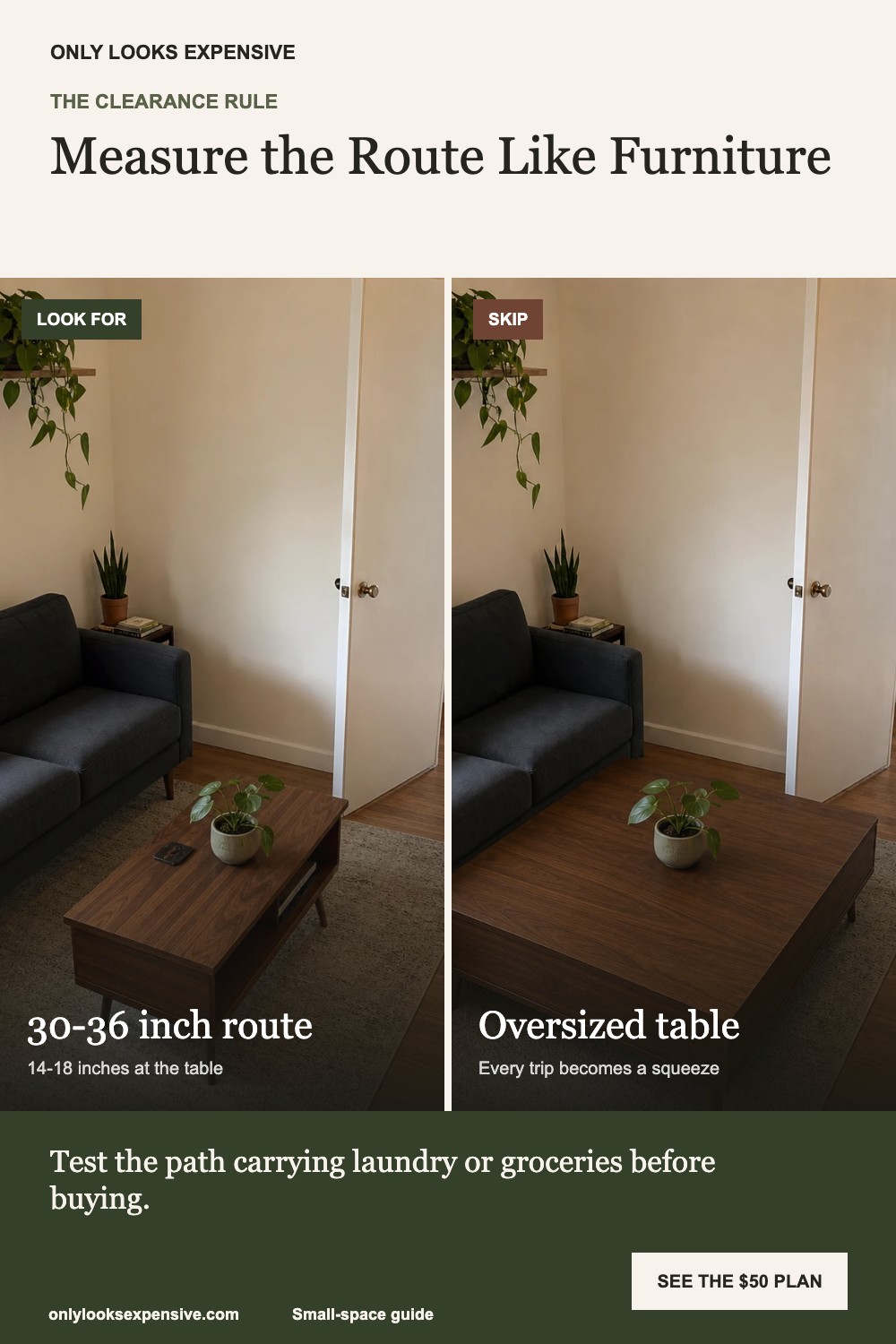
Then protect circulation: keep about 14 to 18 inches between sofa and coffee table and aim for a 30- to 36-inch continuous main route when the room allows. Empty floor is not wasted space.
Make one full-size move instead of six tiny ones.
Choose the field you see and touch most: sofa textiles, bedding, curtains, or one lighting layer. For a compact sofa, two full 20x20 covers with existing inserts and one throw create more area, texture, and cohesion than a row of miniature pillows or figurines.
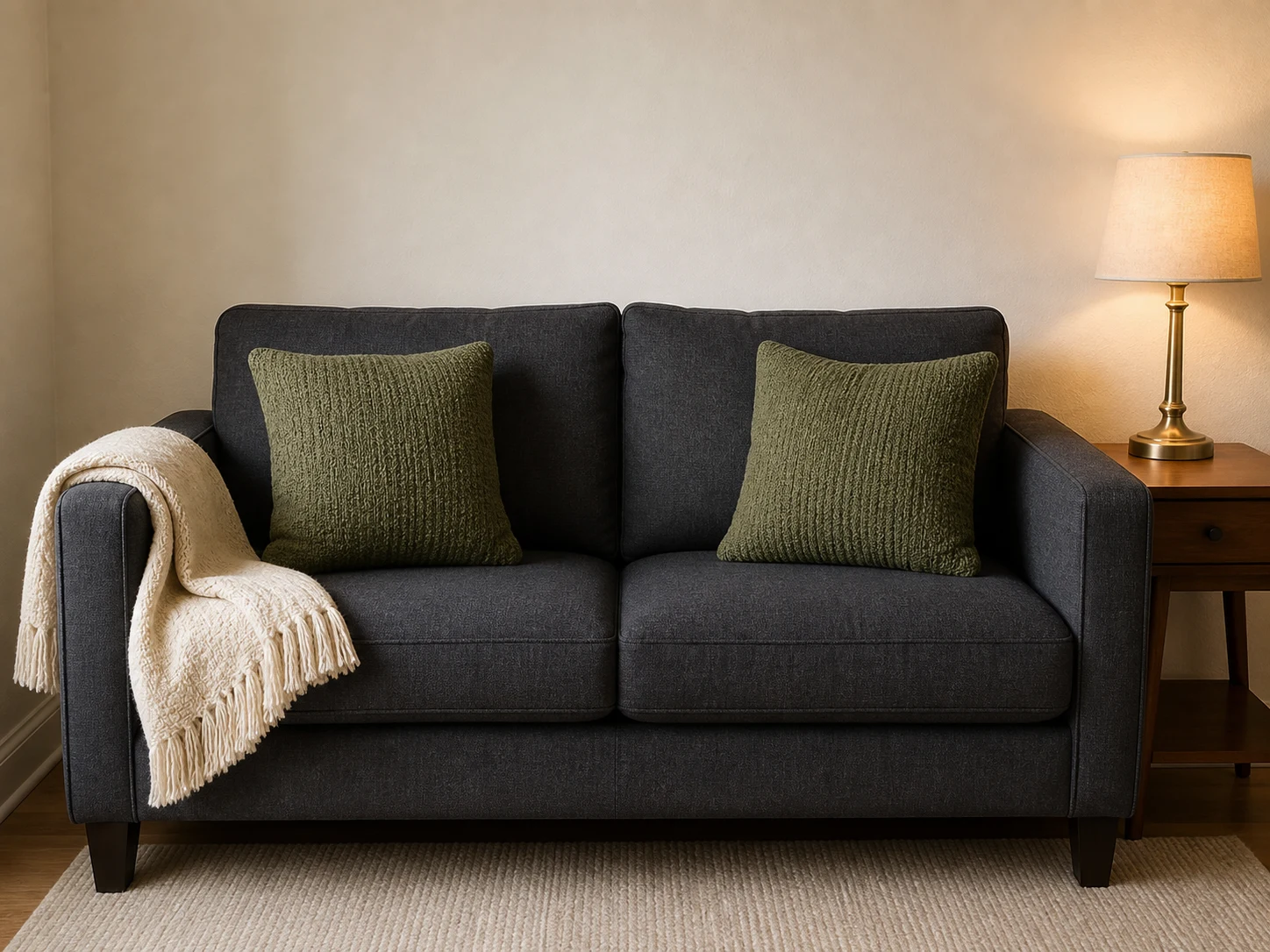 Look for
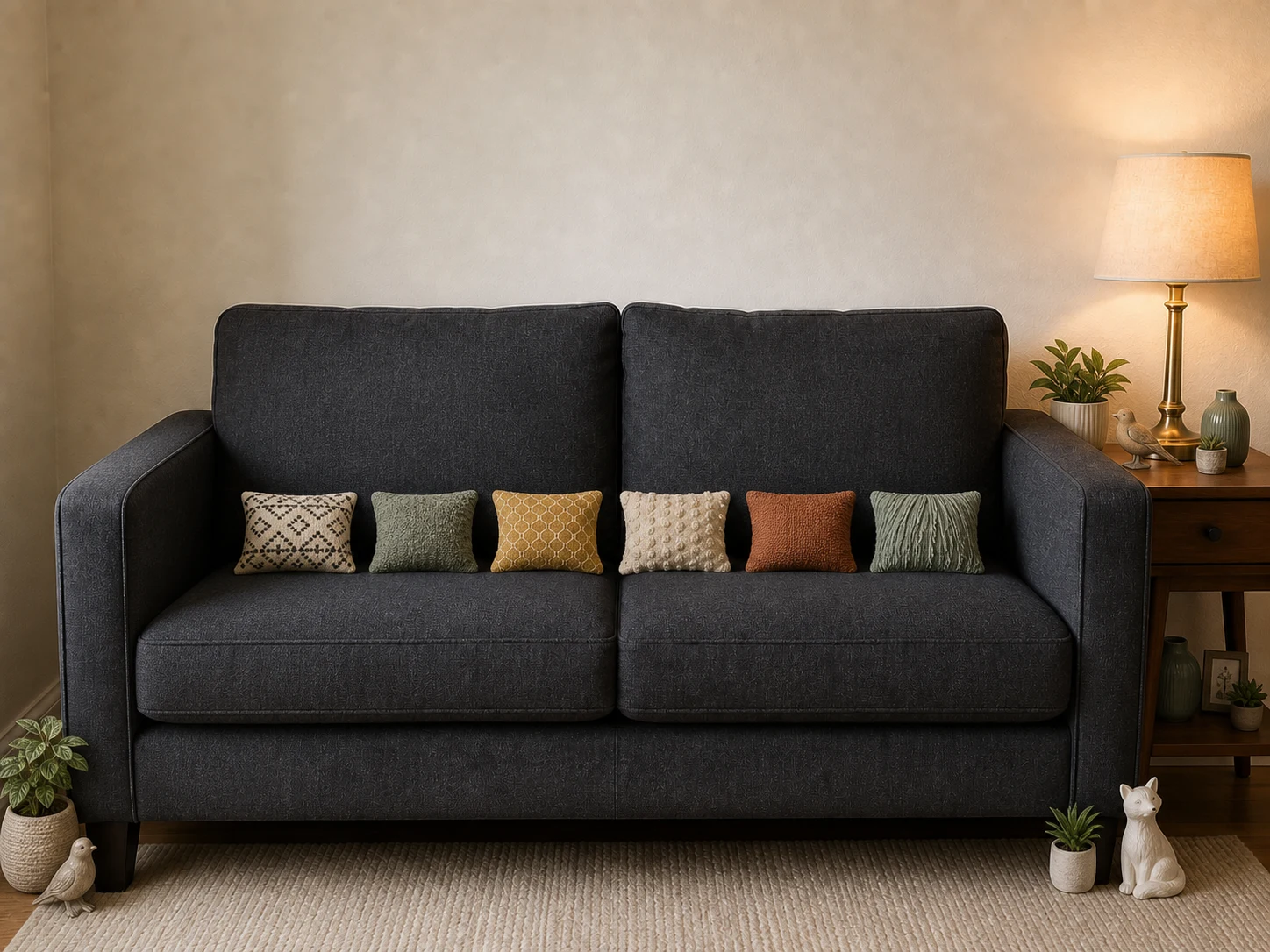 Skip
SkipWrite the single visible problem before shopping. If the item does not solve that problem, improve circulation, or contain daily clutter, it does not belong in the first $50.
Measure the route as if it were furniture.
Leave about 14 to 18 inches between sofa and coffee table for reach and knees. Aim for a continuous route around 30 to 36 inches from entry to kitchen, bedroom, or bathroom when the room permits. A route should not disappear when a door, drawer, or chair opens.
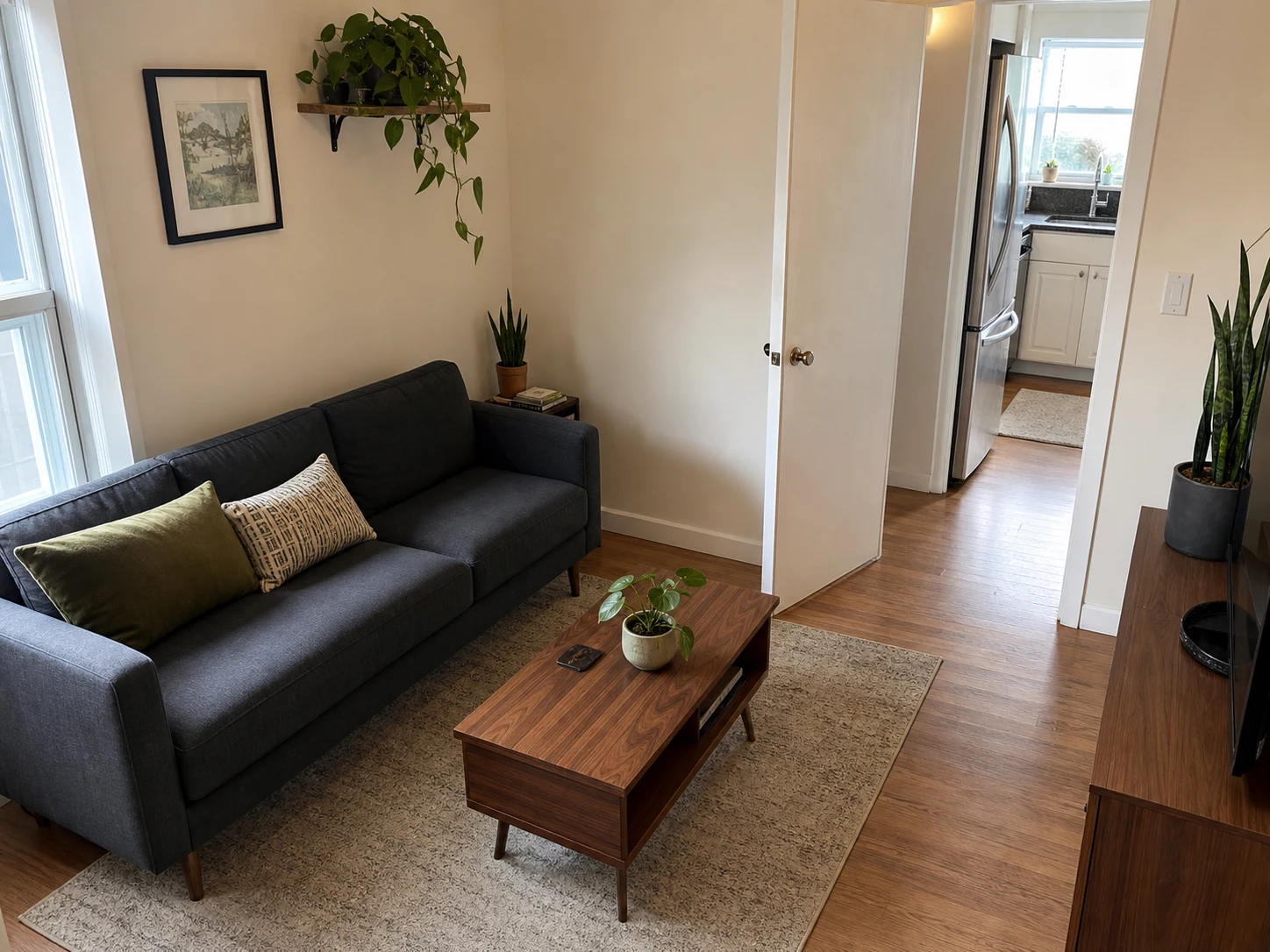 Look for
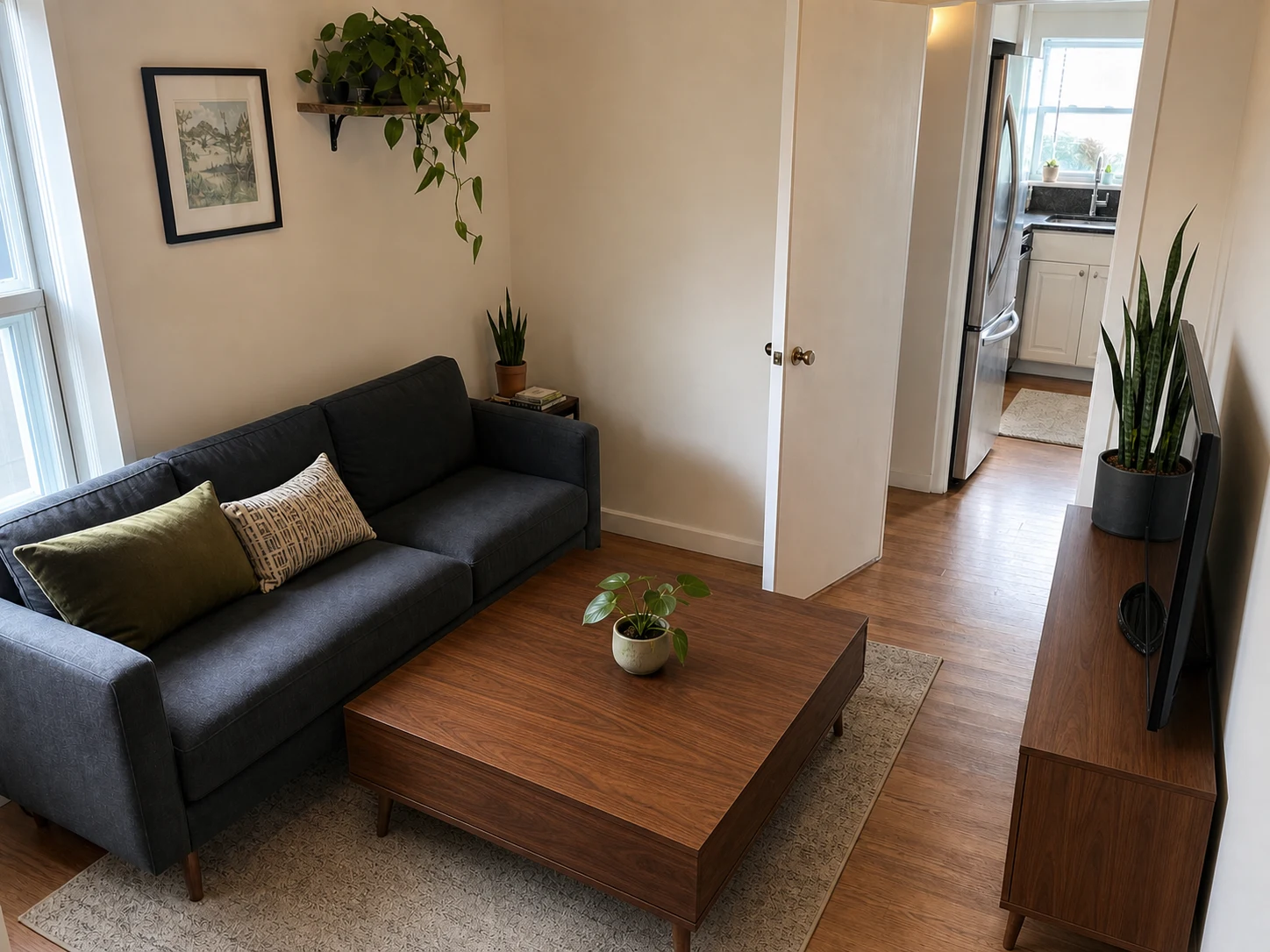 Skip
SkipMark the full furniture footprint and every open door or drawer. Walk the route carrying laundry or groceries. A table that technically fits may still fail the daily test.
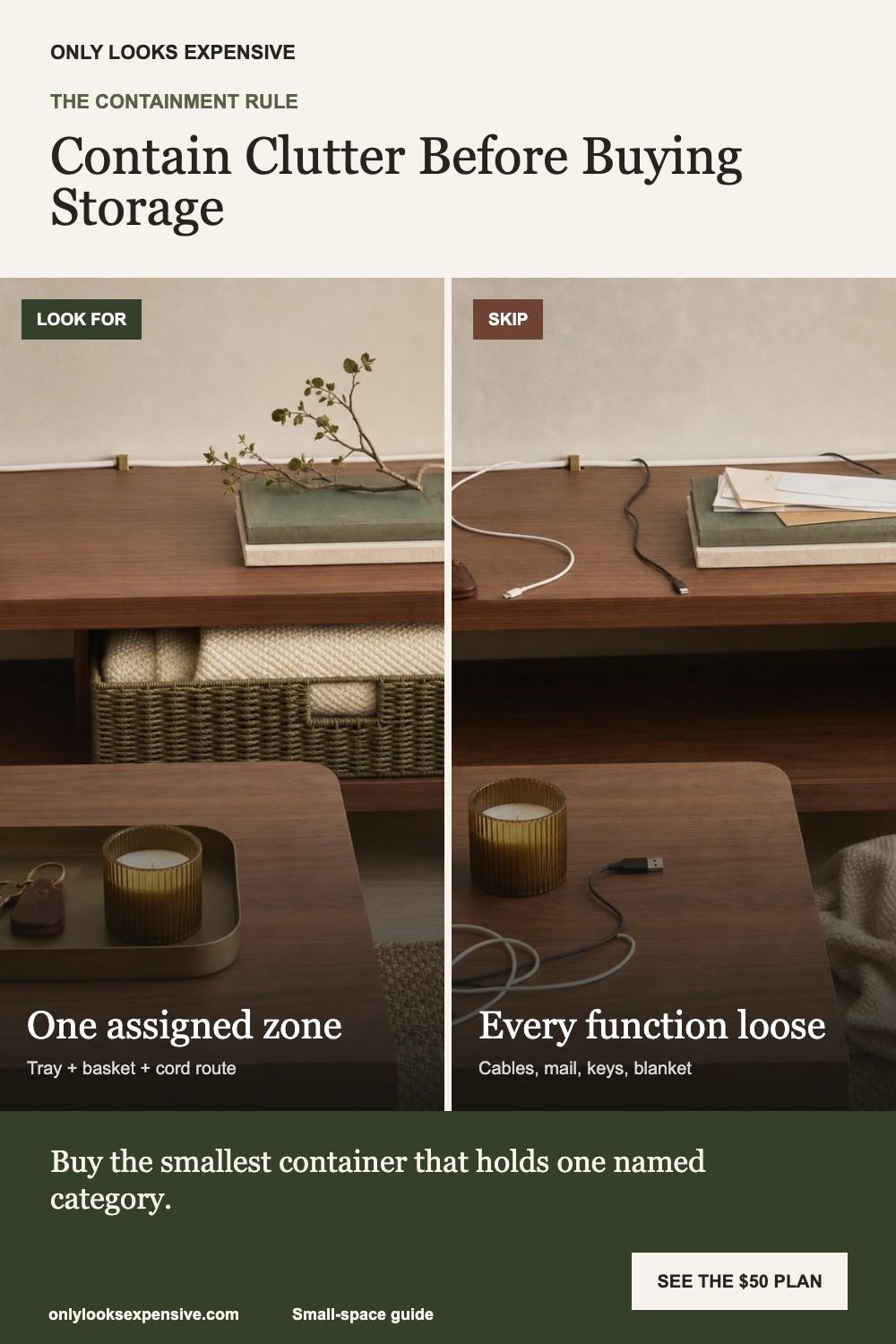
Make the necessary clutter read as one object.
Remote, keys, charging cable, mail, and blankets are not bad decor; they are unassigned functions. Use one tray for hard small items, one closed basket for soft items, and removable cord clips along furniture backs. Leave the rest of the surface clear.
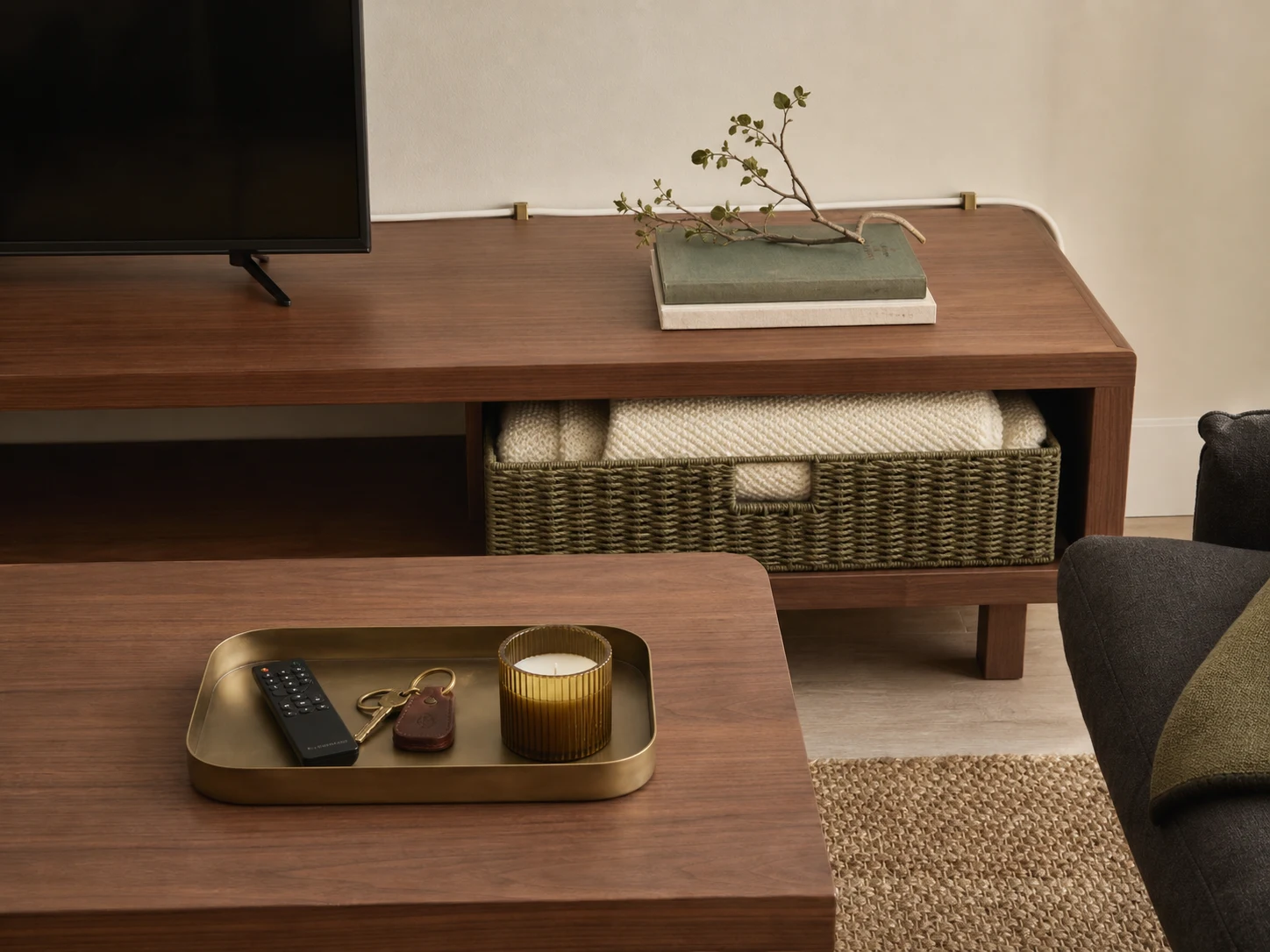 Look for
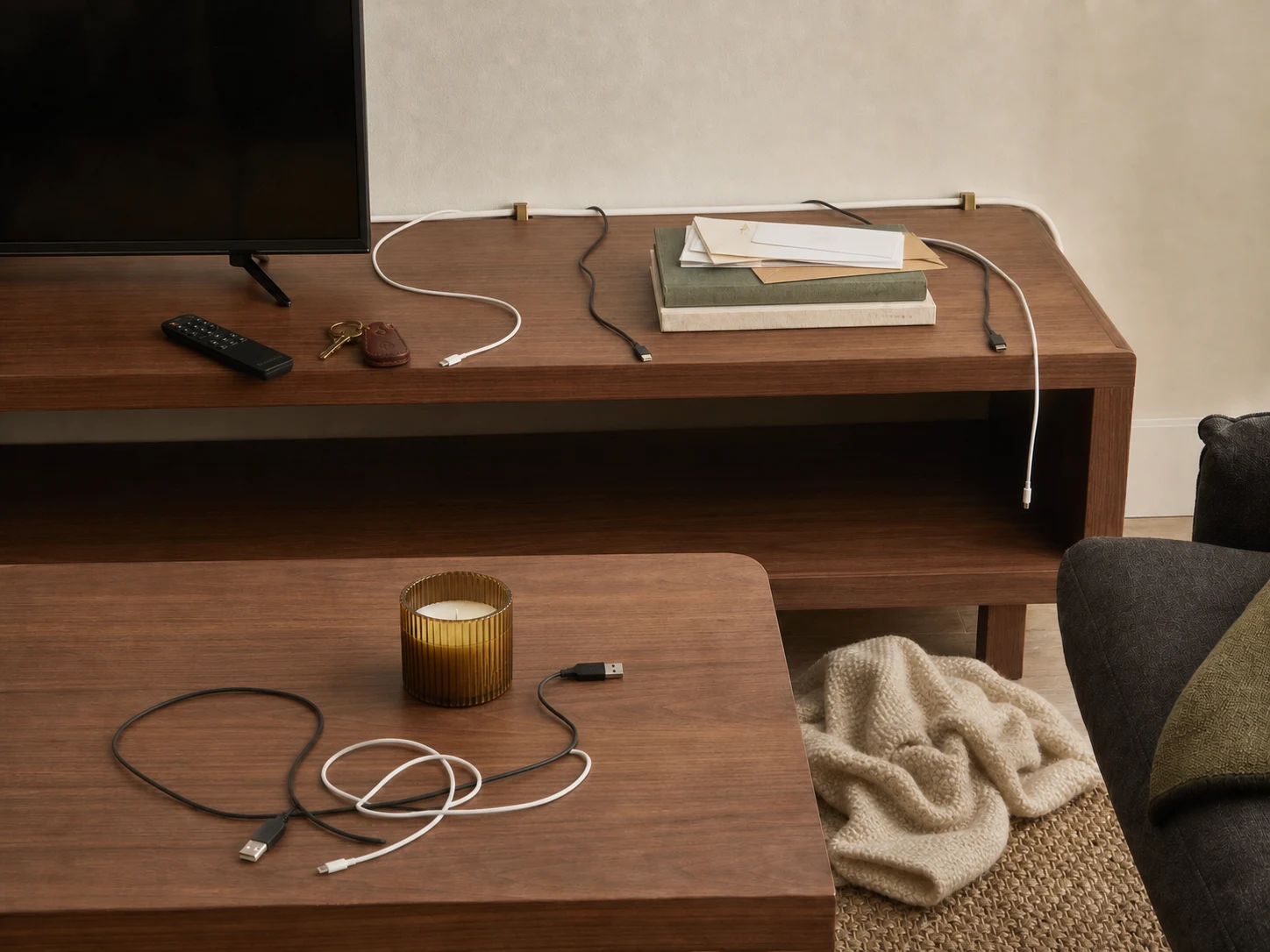 Skip
SkipBuy the smallest container that holds the defined category. Large empty organizers invite accumulation. Check exterior dimensions, lid clearance, handles, floor protection, and whether the tray can lift with its contents.
Small rooms make weak decisions louder.
Empty bins become permission to keep more. Name the contents first.
A normal sofa still needs normal pillow scale, art scale, and light even in a compact room.
A high shelf is not useful storage when daily items need a chair to access.
Floor plants, baskets, and side tables are still obstructions when placed in circulation.
These are allocation caps, not quoted checkout prices. Reuse pillow inserts and any tray, throw, or compatible bulb already in the apartment. Verify current prices, materials, dimensions, and returns.
How we screen a small-space purchase
We prioritize what the shopper sees, touches, or moves around every day.
We measure the object, open doors and drawers, cord route, and required clearance.
We prefer trays, baskets, covers, and lights that can move rooms or survive the next apartment.
We consider assembly, wall repair, cleaning, storage, return shipping, and disposal before buying.
We have not physically tested every item in these searches. Confirm current dimensions, materials, care, included pieces, price, seller, shipping, and returns on the retailer page.
Use the budget where the eye lands.
Choose one or two categories, not the whole list, and keep the $50 ceiling.
Selection guidance last reviewed July 12, 2026. Product availability and retailer details can change.
Small-space measurements that matter
What should I buy first?
Choose one field you see or touch every day: sofa textiles, bedding, curtains, or one lighting layer. Do not divide the first $50 among many tiny objects.
How much walkway space should I leave?
Aim for a continuous main route around 30 to 36 inches where possible and keep furniture, plants, baskets, and open doors out of it.
How far should the coffee table be from the sofa?
About 14 to 18 inches is a practical starting range. Test sitting, standing, reaching, and the nearby walking route before committing.
Spend on impact, not object count.
Save the overview, then keep the anchor, clearance, and containment checks.