Only Looks Expensive
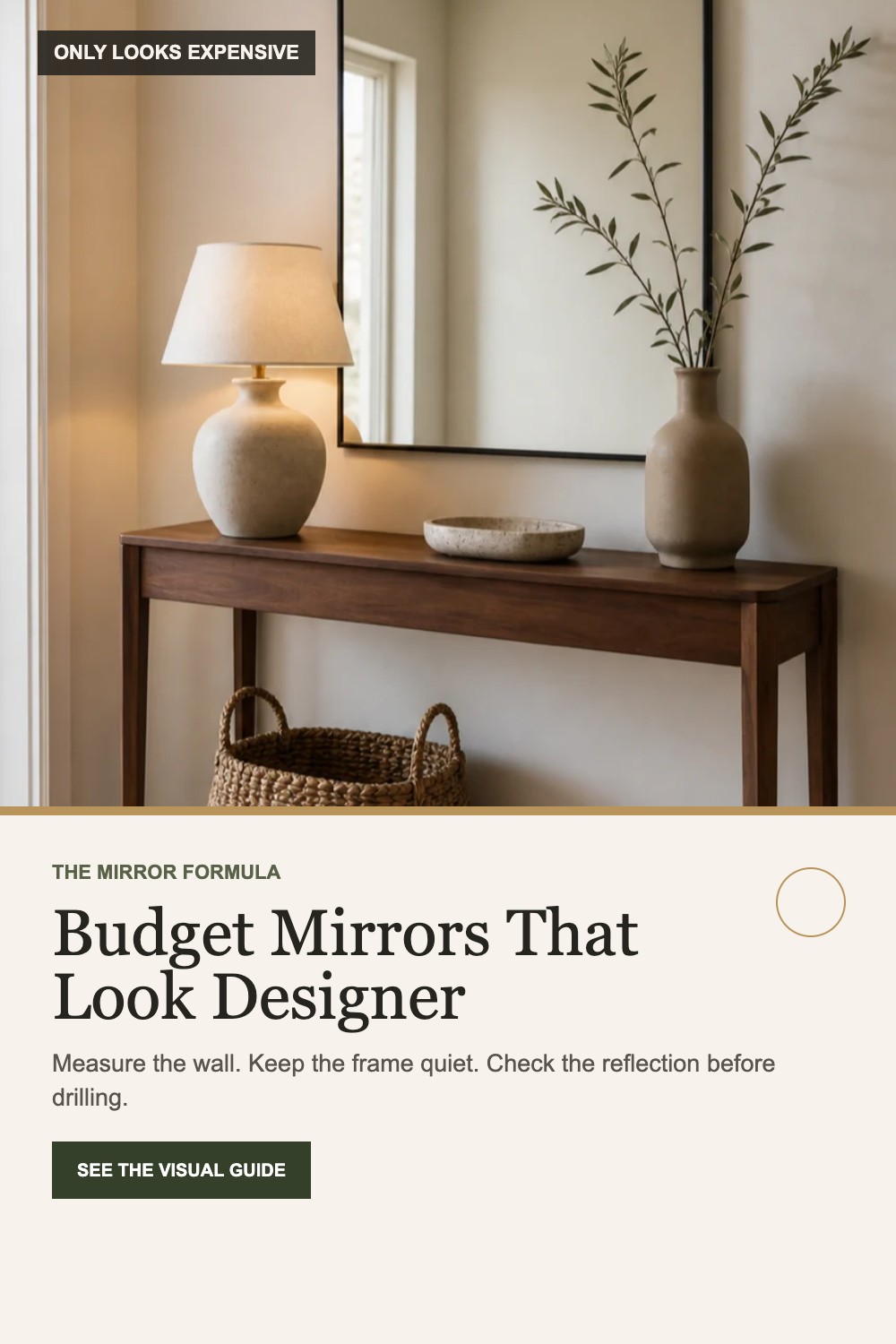
Budget mirrors that look designer
The expensive-looking move is not a louder frame. It is choosing enough mirror for the wall, keeping the edge restrained, and placing the reflection where it improves the room.
This post contains affiliate links. If you buy through them, we may earn a commission at no extra cost to you.

Buy the wall proportion, not the staged-photo illusion.
A mirror earns its space twice: it creates a strong shape on the wall and reflects something useful back into the room. The size that looks substantial in a listing can feel tiny above your console, vanity, or dresser, so begin with measurements rather than style names.
Once the proportion works, choose a simple frame and inspect the reflection before drilling. A restrained affordable mirror in the right place usually looks more considered than an ornate mirror that is too small or aimed at clutter.
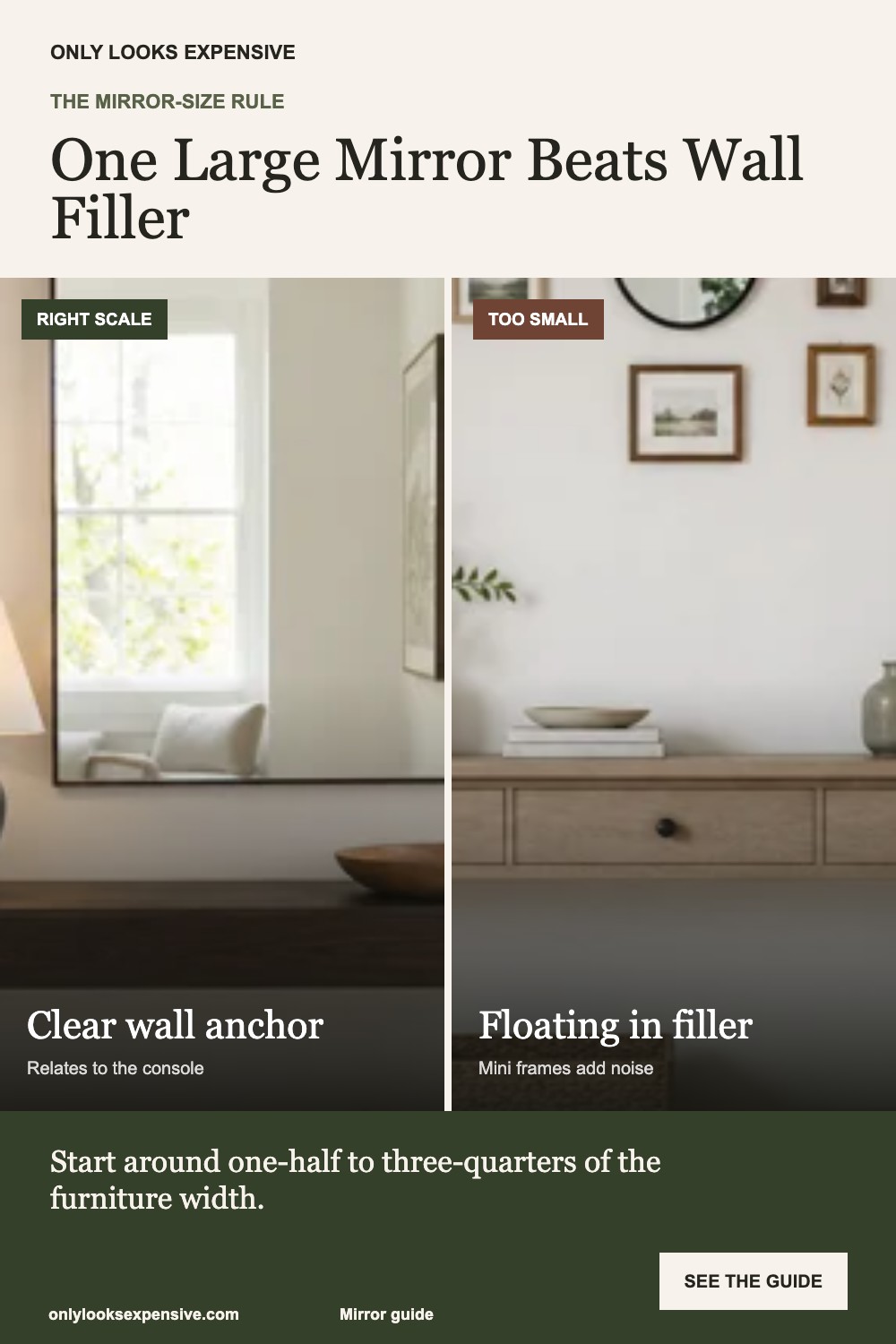
Let the mirror hold the furniture below it.
Above a console or dresser, a practical starting range is roughly one-half to three-quarters of the furniture width. The exact answer depends on the shape and surrounding space, but the mirror should register as an anchor from the doorway. Leave a deliberate gap above the furniture rather than floating it near the ceiling.
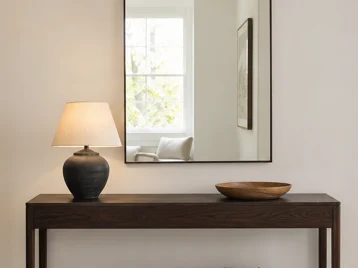 Look for
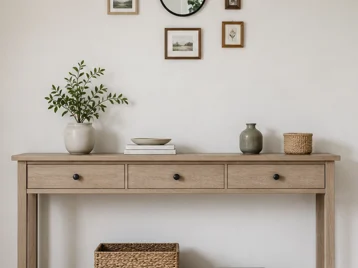 Skip
SkipRead the overall dimensions, not only the reflective-glass size. Tape the width and height onto your wall, then step back to the room entrance. For bathroom use, also confirm the mirror leaves safe clearance from faucets, sconces, outlets, and cabinet doors.
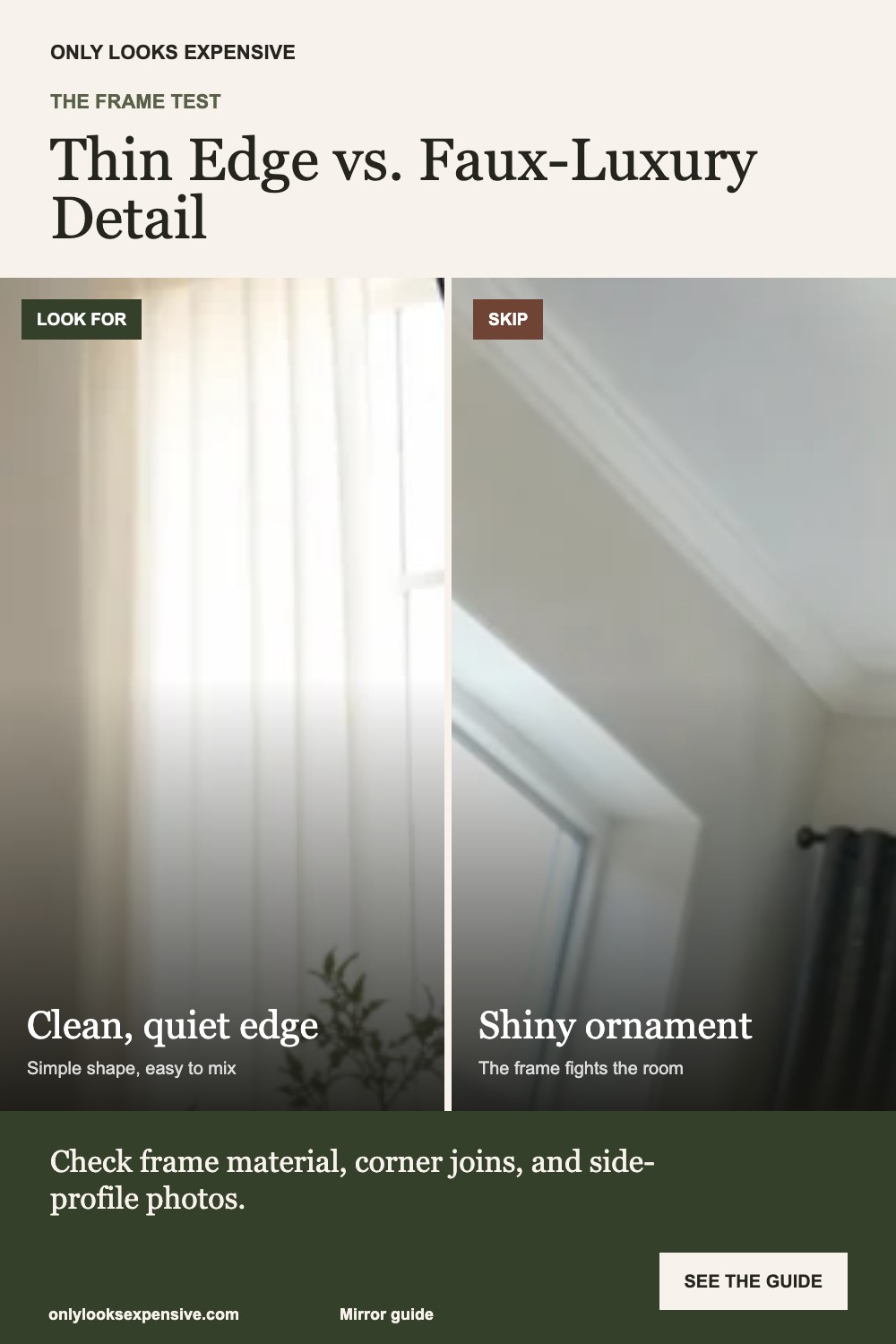
Thin, quiet edges mix more easily.
A slim matte-black frame, restrained brass edge, simple wood profile, or clean frameless bevel gives the reflection room to do the work. Chunky plastic ornament, mirror-bright yellow gold, and complex fake carving make the frame the loudest object in the entryway and are harder to coordinate with changing decor.
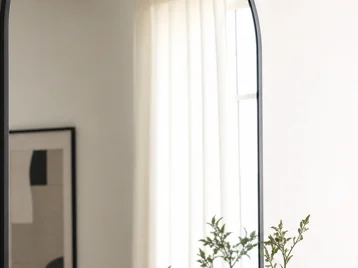 Look for
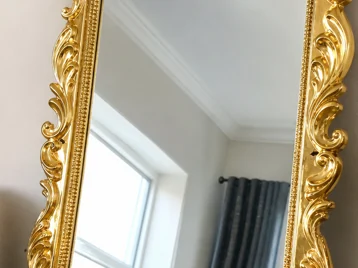 Skip
SkipZoom into corner joints, frame texture, and side-profile images. Confirm whether the frame is metal, wood, engineered wood, resin, or plastic. Read customer photos for finish consistency, but verify the current variant because sellers often combine several colors and sizes on one listing.
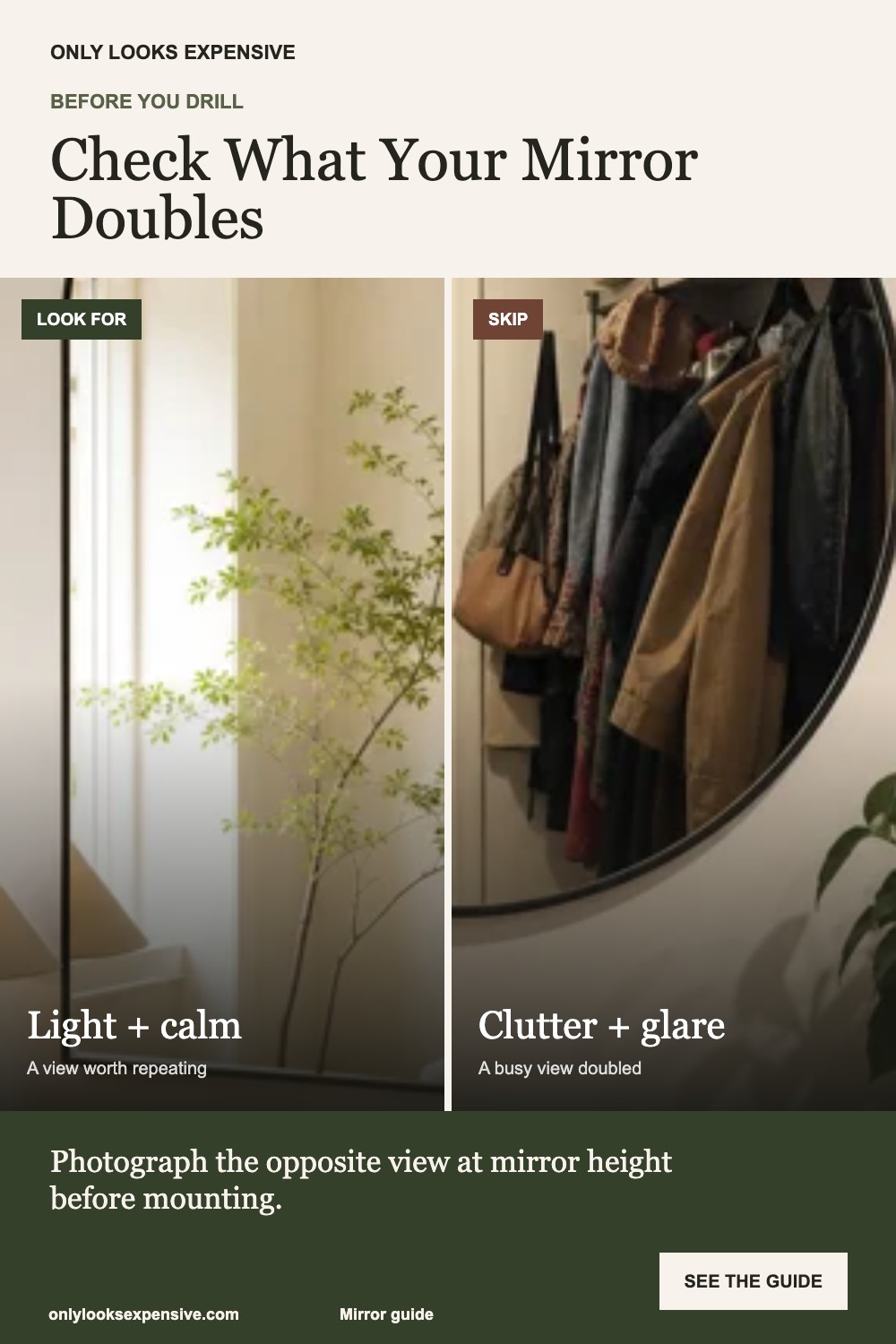
Aim it at light, calm, or a view worth repeating.
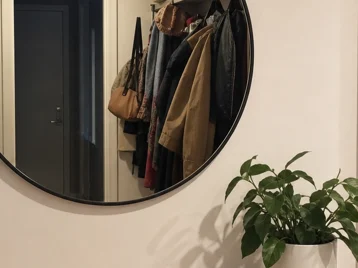
A mirror can brighten a room when it catches a window or a lighter wall, but it also doubles whatever faces it. Before mounting, hold a phone at the proposed mirror height and photograph the opposite view. If that view is a dark doorway, coat pile, television, or busy shelf, shift the mirror or simplify what it reflects.
 Look for
 Skip
SkipCheck product weight, rear hanging points, included hardware, and mounting instructions. Heavy wall mirrors and leaning floor mirrors need appropriate anchoring for the wall type and household. When in doubt, use a qualified installer rather than treating the included hardware as universal.
How we screen a mirror category
We start with the furniture width, available wall height, and the shape the room needs.
We look for named materials, close edge photos, clean joints, and finishes that mix easily.
We prioritize placements that return daylight, calm wall space, or a useful full-body view.
We flag high weight, vague hardware, awkward hanging points, leaning hazards, and difficult returns.
We have not physically tested every item in these searches. Confirm current materials, overall and glass dimensions, weight, distortion reports, mounting requirements, prices, ratings, shipping, and returns on the retailer page.
Choose the shape after you measure the wall.
These categories solve common apartment needs. Large mirrors can be heavy and fragile, so the delivery and return terms matter almost as much as the finish.
Selection guidance last reviewed July 11, 2026. Product availability and retailer details can change.
Keep the mirror tests beside you.
Save the overview, then use the proportion, frame, and reflection checks before ordering or drilling.