Only Looks Expensive
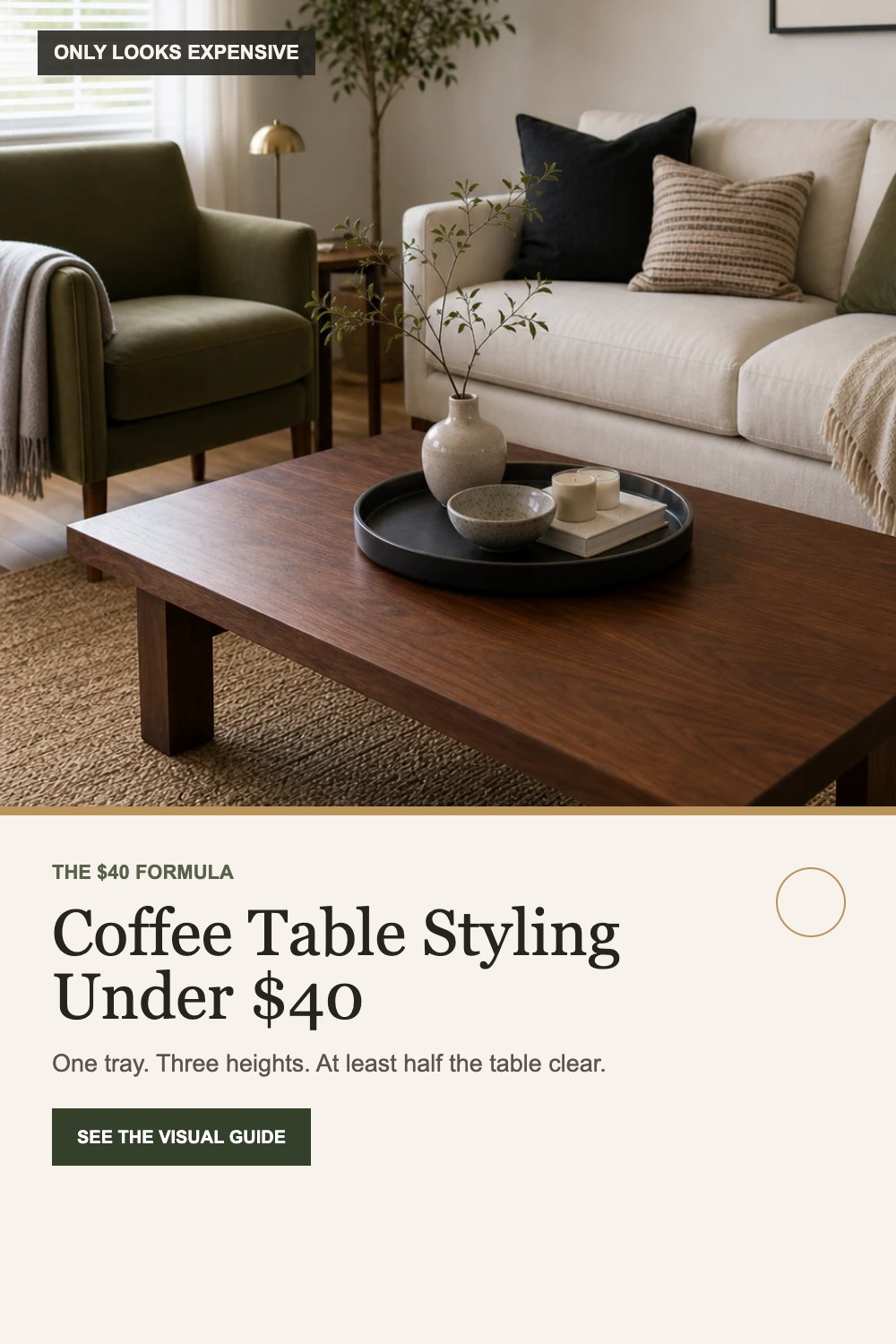
Coffee table styling under $40
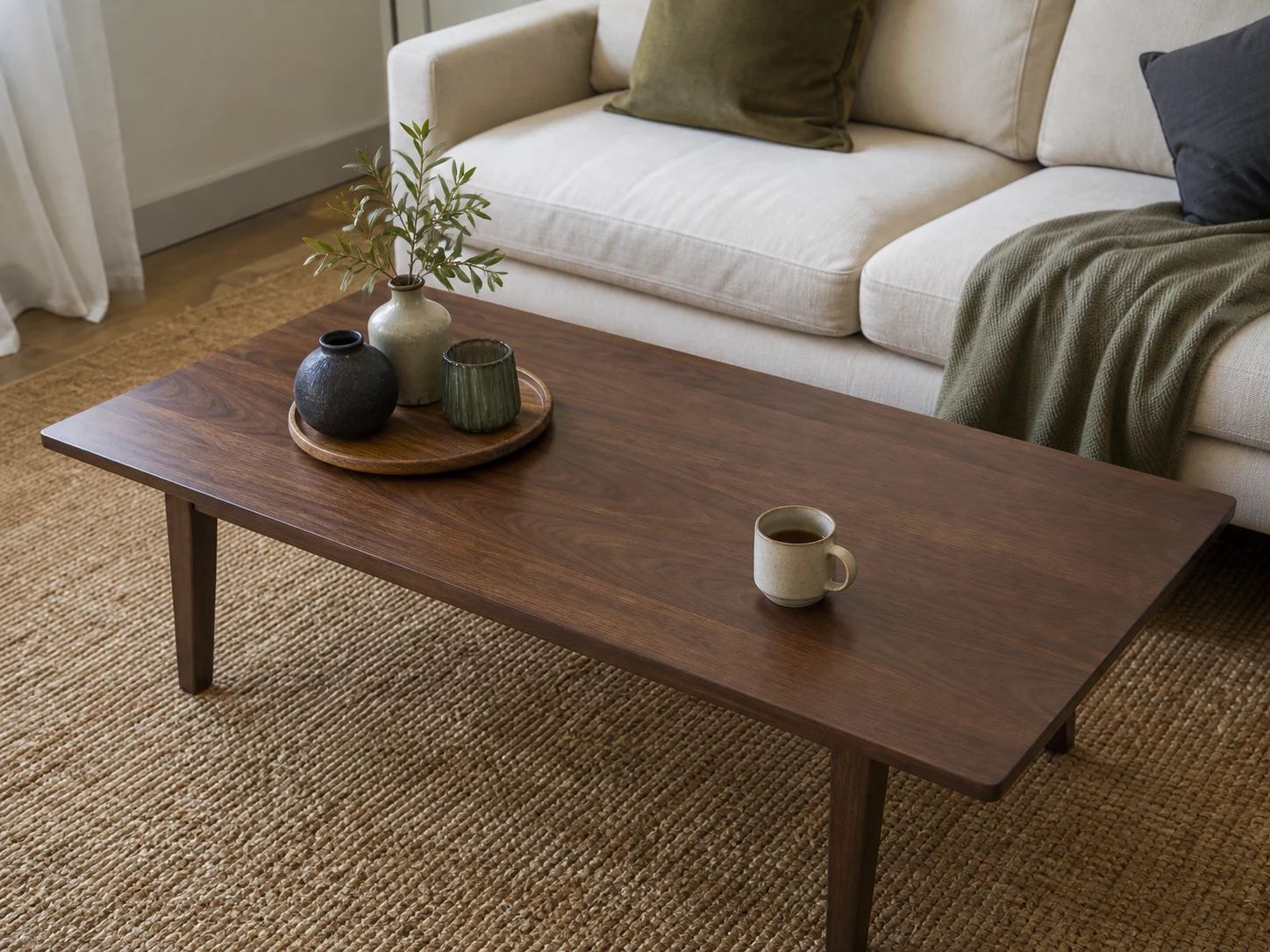
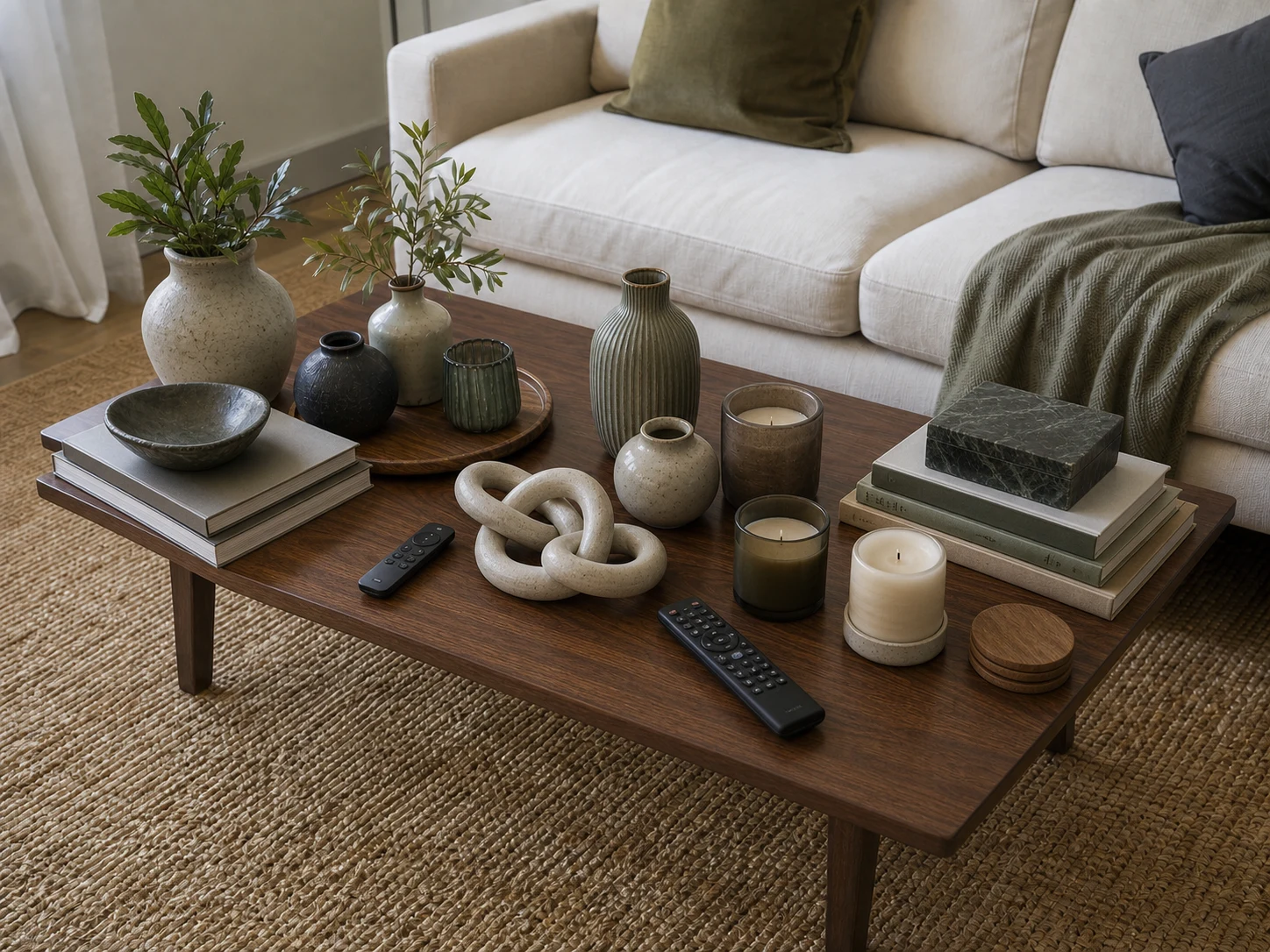
The goal is not to fill the table. The goal is to make remotes, a candle, and one decorative shape read as a single decision while leaving enough room for real life.
This post contains affiliate links. If you buy through them, we may earn a commission at no extra cost to you.

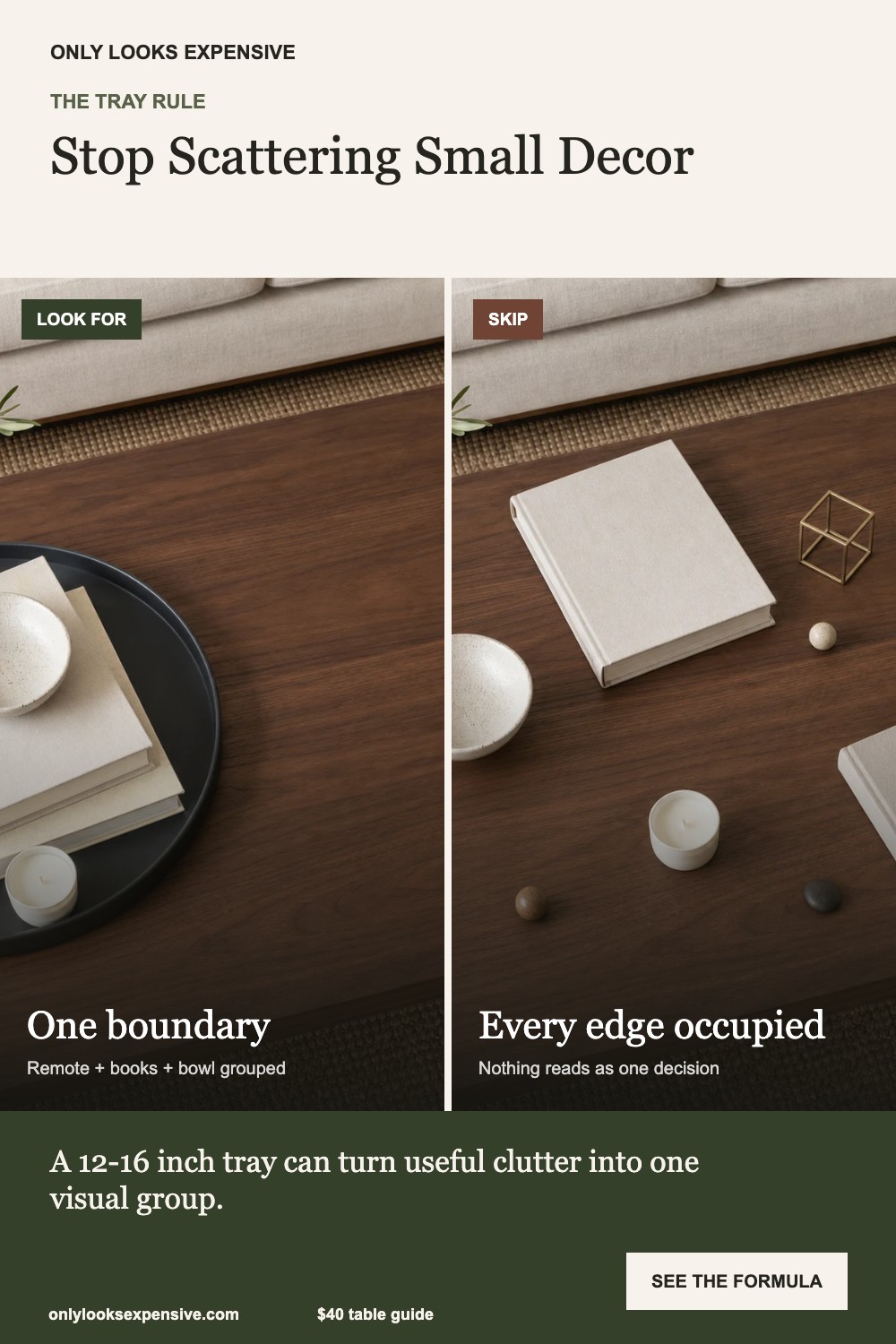
Give the small things one boundary.
A tray turns five loose objects into one readable group. Put that group off-center, vary the heights, and leave at least half the table free for a mug, laptop, or game night.
Before styling anything, check the table itself: about two-thirds of the sofa length, at or slightly below seat height, and roughly 14 to 18 inches from the sofa is a useful starting arrangement.
Use one tray, not a field of little objects.
A tray around 12 to 16 inches works on many compact tables, but the real test is proportion: it should hold the useful pieces without swallowing the tabletop. A round tray softens a rectangular table; a rectangular tray can reinforce a curved or oval table.
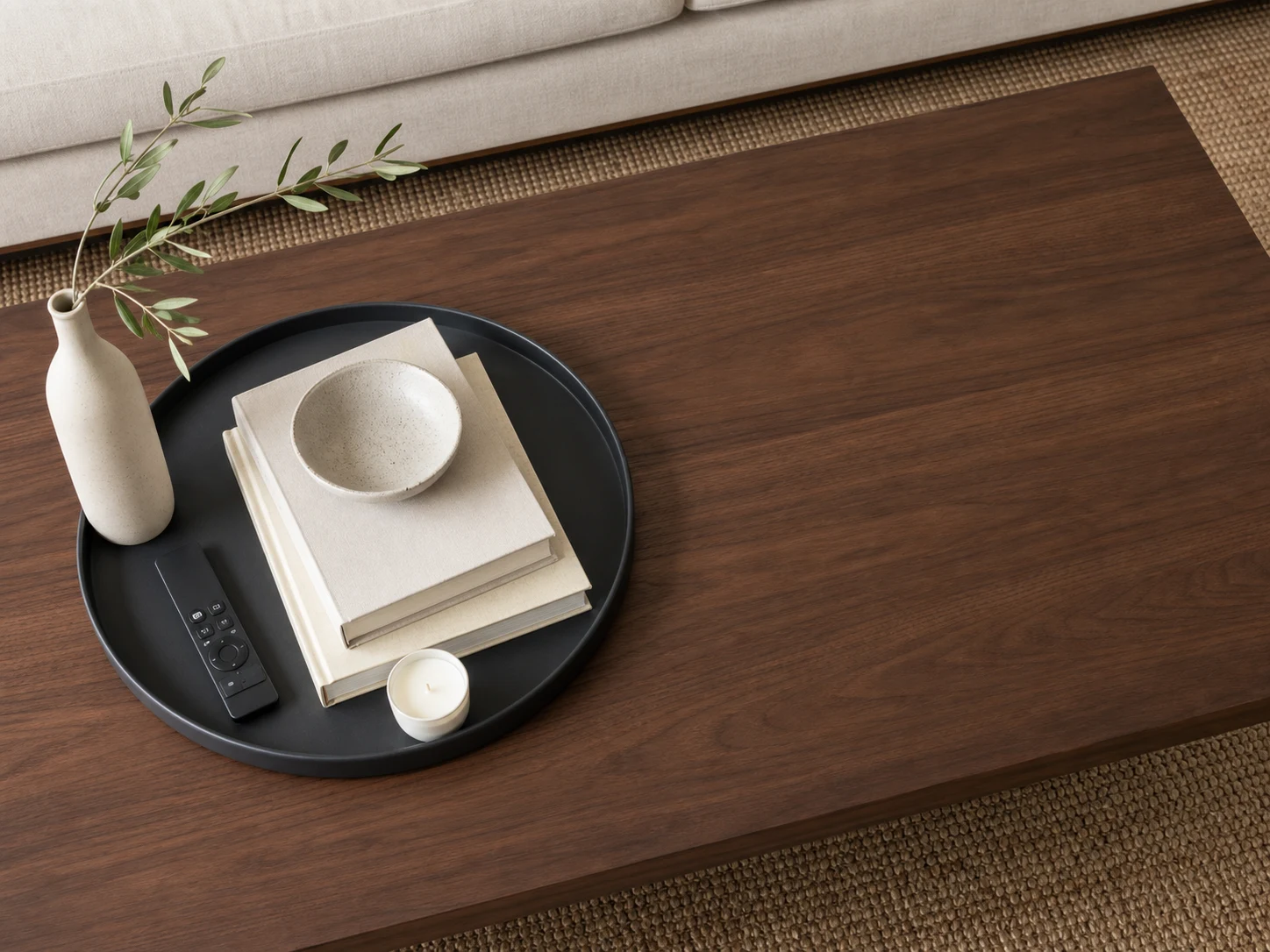 Look for
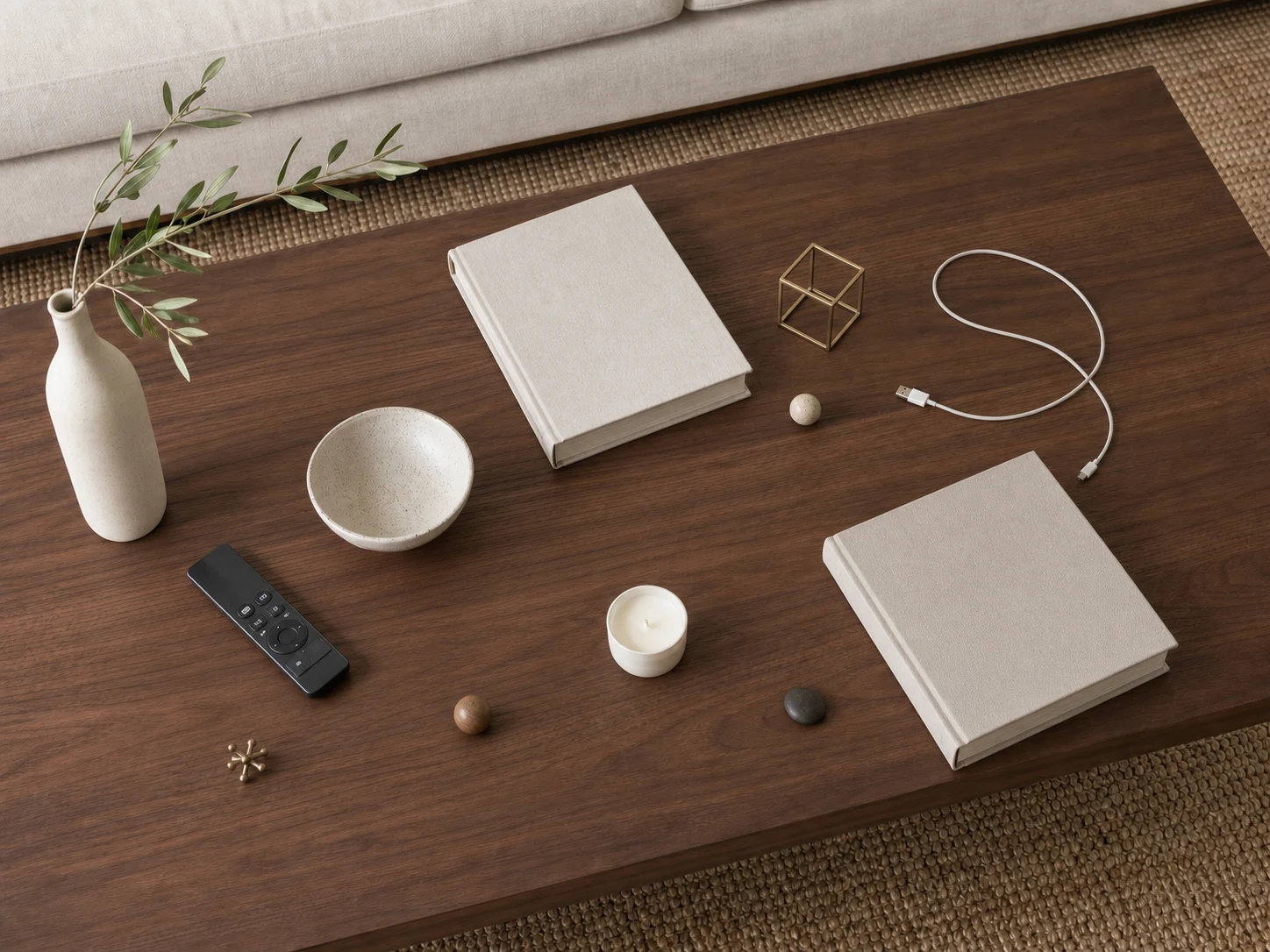 Skip
SkipMeasure the usable interior, lip height, total weight, and handle placement. A tray should lift with its contents and should not occupy more than roughly half the tabletop unless the table is purely decorative.
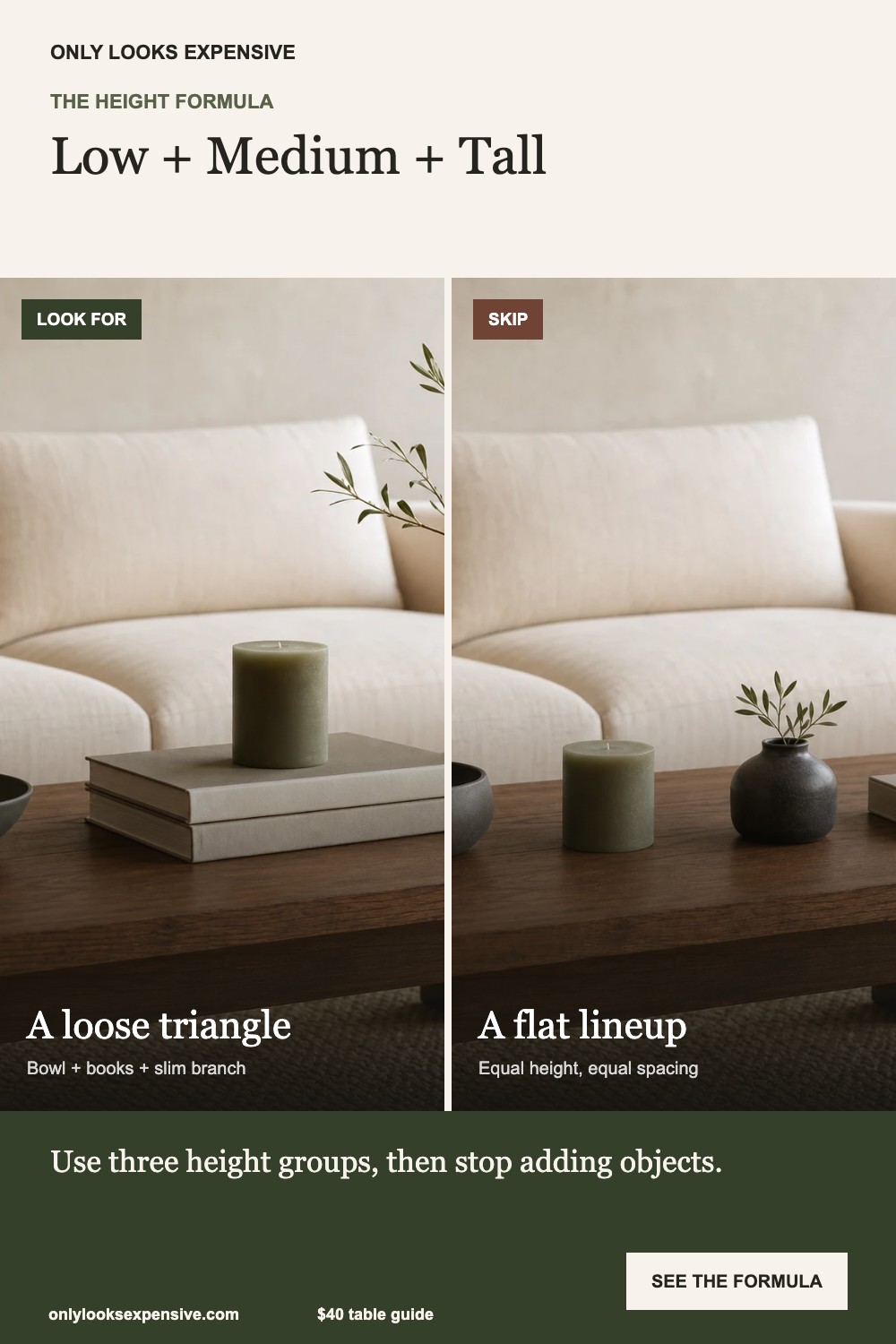
Build one low, one medium, and one light vertical shape.
A low bowl anchors the bottom. Two stacked books or a small box create a middle level. A slim 12- to 18-inch branch gives height without becoming a centerpiece you must talk around. Keep the tallest piece off the main sightline between seats or toward the television.
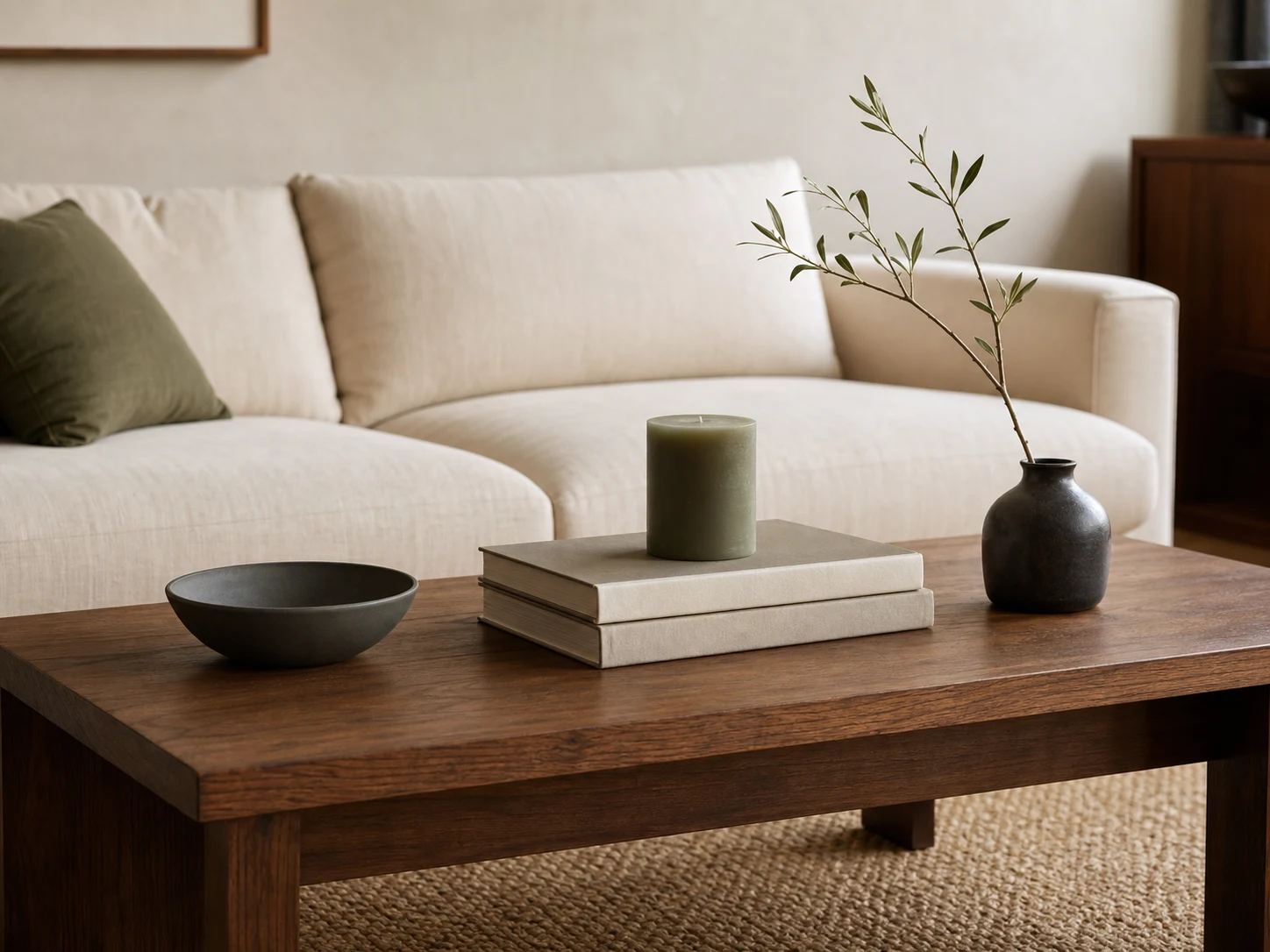 Look for
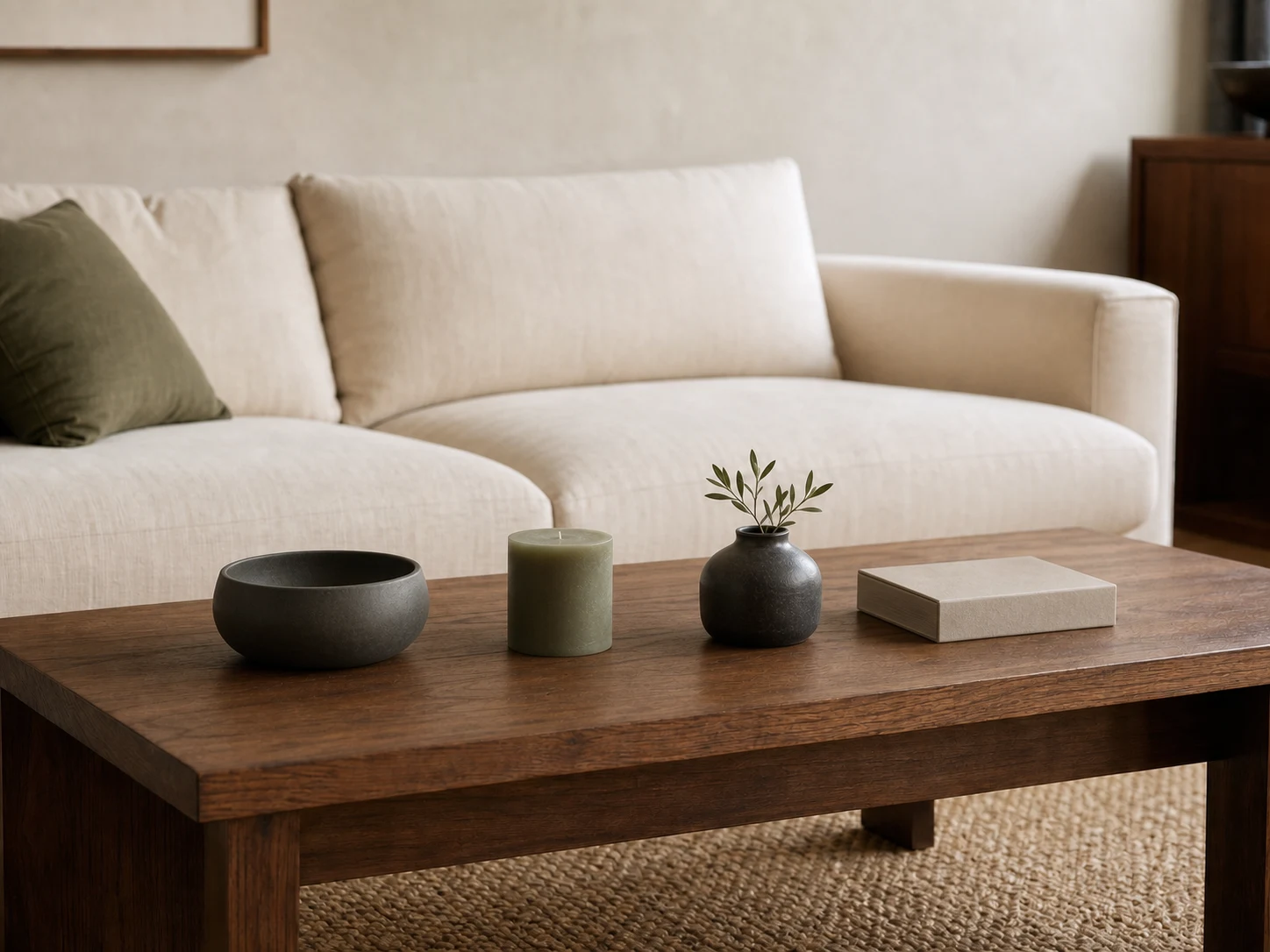 Skip
SkipTurn a clothbound book, lidded box, low kitchen bowl, or clipped branch into the height you need before buying another decorative object. The composition matters more than the category label.
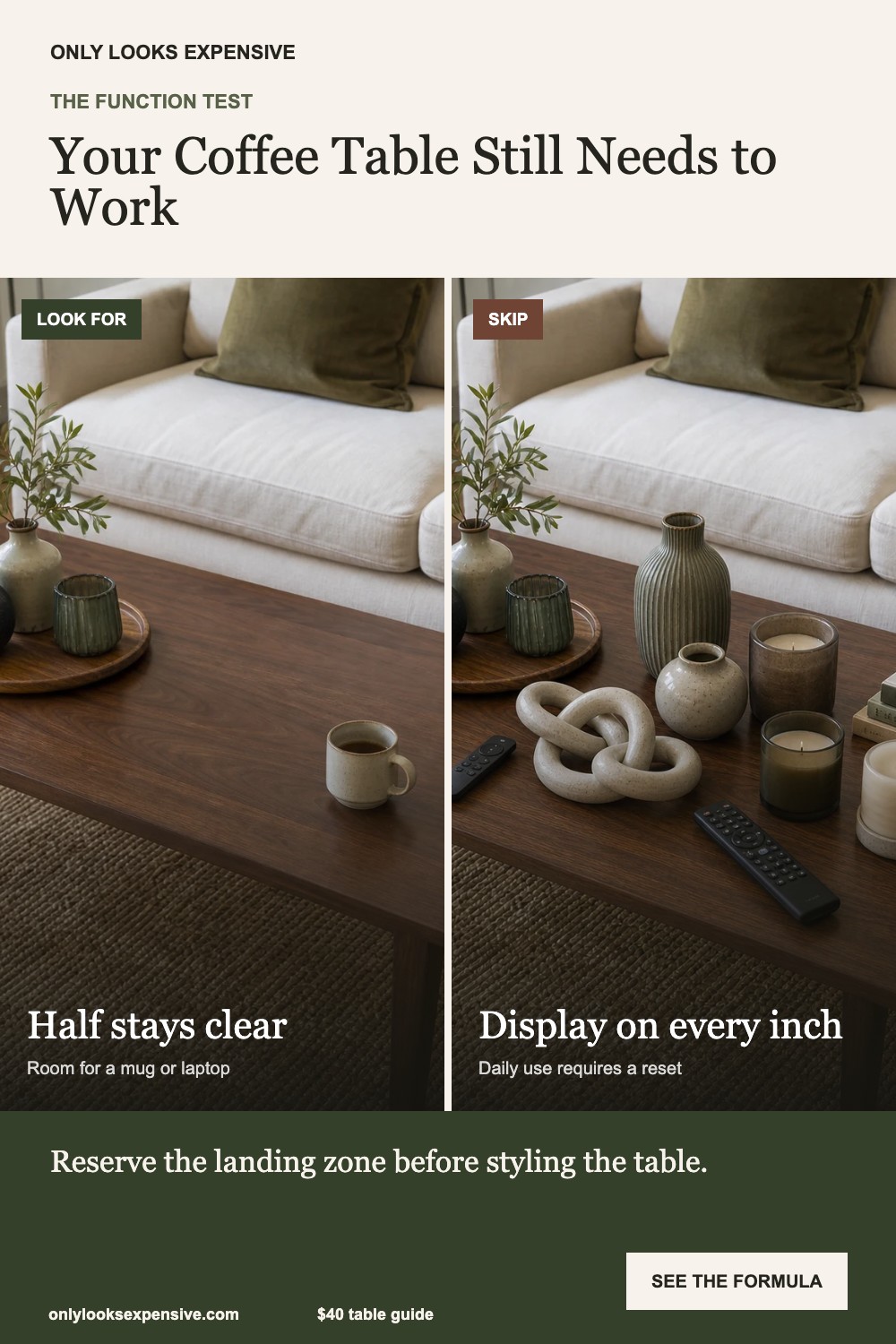
A styled table still needs to work.
Reserve a clear area before placing decor. If everything must move for a mug, the styling will either annoy you or end up as a pile. A one-third decor zone and two-thirds living zone is a strong practical split for small apartments.
 Look for
 Skip
SkipUse a flameless candle when books, branches, curtains, or children are nearby. If you use a real candle, remove the styled grouping first and follow the candle maker's clearance and supervision instructions.
Four ways a $40 plan turns into clutter.
Photograph the empty table and measure the usable area before adding another object.
The tray should define a group, not become a second tabletop covering the first.
Remote, coasters, and keys can live inside the composition instead of beside it.
Move the tall element toward a corner and keep the main seated sightline open.
These are allocation caps, not quoted checkout prices. Skip any line you can fill from another room, a thrift store, or your own shelves; verify current prices and returns before buying.
How we screen coffee-table decor
We reserve the landing zone and contain the remote before adding decorative height.
We compare tray width, object height, and table clearance with the sofa and sightline.
We prefer trays, bowls, books, and vessels that can move to an entryway, kitchen, or bedroom.
We flag open flame, unstable tall branches, scratch risk, fragile finishes, and difficult returns.
We have not physically tested every item in these searches. Confirm current dimensions, materials, care, price, seller, shipping, and returns on the retailer page.
Buy the boundary before the filler.
Measure the tabletop, then compare simple categories that can serve another room later.
Selection guidance last reviewed July 12, 2026. Product availability and retailer details can change.
Coffee-table measurements that matter
How far should the coffee table sit from the sofa?
About 14 to 18 inches is a practical starting range. Test whether you can sit, stand, and reach a drink without shuffling the table.
How much of the tabletop should stay empty?
Keep at least one-half usable. In a small apartment, a one-third decor zone and two-thirds living zone is even more comfortable.
How many decorative objects are enough?
Think in three height groups rather than an object count: low, medium, and one light vertical shape. The tray lets several useful small items read as one group.
Keep the table useful.
Save the full plan, then keep the tray, height, and clear-surface checks.