Only Looks Expensive
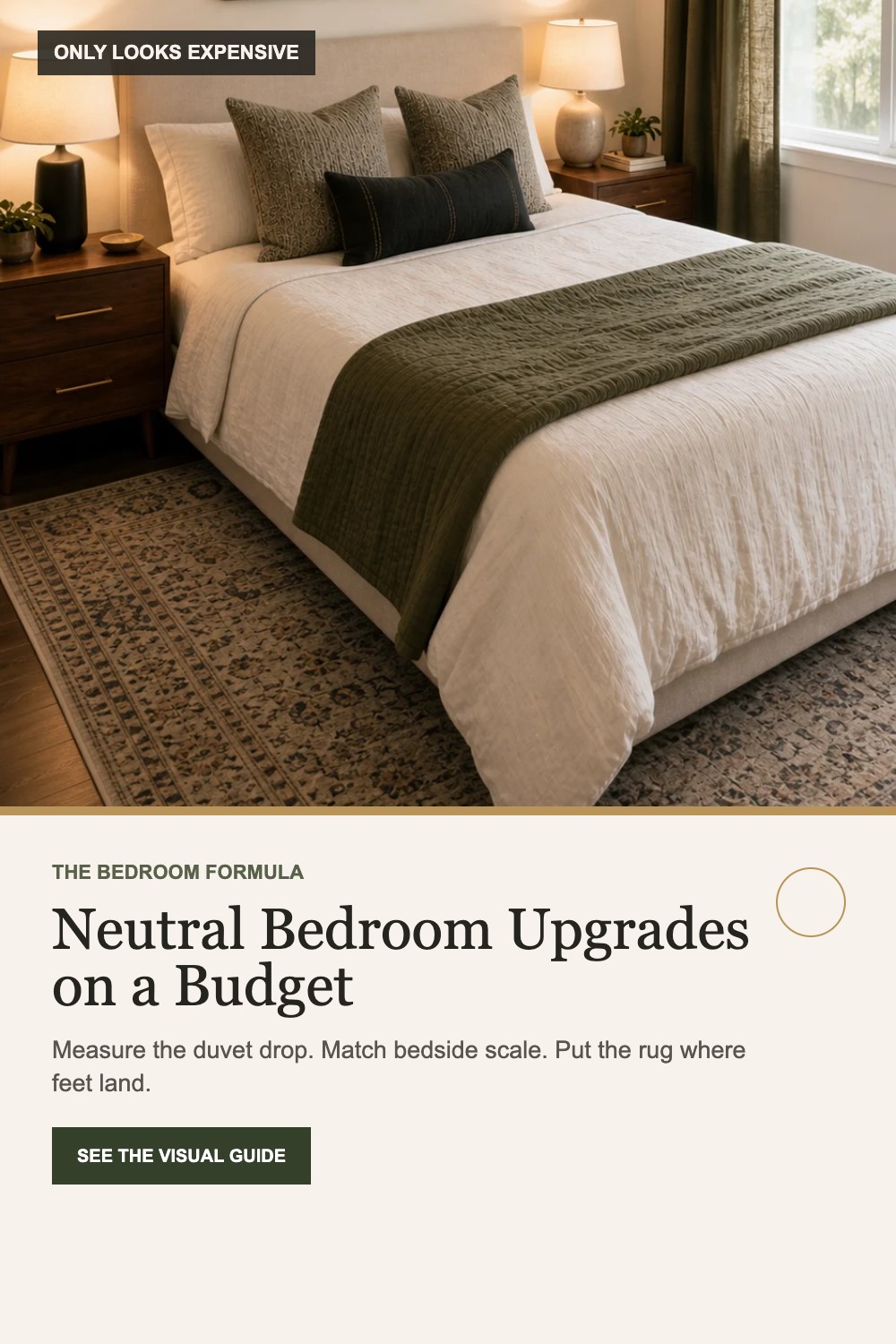
Neutral bedroom upgrades on a budget
Neutral does not mean buying five shades of beige. It means controlling scale and texture so the bed, lamps, rug, and curtains read as one calm system.
This post contains affiliate links. If you buy through them, we may earn a commission at no extra cost to you.

Build the bed by measurements, not pillow count.
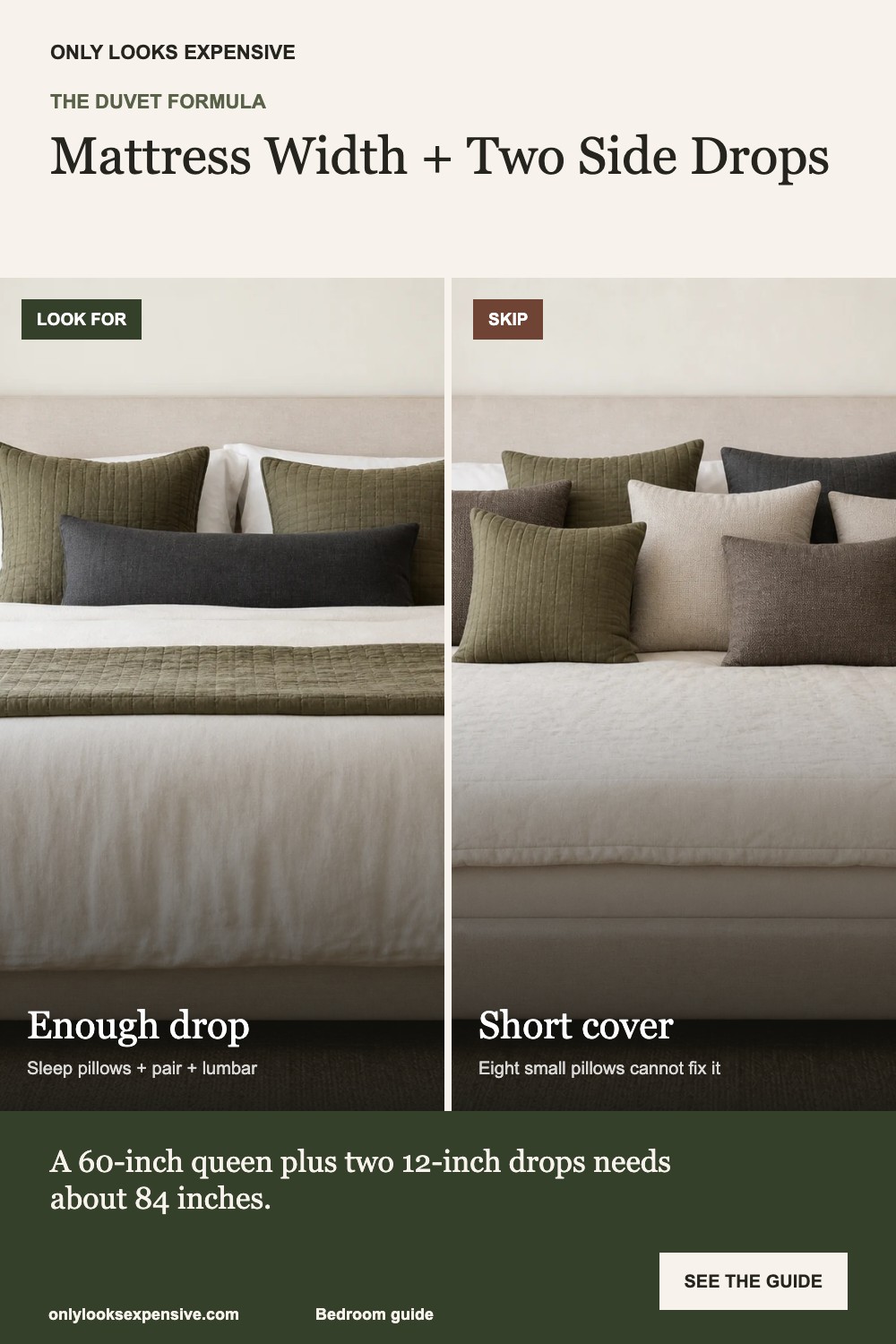
Choose duvet width from the mattress plus the visible drop you want. Use two sleeping pillows, one substantial decorative pair, and one lumbar instead of building a wall of cushions. Add texture with a folded quilt across the lower third.
Keep the nightstand close to mattress height, make the lamp large enough for reading, and use a rug that extends beyond the places where feet land. That is the room formula.
Measure the drop before choosing the label size.
A queen mattress is typically about 60 inches wide. If you want a 12-inch visible drop on both sides, the finished duvet should be at least about 84 inches wide; deeper mattresses need more. Check actual product dimensions because two items labeled queen can differ substantially.
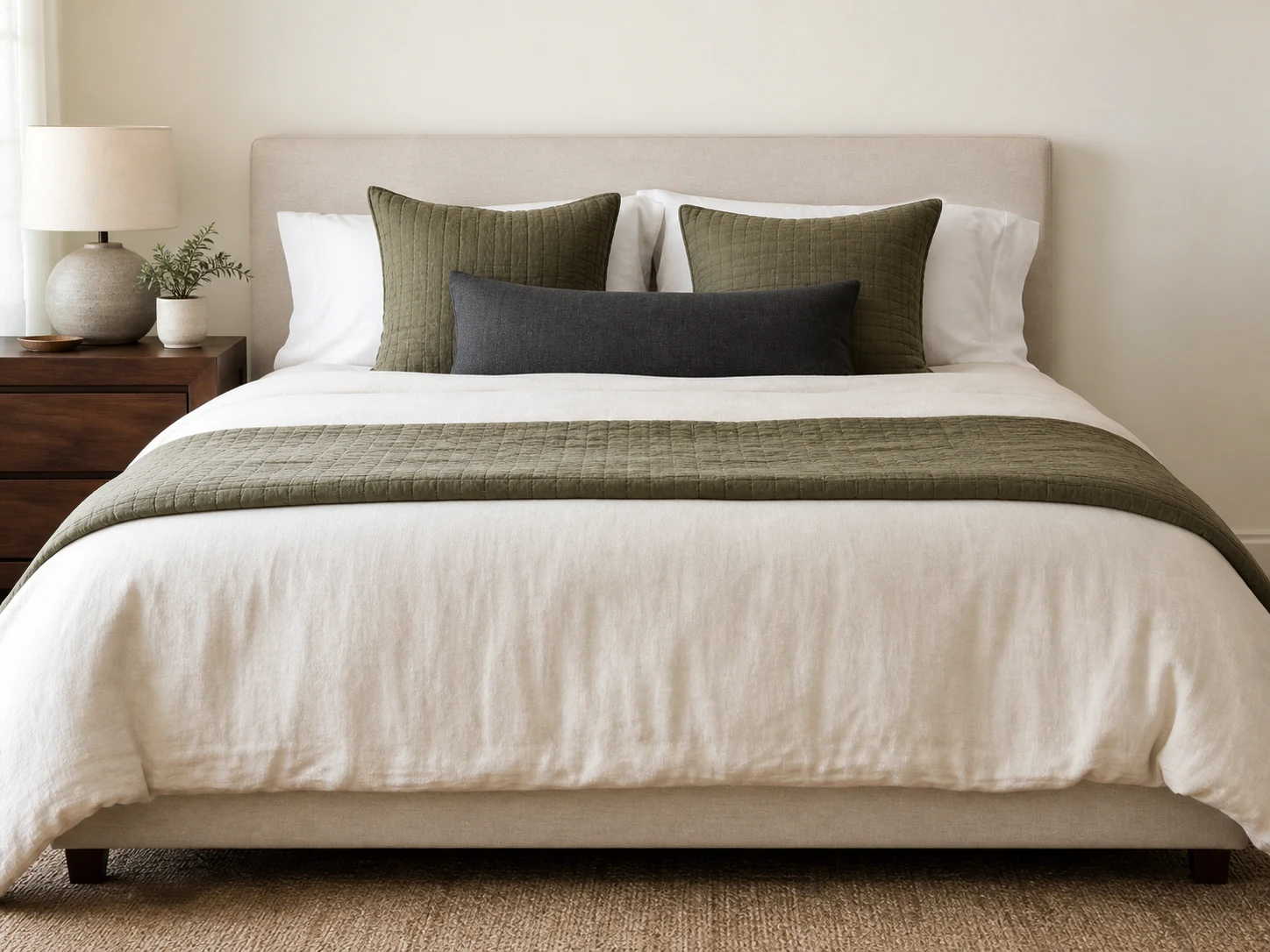 Look for
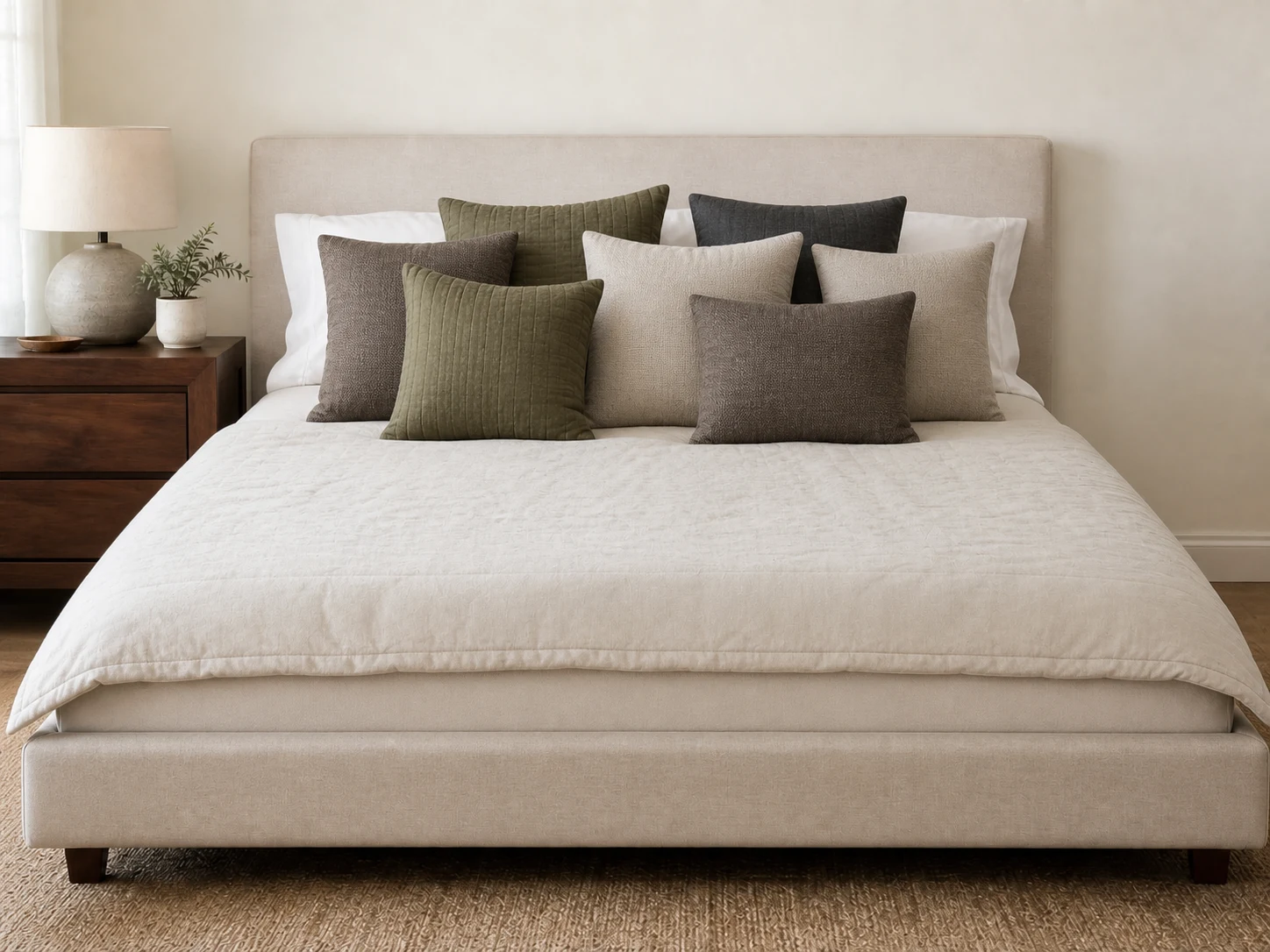 Skip
SkipRead finished width and length, insert size, closure, corner ties, fabric content, care, shrinkage, and whether a duvet insert is included. Measure the mattress depth instead of relying on the bed-size label.
Match the nightstand to the mattress and the lamp to the person.
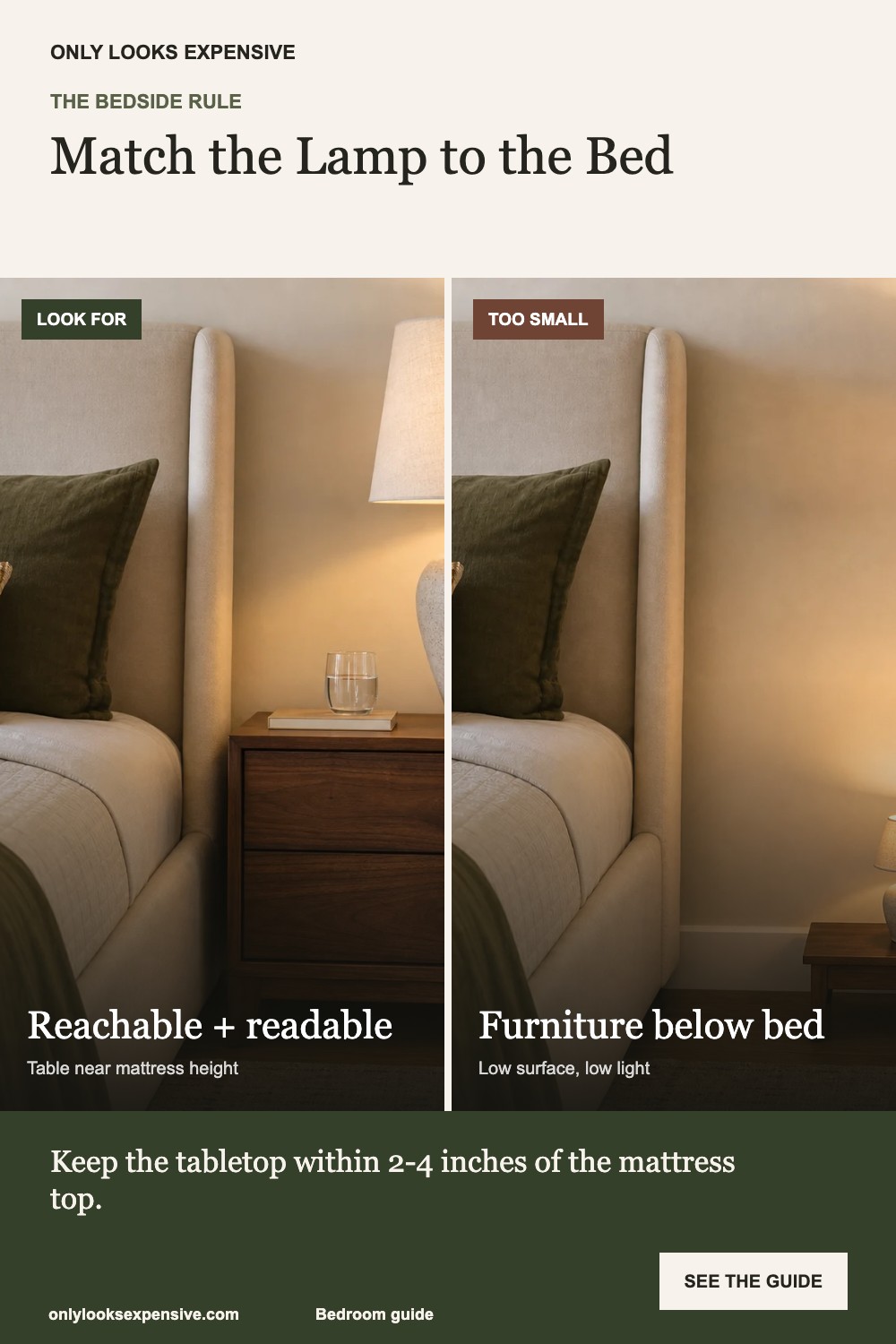
A nightstand top within roughly 2 to 4 inches of the mattress top is an ergonomic starting point. Many standard beds and tables work with a lamp around 24 to 28 inches tall, but seated or reclining eye level is the final glare check. Leave enough stable surface for water, a phone, and a book.
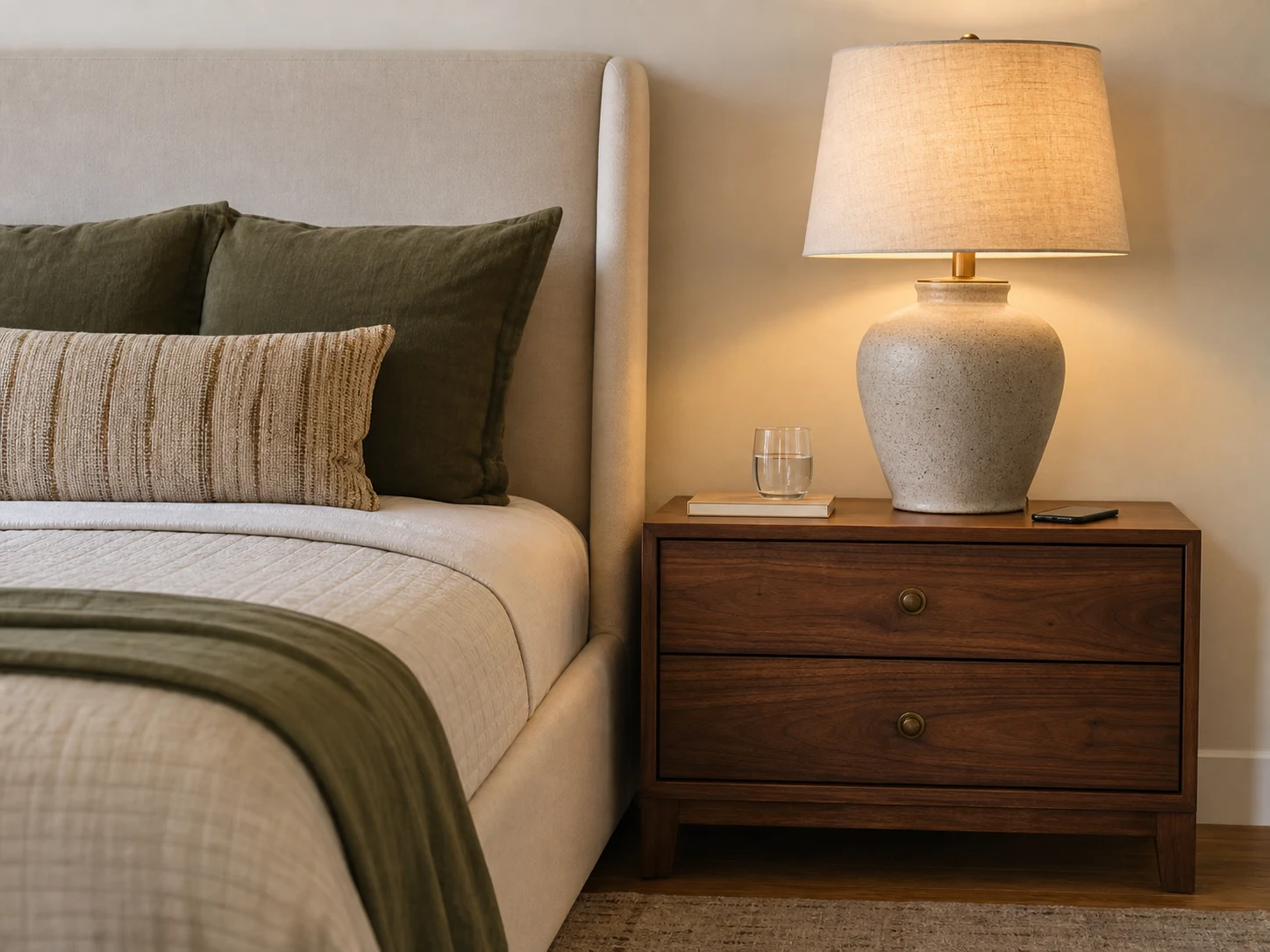 Look for
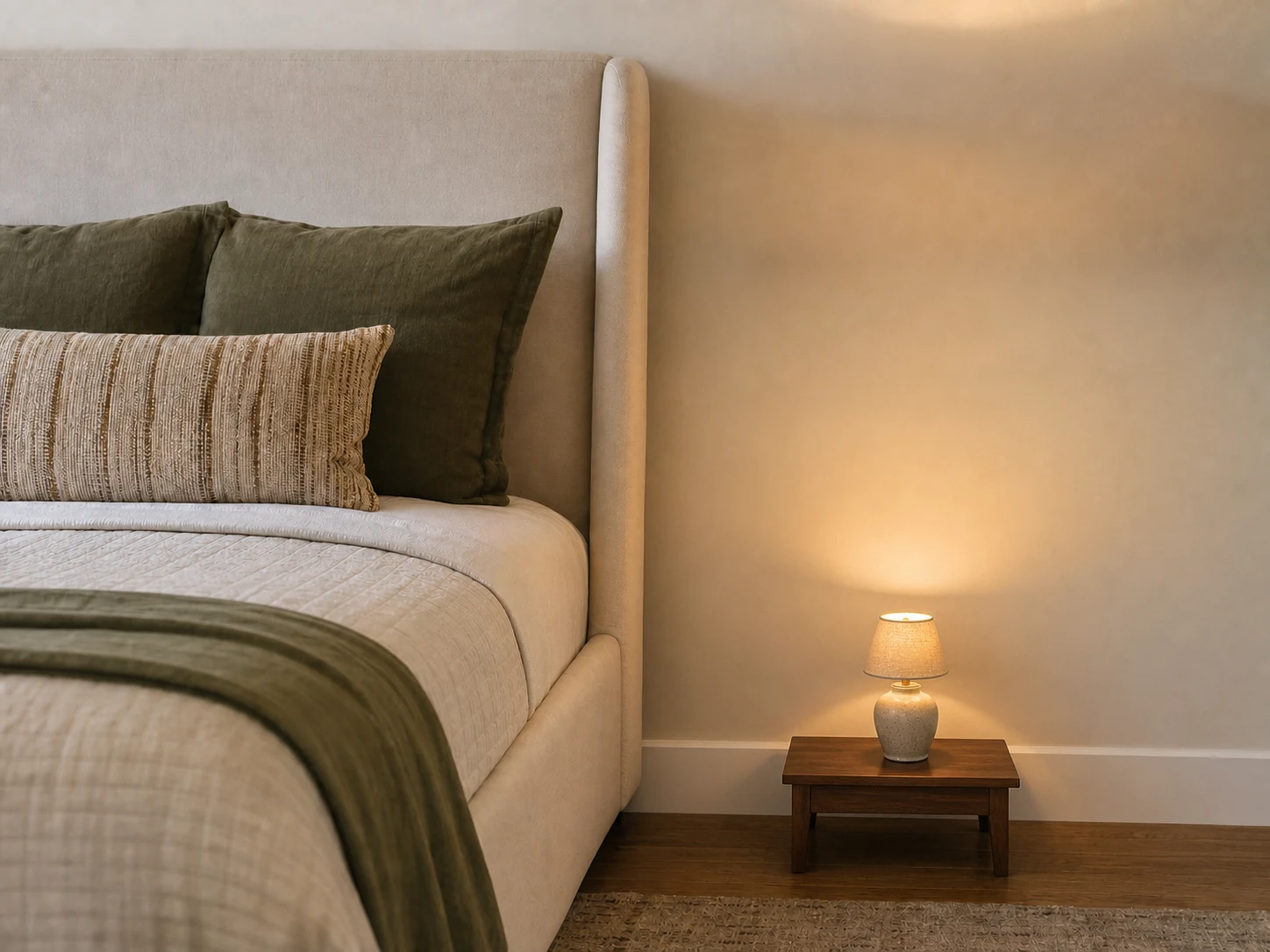 Skip
SkipCompare nightstand height and depth with the mattress and bed-frame projection. For the lamp, check total height, shade diameter, switch location, cord route, socket, bulb visibility, and certification information.
Put softness where feet land, not only where cameras look.
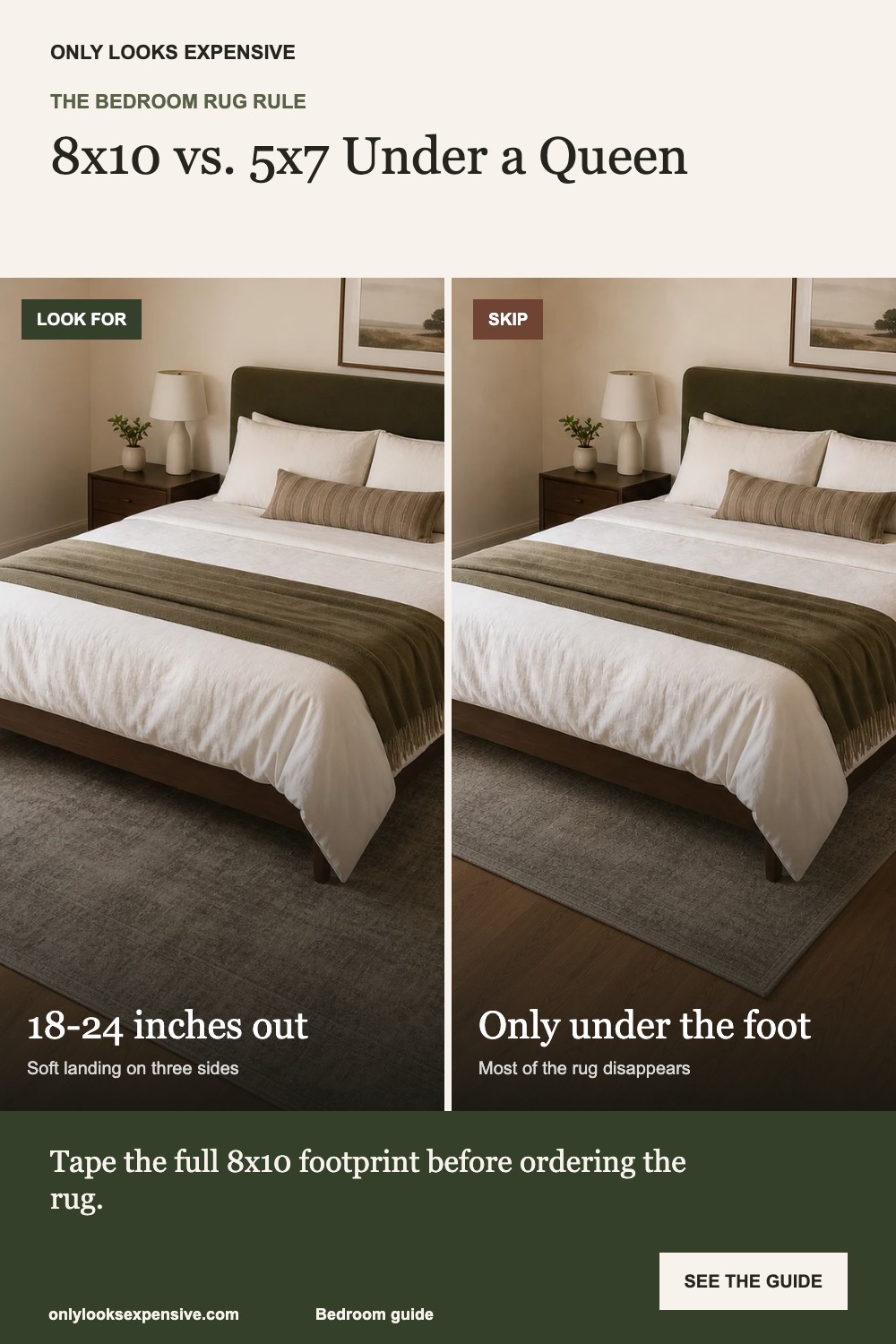
An 8x10 rug is a common queen-bed starting size; a 9x12 often suits a king. Position it under the lower two-thirds of the bed so it extends roughly 18 to 24 inches beyond both sides and the foot while the nightstands can remain on bare floor. Confirm the room still leaves a visible border around the rug.
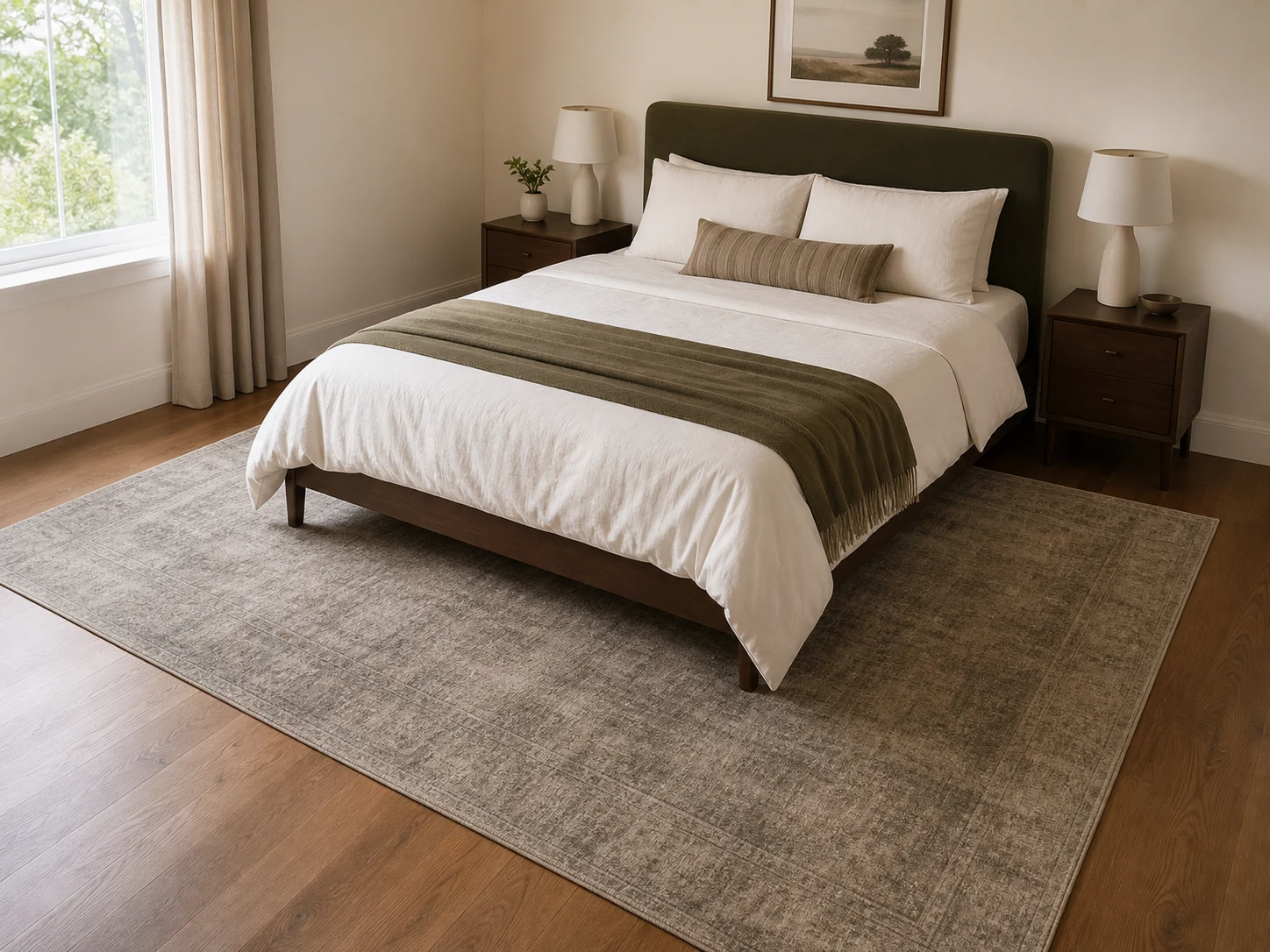 Look for
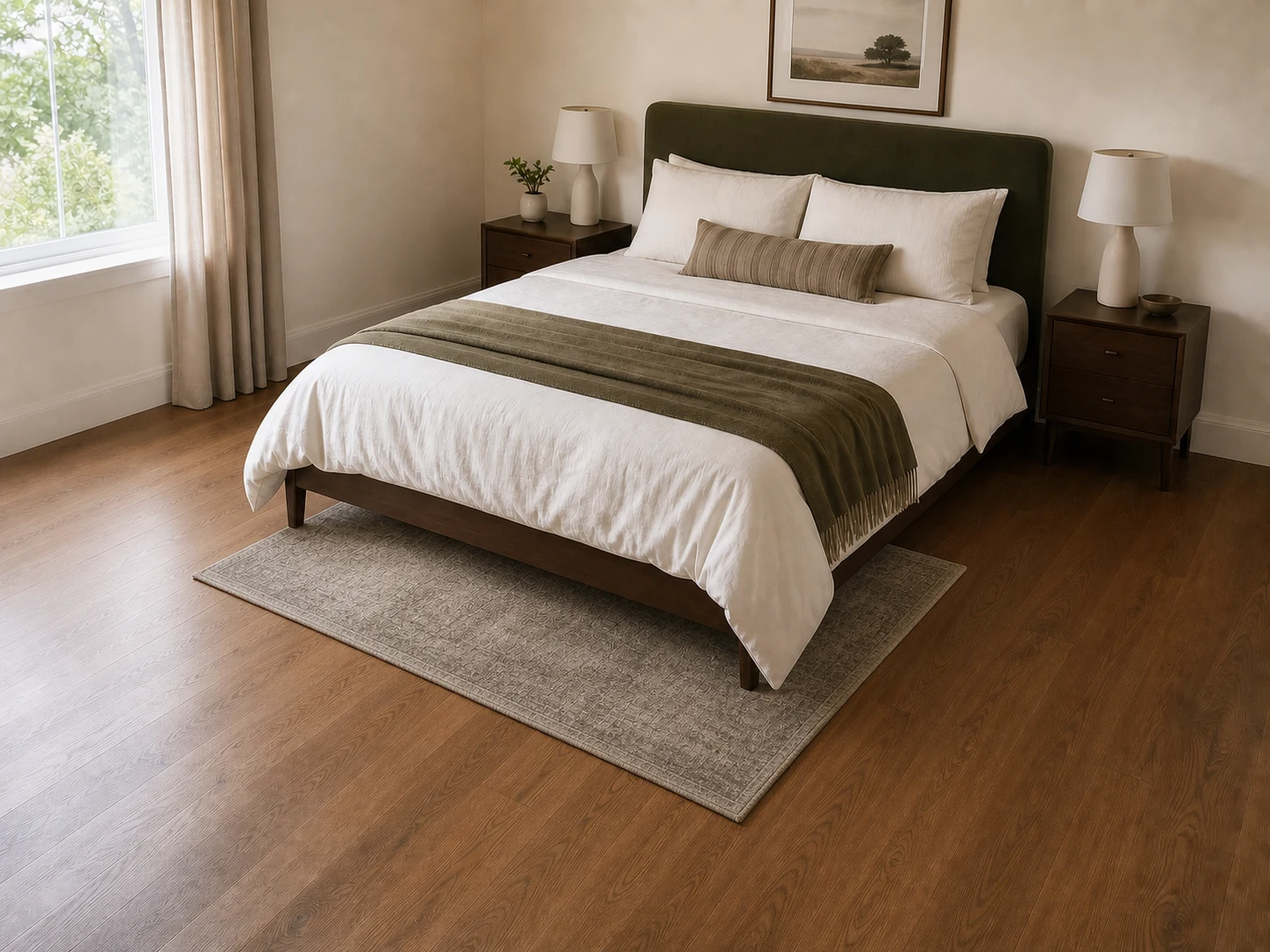 Skip
SkipTape the rug footprint and open every door and drawer. Check pile height, pad recommendation, bed-leg stability, cleaning, return method, and whether the listed size is exact or approximate.
Neutral rooms expose proportion mistakes faster.
Finished duvet dimensions and mattress depth decide the visible drop.
One substantial pair and one lumbar create a clearer hierarchy and take less time to remove.
Symmetry does not help when both fixtures are too low for the bed and person.
The decorative strip looks staged but offers no landing zone beside the bed.
This reset assumes you reuse pillow inserts, duvet insert, lamps, nightstands, and rug. It is a planning ceiling, not a live retailer quote; verify current sizes, materials, prices, and returns.
How we screen bedroom categories
We record mattress width, length, depth, frame projection, and floor clearance.
We check where hands reach, eyes read, feet land, drawers open, and cords travel.
We use a light base, one muted accent, one dark anchor, and varied texture instead of more colors.
We flag vague dimensions, difficult laundering, compressed inserts, heavy rug returns, and unclear electrical details.
We have not physically tested every item in these searches. Confirm current dimensions, materials, care, included pieces, price, seller, shipping, and returns on the retailer page.
Spend on the fields the eye reads first.
Check finished dimensions, texture, care, and return logistics before color names.
Selection guidance last reviewed July 12, 2026. Product availability and retailer details can change.
Bedroom measurements that matter
How wide should a duvet be?
Add the mattress width to twice the visible side drop you want. A 60-inch queen mattress with a 12-inch drop on each side needs at least about 84 inches of finished width.
¿Qué alfombra suele funcionar bajo una cama Queen?
An 8x10 rug is a common starting point because it can extend beyond both sides and the foot. Tape the footprint and confirm the room border and door clearance.
How high should a nightstand be?
Start within roughly 2 to 4 inches of mattress-top height, then check reach, drawer opening, and how the lamp shade meets your eye line.
Measure the layers before buying them.
Save the overview, then keep the bedding, bedside, and rug checks.