Only Looks Expensive
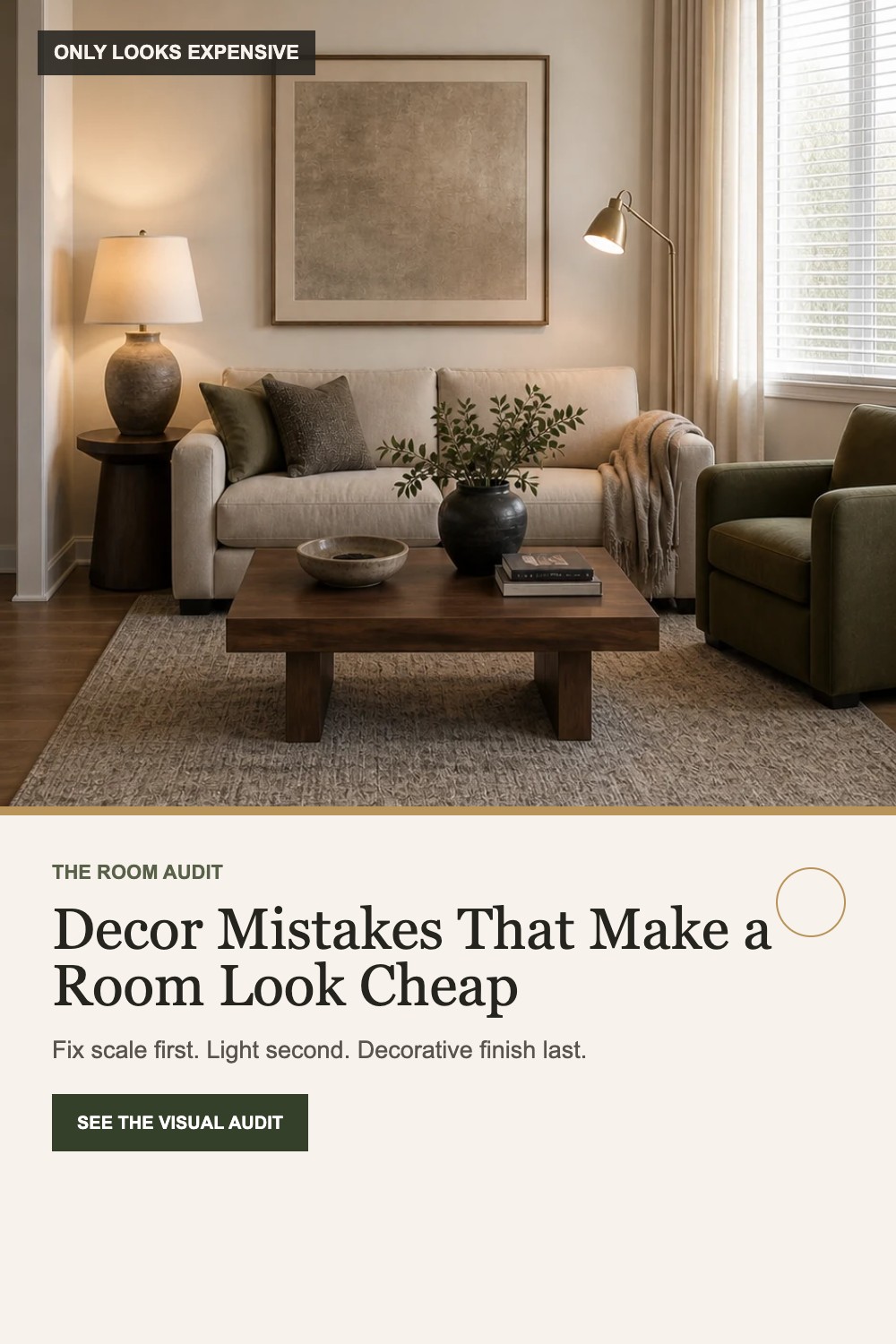
Decor mistakes that make a room look cheap
The most expensive-looking fix is often moving, removing, or resizing something. Audit the room in this order: scale, light, then decorative finish. Buying small filler before those three are right only makes the problem busier.
This post contains affiliate links. If you buy through them, we may earn a commission at no extra cost to you.

Small furniture is not always the issue. Small relationships are.
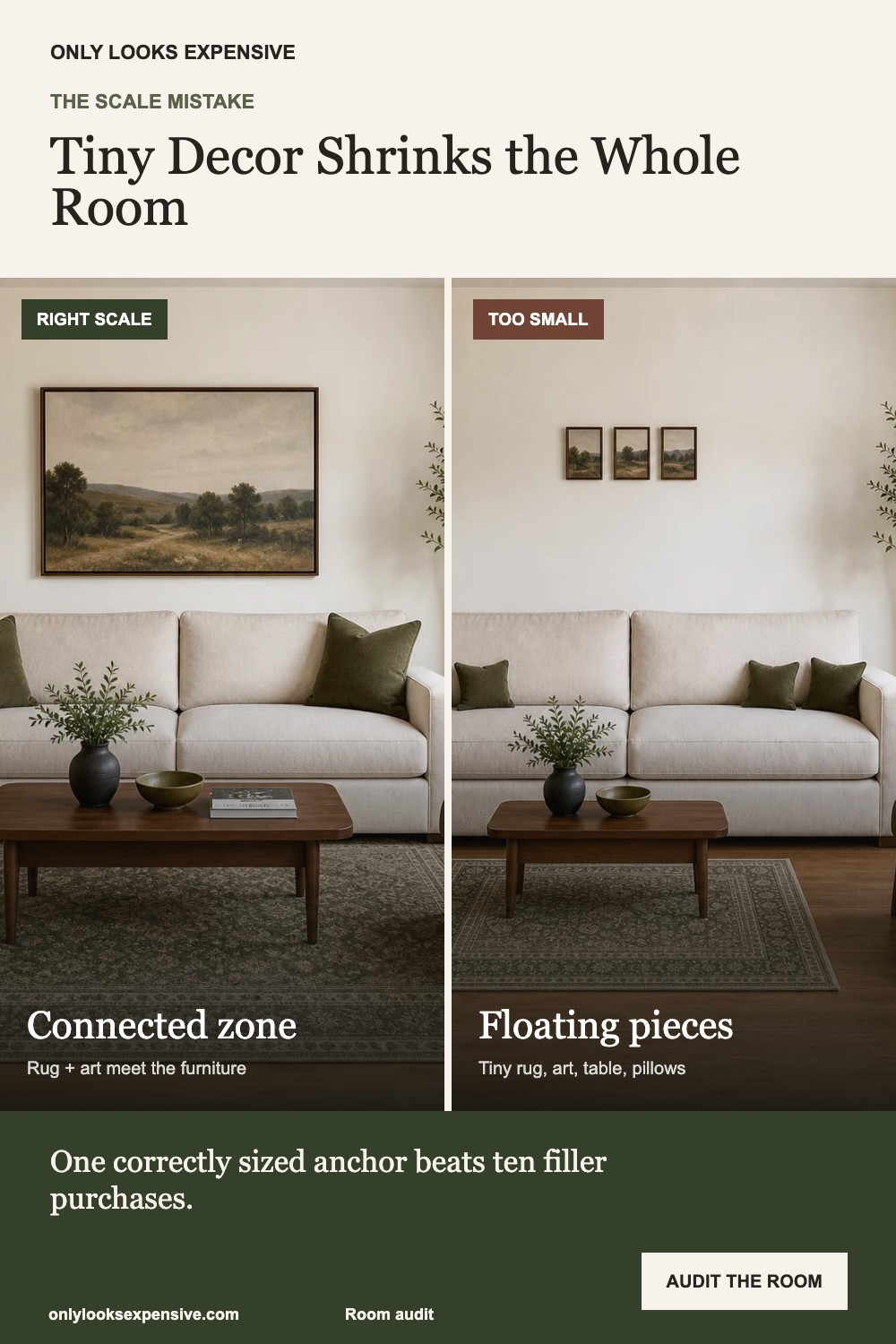
A 5x7 rug floating under a coffee table makes a normal sofa feel heavier. Tiny art makes a wall feel emptier. One cold ceiling light removes the depth from every material in the room. Those are relationship problems, not price problems.
Correct the largest visual field first. Then repeat two or three calm materials and remove anything that exists only to fill an awkward gap.
Connect the furniture instead of floating around it.
In a living room, get at least the sofa and chair front legs onto the rug when the room allows it. Above a sofa or console, start with wall art around one-half to three-quarters of the furniture width. A coffee table around two-thirds of the sofa length usually reads more deliberate than a tiny table stranded in the middle.
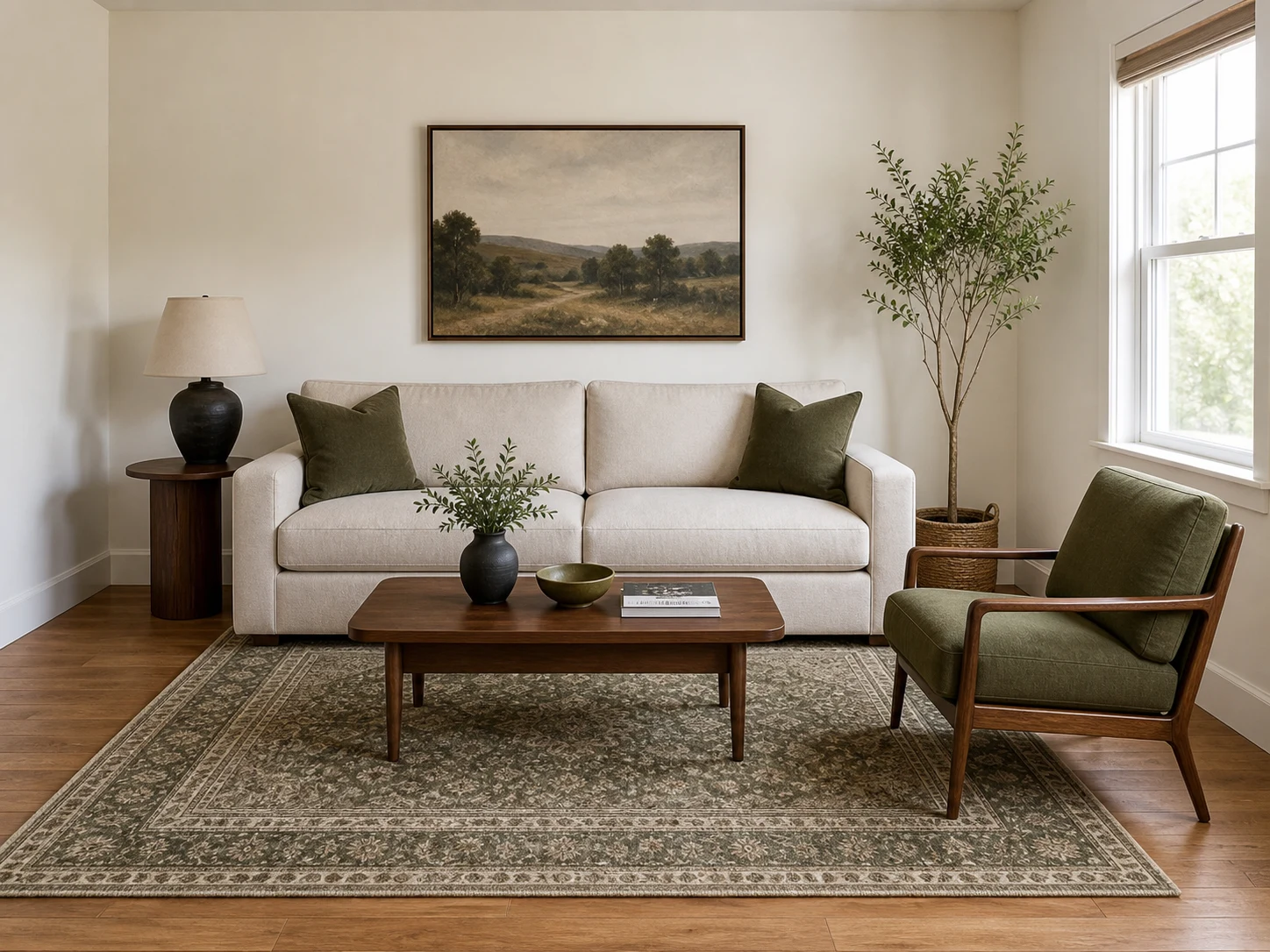 Look for
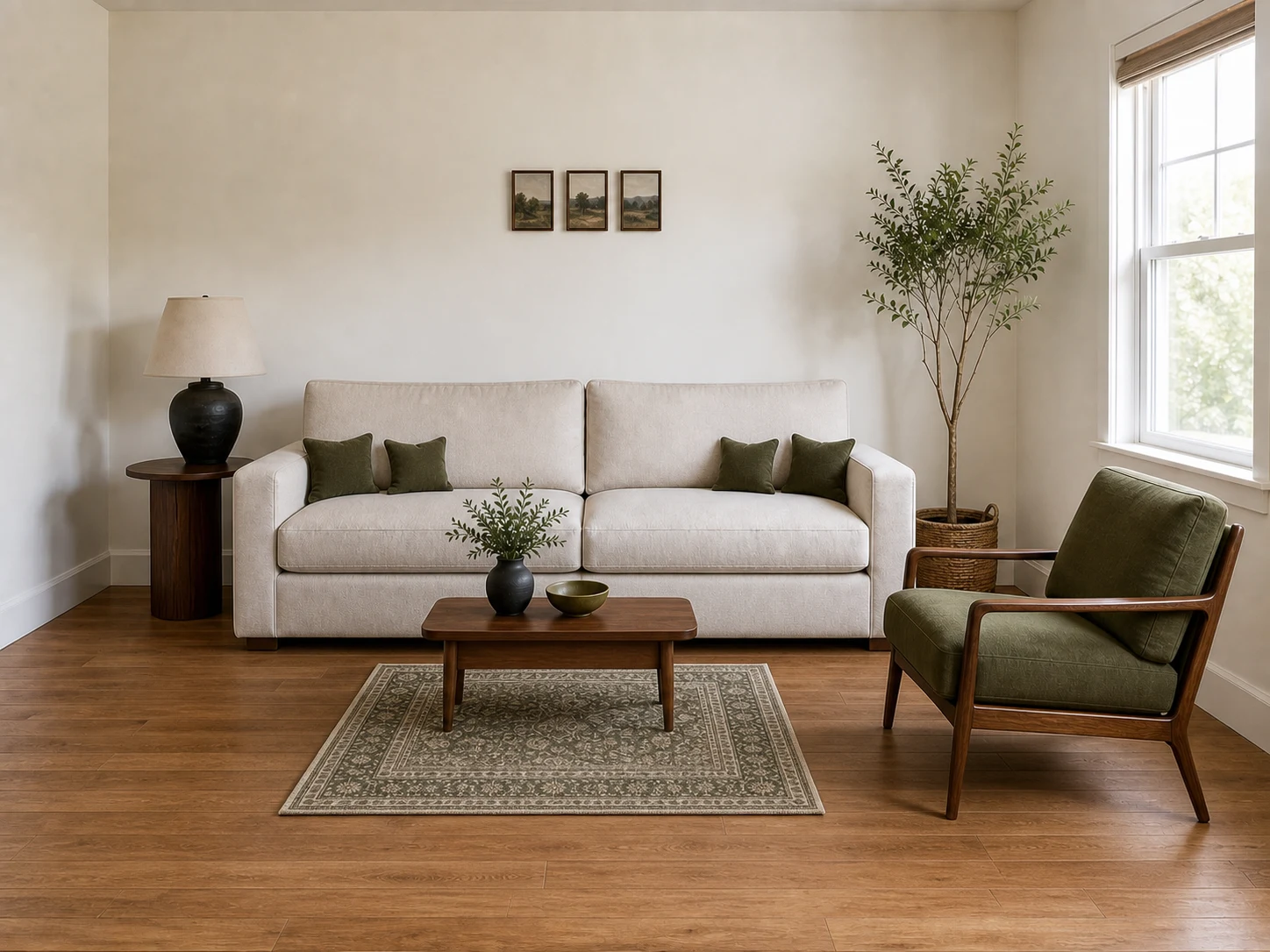 Skip
SkipMark the full rug and art footprint with painter's tape. For the rug, test door swing and leave a visible border of floor. For art, stand across the room and compare the taped shape with the furniture width.
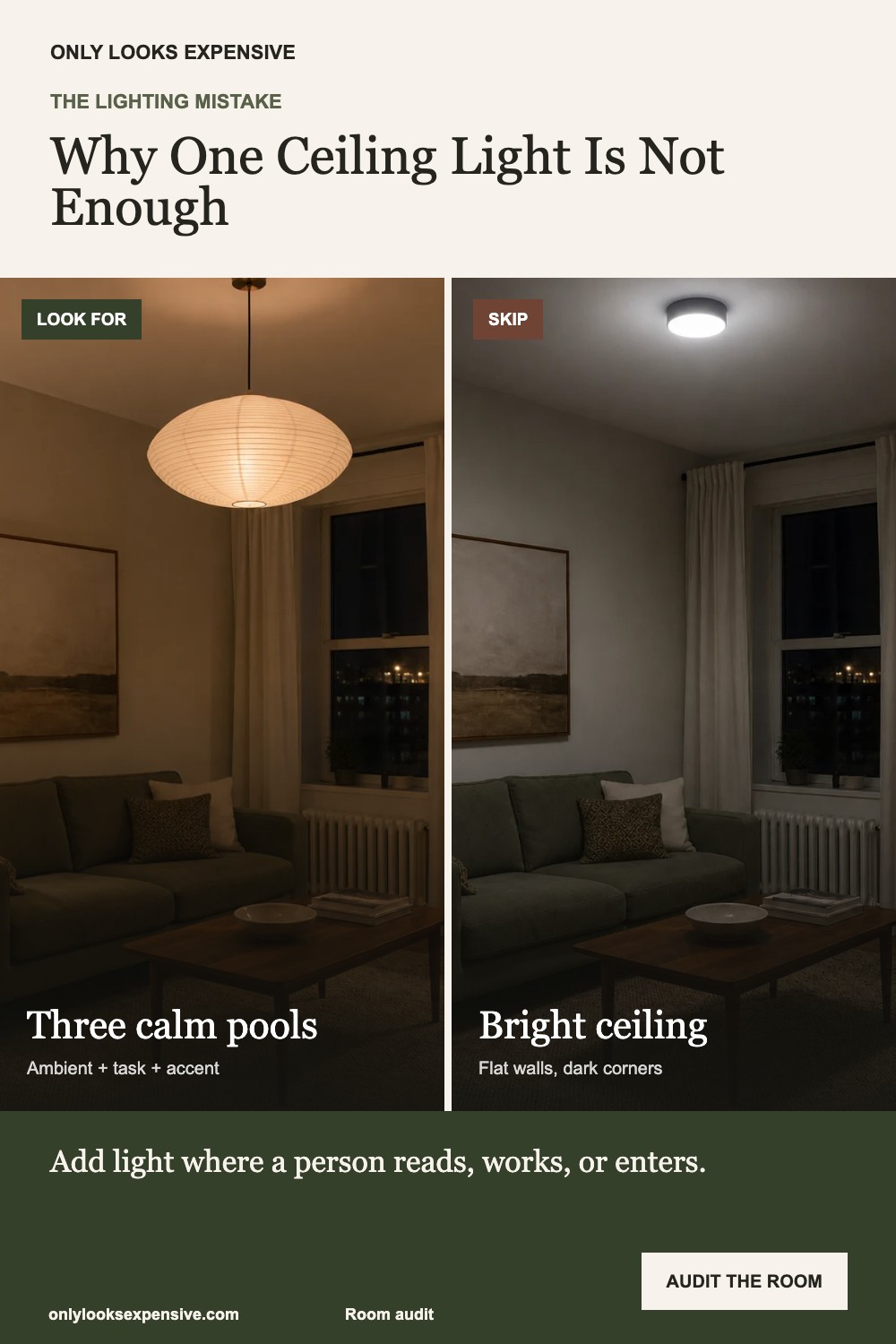
One bright ceiling light flattens every good decision.
Create at least two useful heights after sunset: ambient light for the room and task light near seating. A third accent pool near art or a shelf adds depth. Keep living-room bulbs in one warm-white family around 2700K unless a specific task needs a cooler source.
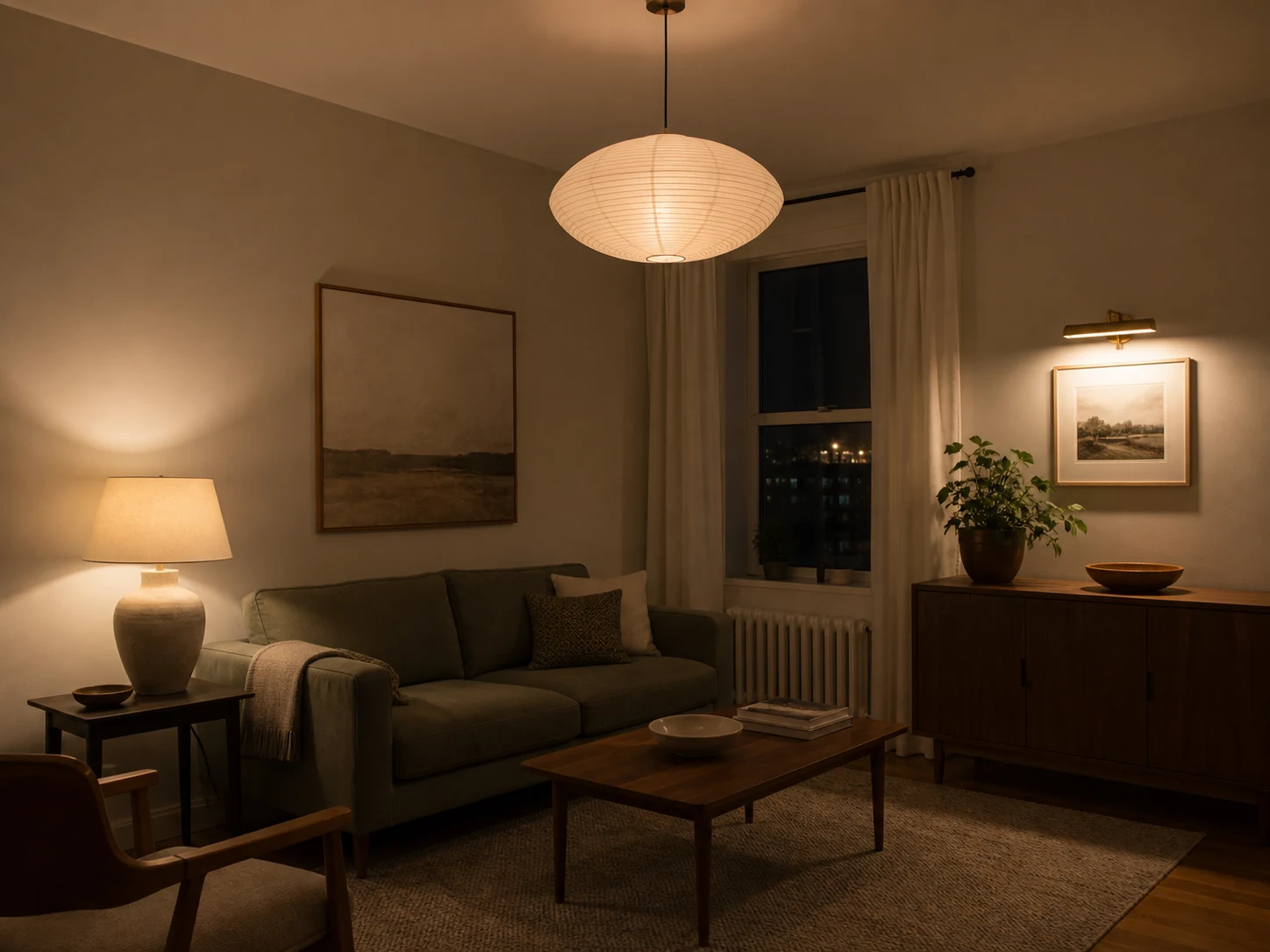 Look for
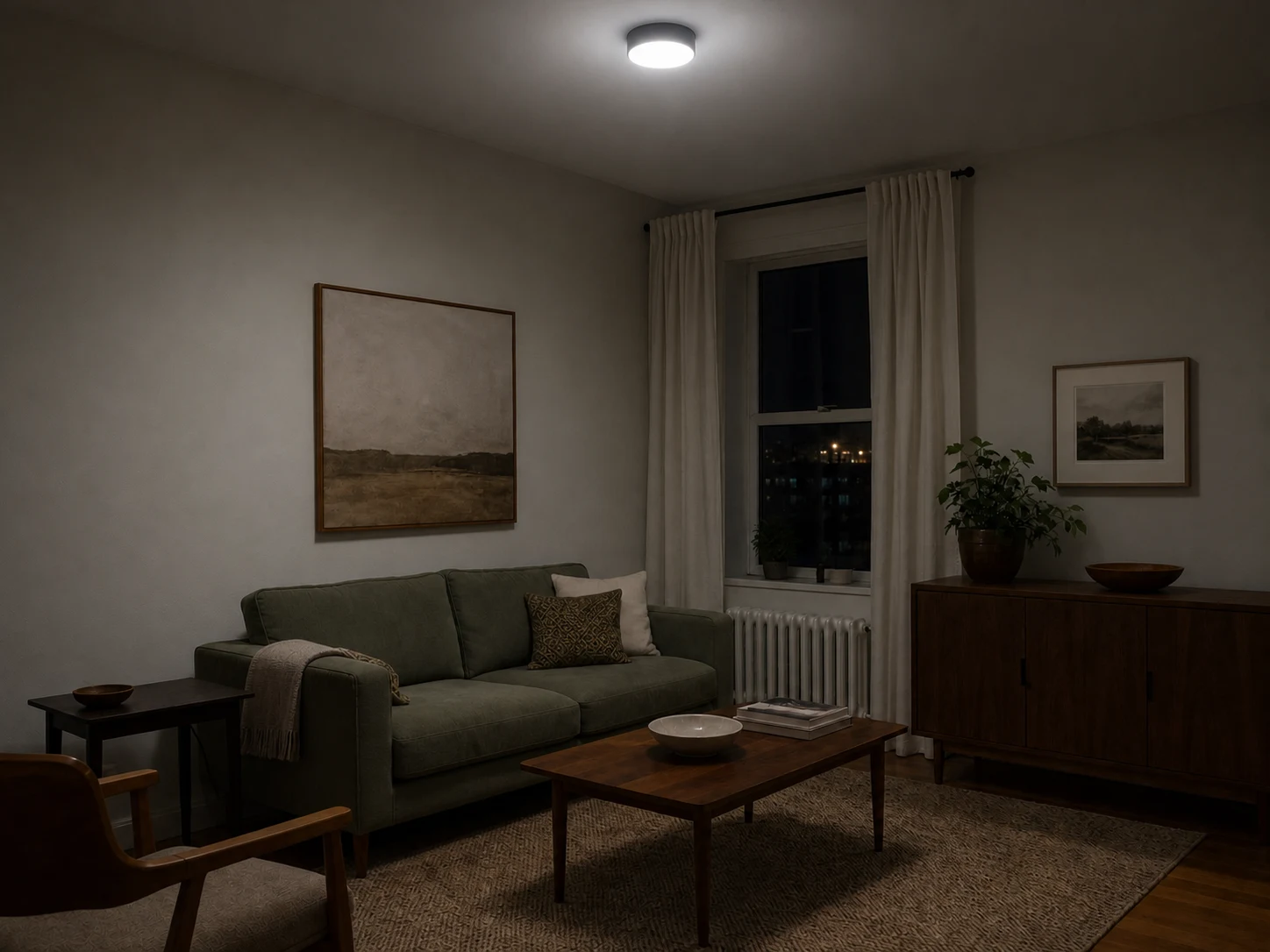 Skip
SkipTurn off the ceiling light and photograph the dark zones. Add a lamp where a person reads, works, or enters the room, not where an empty surface happens to exist.
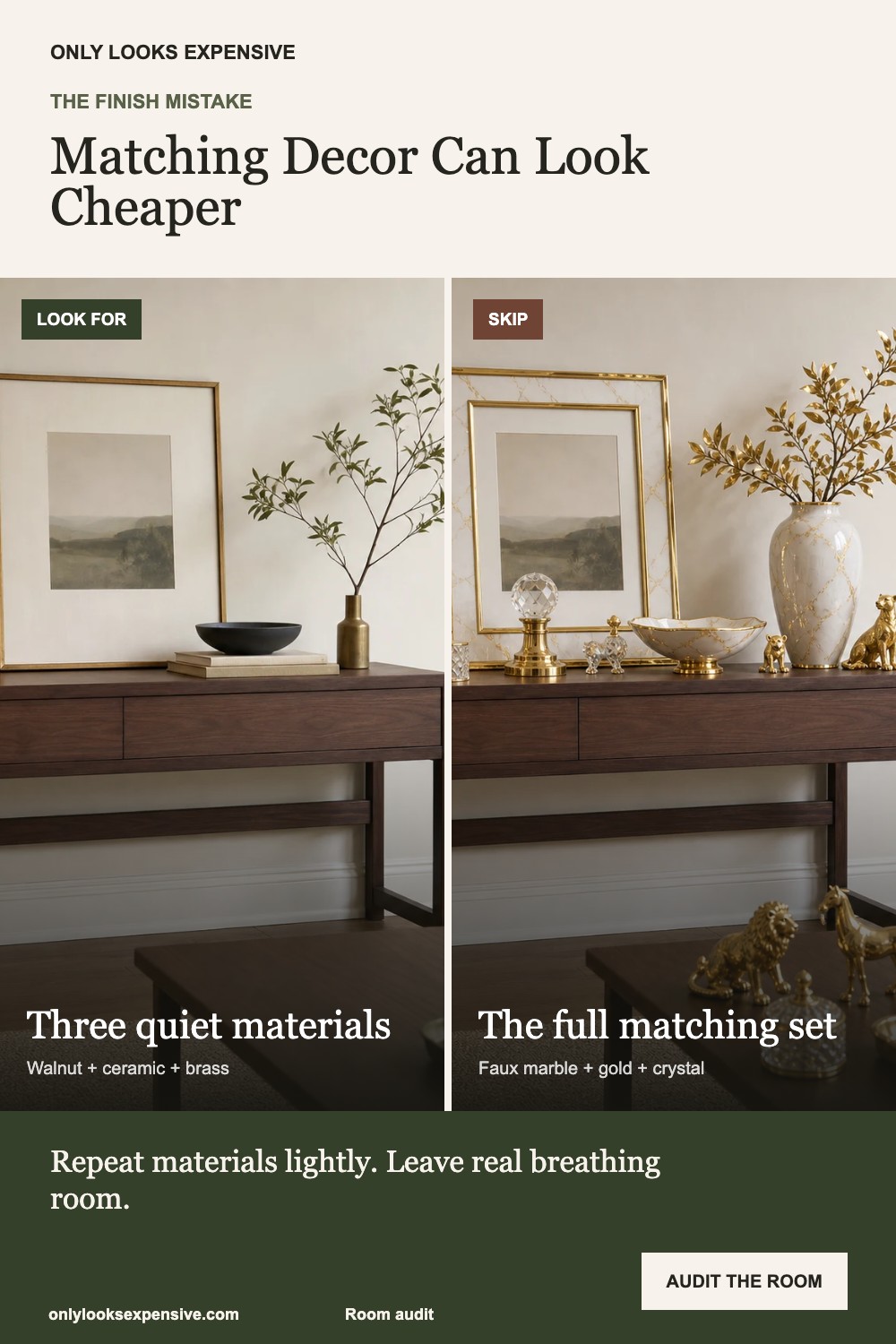
Repeat quiet materials. Stop buying the whole matching set.
Choose two or three materials that already belong in the room: walnut, matte ceramic, aged brass, linen, or black metal. Repeat them lightly. A matching faux-marble lamp, frame, vase, tray, and bowl does not create cohesion; it amplifies the least convincing finish.
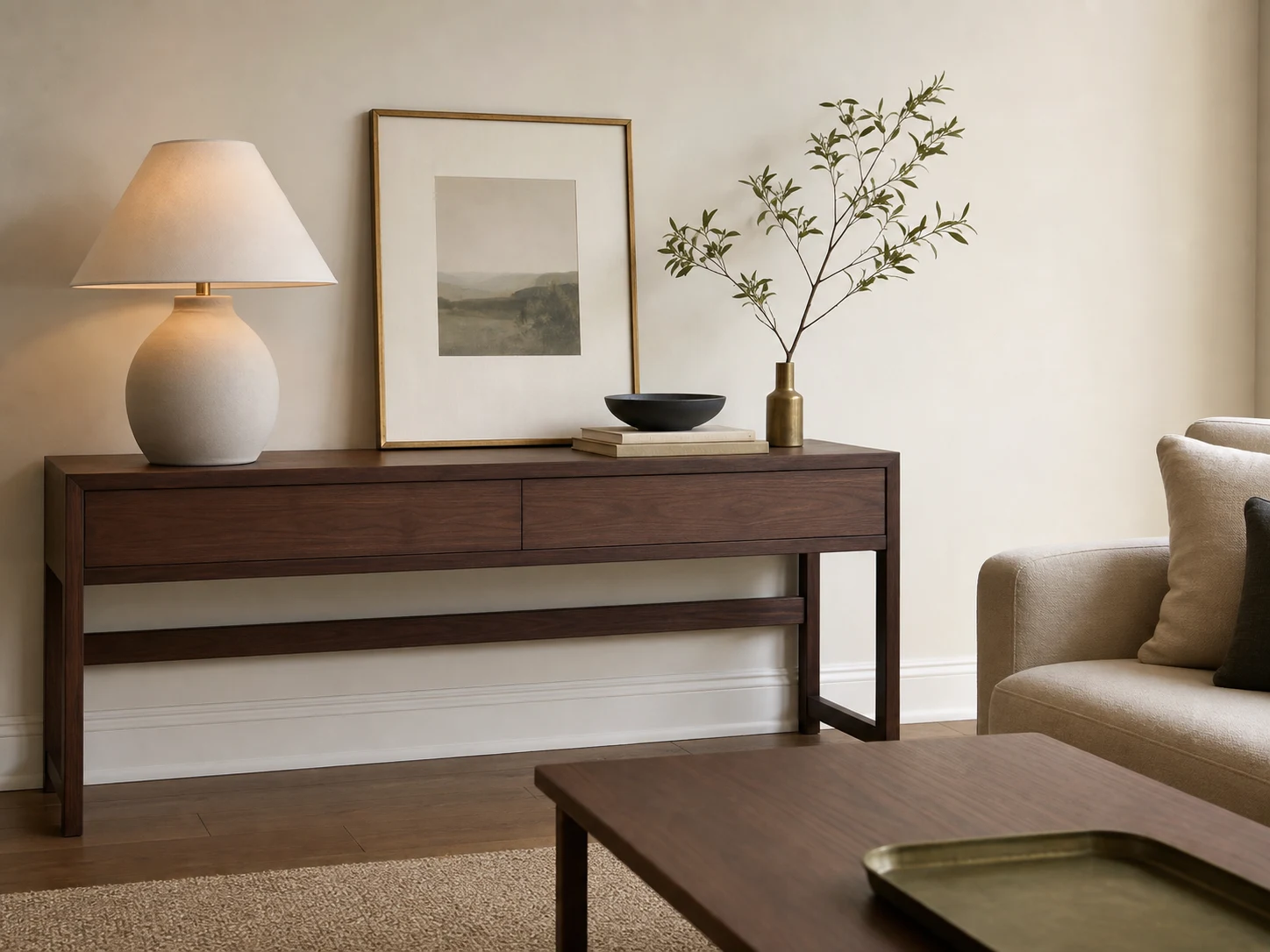 Look for
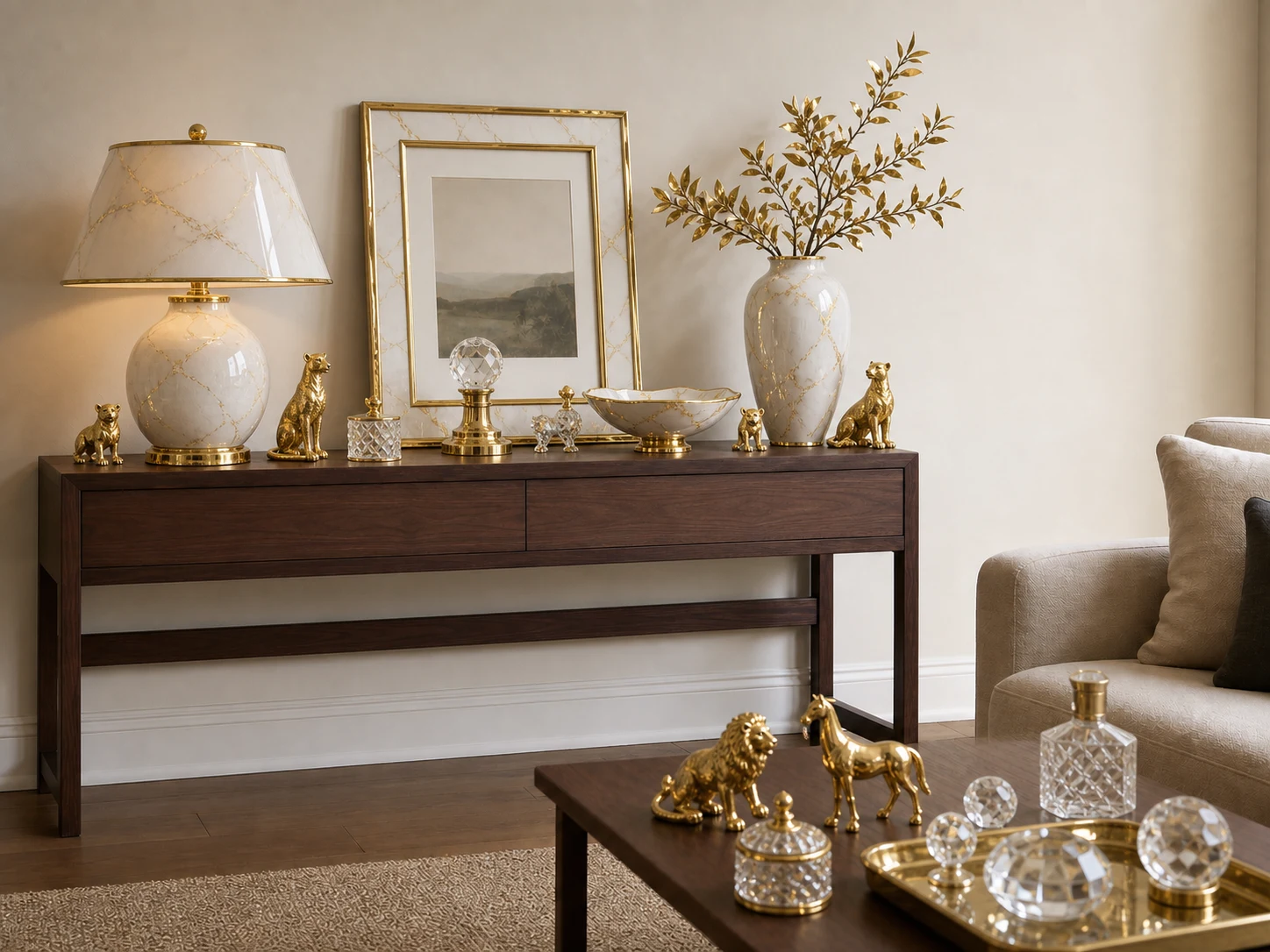 Skip
SkipRemove half the small objects and photograph the surface. Add back only what supplies function, height, texture, or a personal story. If two objects perform the same visual job, keep the stronger one.
What people get wrong before they spend.
Tiny filler makes an undersized rug, mirror, or artwork look even smaller.
Two cream objects can still fight when one is glossy, ornate, and miniature.
A room that works only in daylight needs a lighting plan, not another vase.
Correct styling never excuses blocked doors, pinched walkways, or cords under rugs.
This receipt fixes visible signals before a rug, art, or furniture purchase. It is a planning ceiling, not a live price claim; reuse what you own and verify current retailer details.
How we decide whether a purchase is actually the fix
A straight-on photo exposes scale, clutter, bulb color, and blocked circulation faster than shopping tabs do.
We choose one category: placement, size, lighting, storage, or finish.
We move, remove, tape, steam, or swap rooms before recommending another object.
When a purchase is needed, dimensions, material, use case, and return risk decide the category.
Concept images illustrate relationships, not physically tested products. Confirm current specifications, dimensions, materials, prices, seller, shipping, and returns on each retailer page.
Match the category to the signal.
Measure before opening the search. These pathways are intentionally specific enough to reduce filler purchases.
Selection guidance last reviewed July 12, 2026. Product availability and retailer details can change.
Where to start
What should I fix first when a room looks cheap?
Fix scale and placement first: rug, wall anchor, curtains, and furniture clearances. Correct the lighting next. Decorative finish comes last.
How large should art be above a sofa?
Start around one-half to three-quarters of the sofa width and tape the footprint before buying. One clear anchor is easier to scale than many tiny frames.
Should all my decor match?
No. Repeat two or three quiet materials instead of buying a glossy matching set. Variation in shape and age makes a room feel collected rather than packaged.
Fix the biggest signal first.
Save the overview, then keep the scale, lighting, and finish checks.