Only Looks Expensive
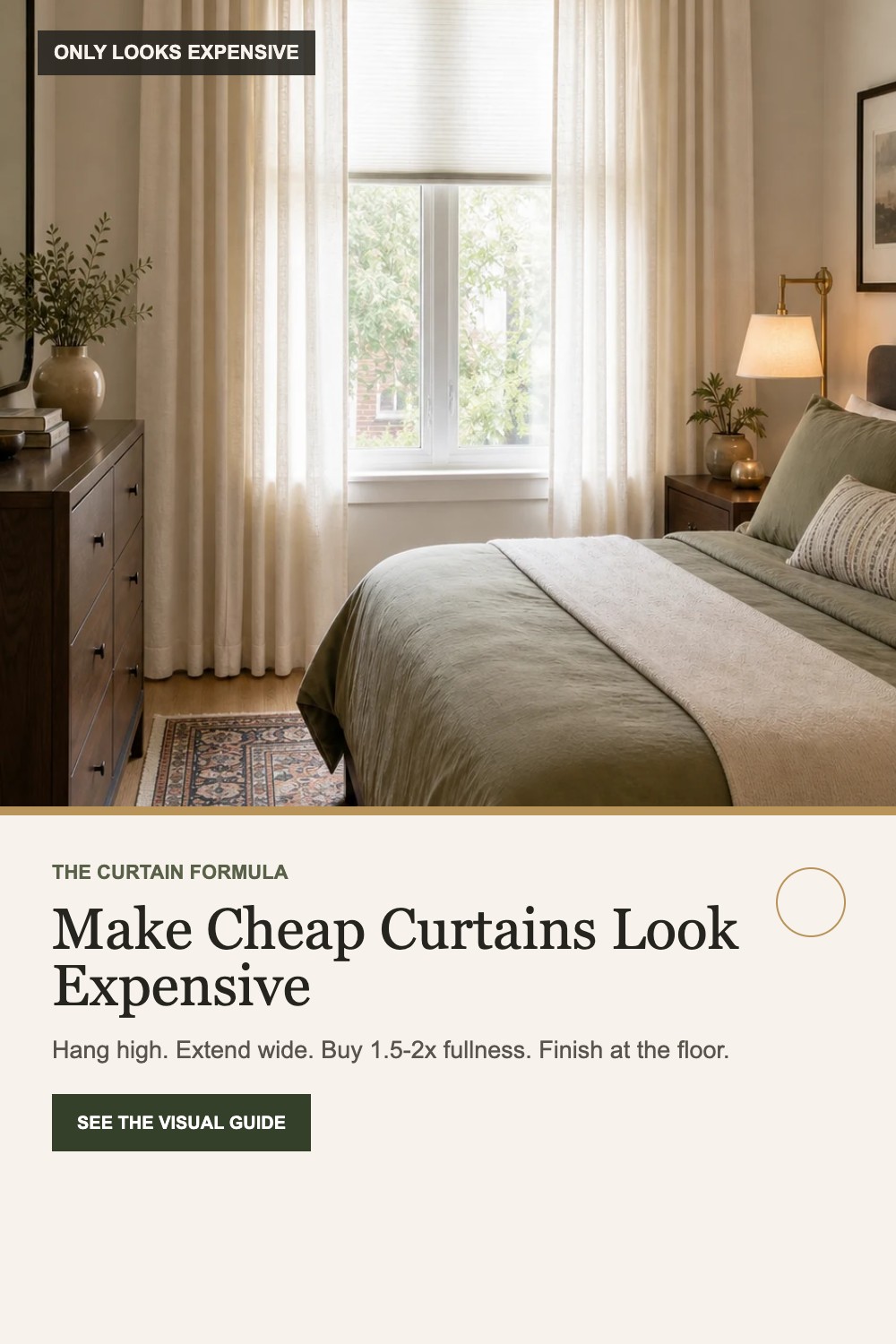
Make cheap curtains look expensive
The fabric gets blamed for mistakes made by the rod. Correct the height, width, fullness, and hem before paying more for a panel with a luxury-sounding material name.
This post contains affiliate links. If you buy through them, we may earn a commission at no extra cost to you.

Make the window look larger without covering more glass.
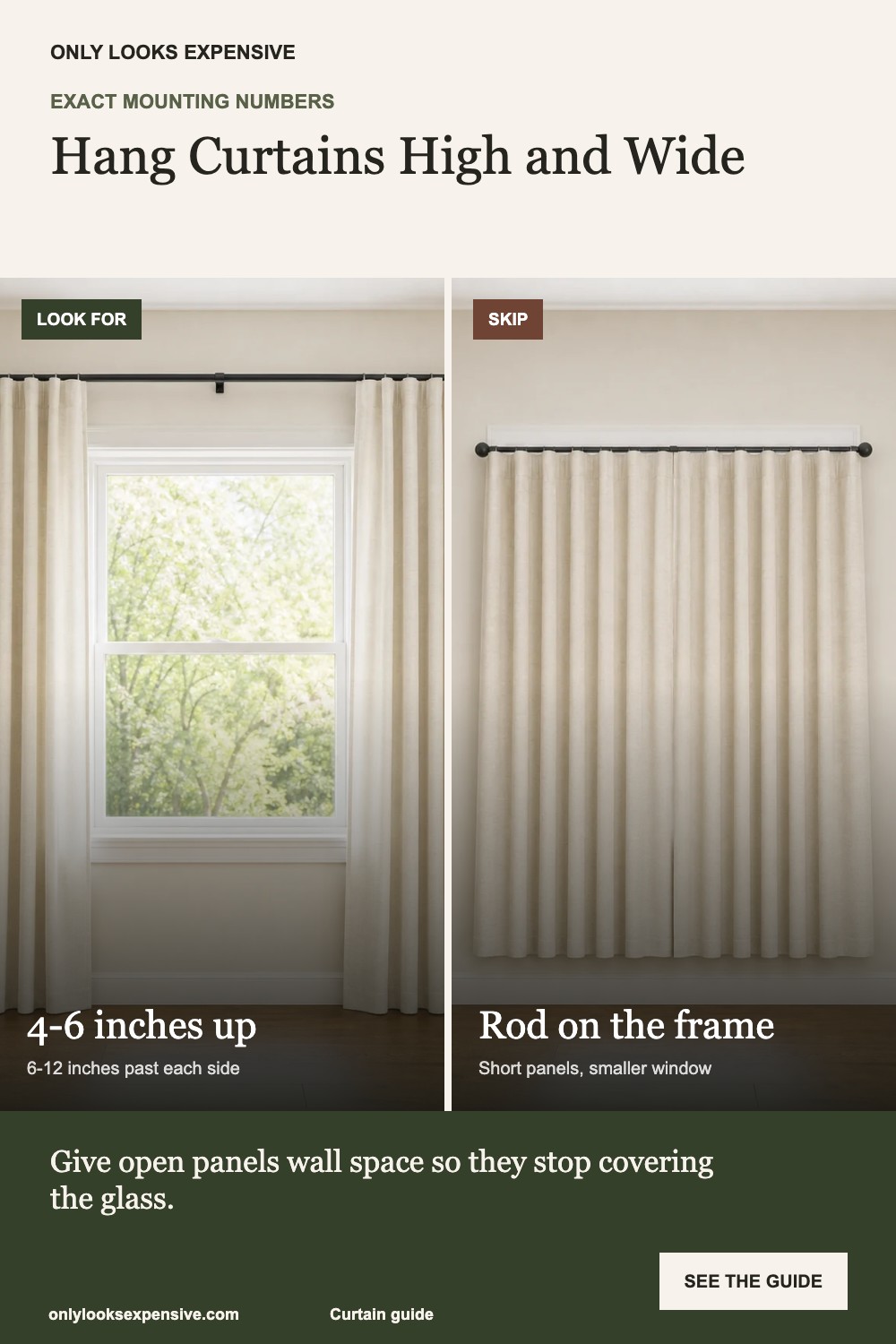
Mount the rod about 4 to 6 inches above the frame and extend it at least 6 inches beyond each side when the wall allows. That gives open panels somewhere to stack without stealing daylight.
Buy enough panel width to reach 1.5 to 2 times the rod width, then hem the fabric to skim the floor. Steam the folds after installation. Those four steps do more than an expensive weave installed at the wrong size.
High and wide is a measurement, not a slogan.
Start around 4 to 6 inches above the top frame. Extend roughly 6 to 12 inches beyond each side when wall space permits, so the open fabric sits beside the glass. Check for studs, anchors, trim, radiators, outlets, and furniture before choosing the final points.
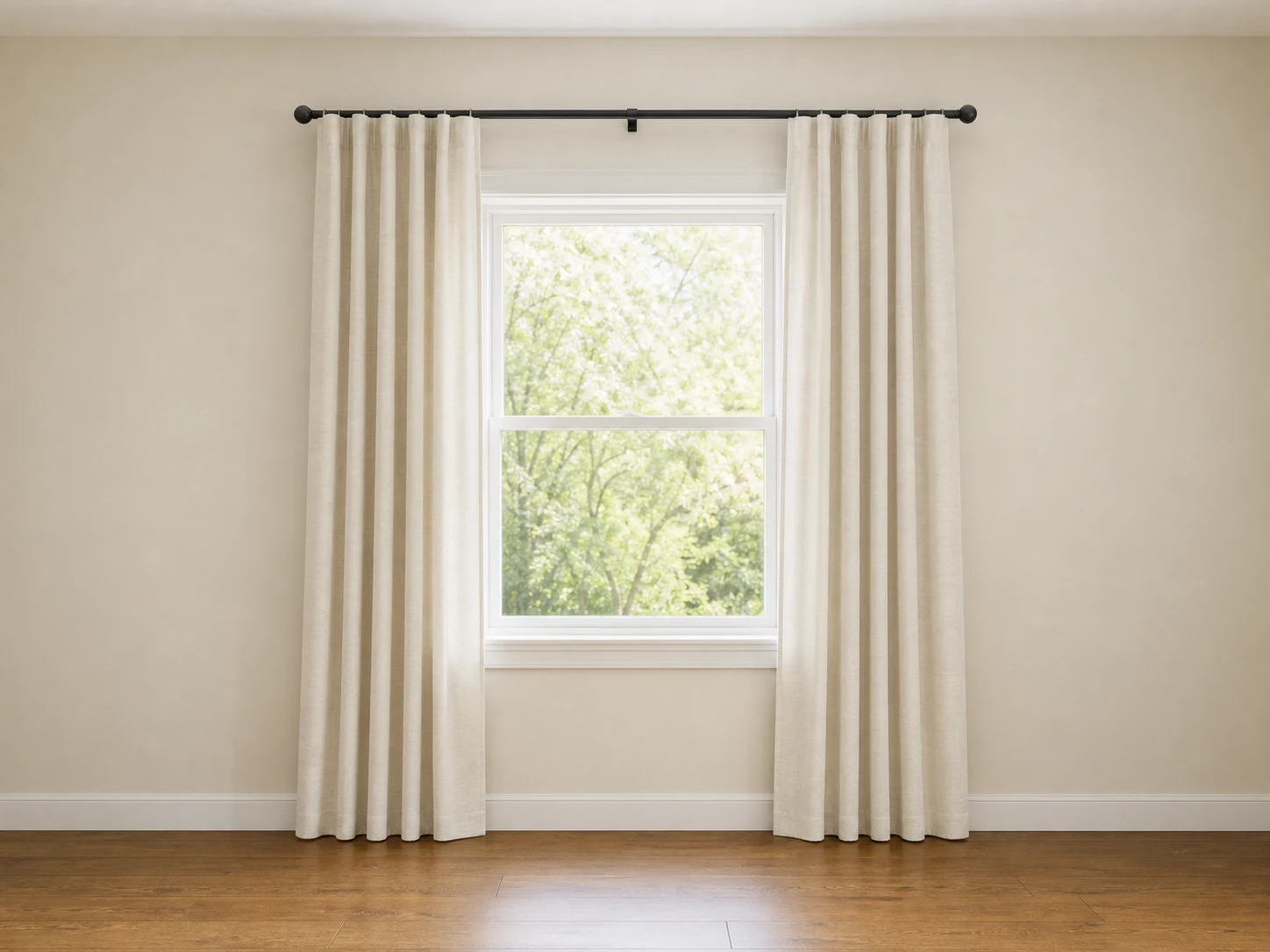 Look for
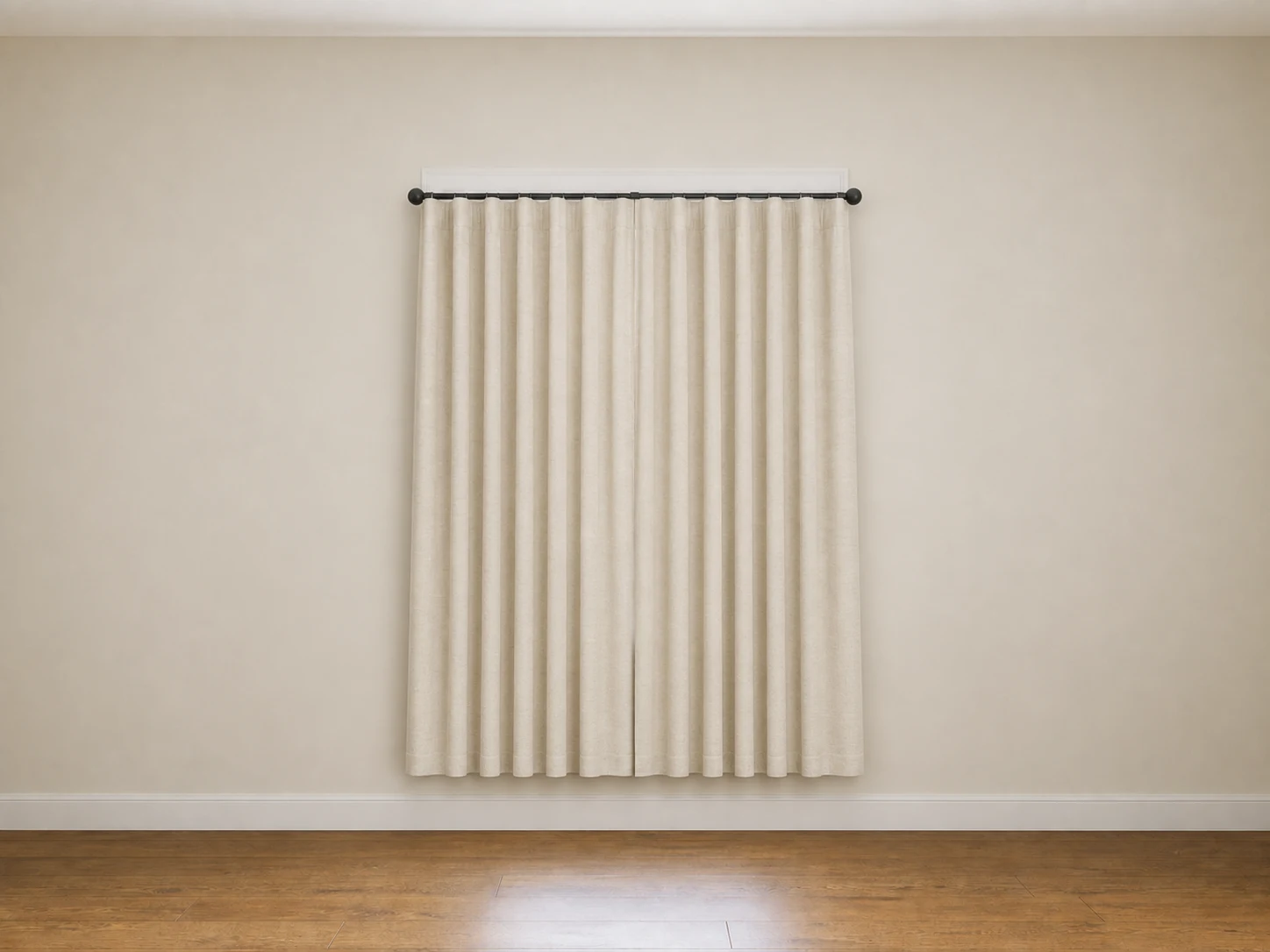 Skip
SkipConfirm rod diameter, maximum span, bracket projection, bracket count, center-support requirement, included anchors, and wall type. A wide adjustable rod that bows in the middle does not look intentional.
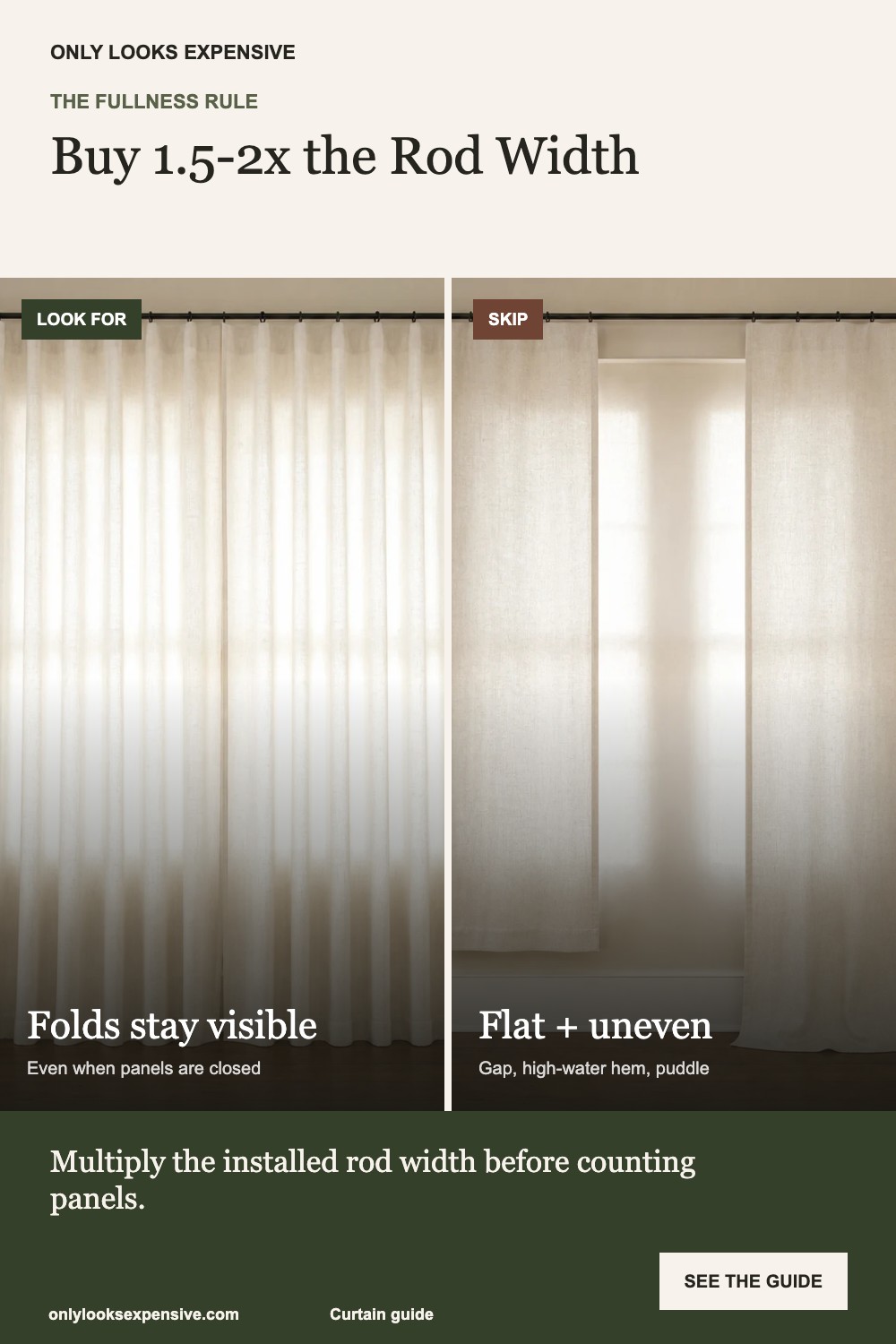
Buy for the rod width, not only the window width.
Multiply the installed rod width by 1.5 for a full everyday look or by 2 for deeper folds, then divide by the width of one panel and round up. Check whether the listing width describes one panel or the entire pair. Wash or steam according to the care label before the final hem because fabric can change.
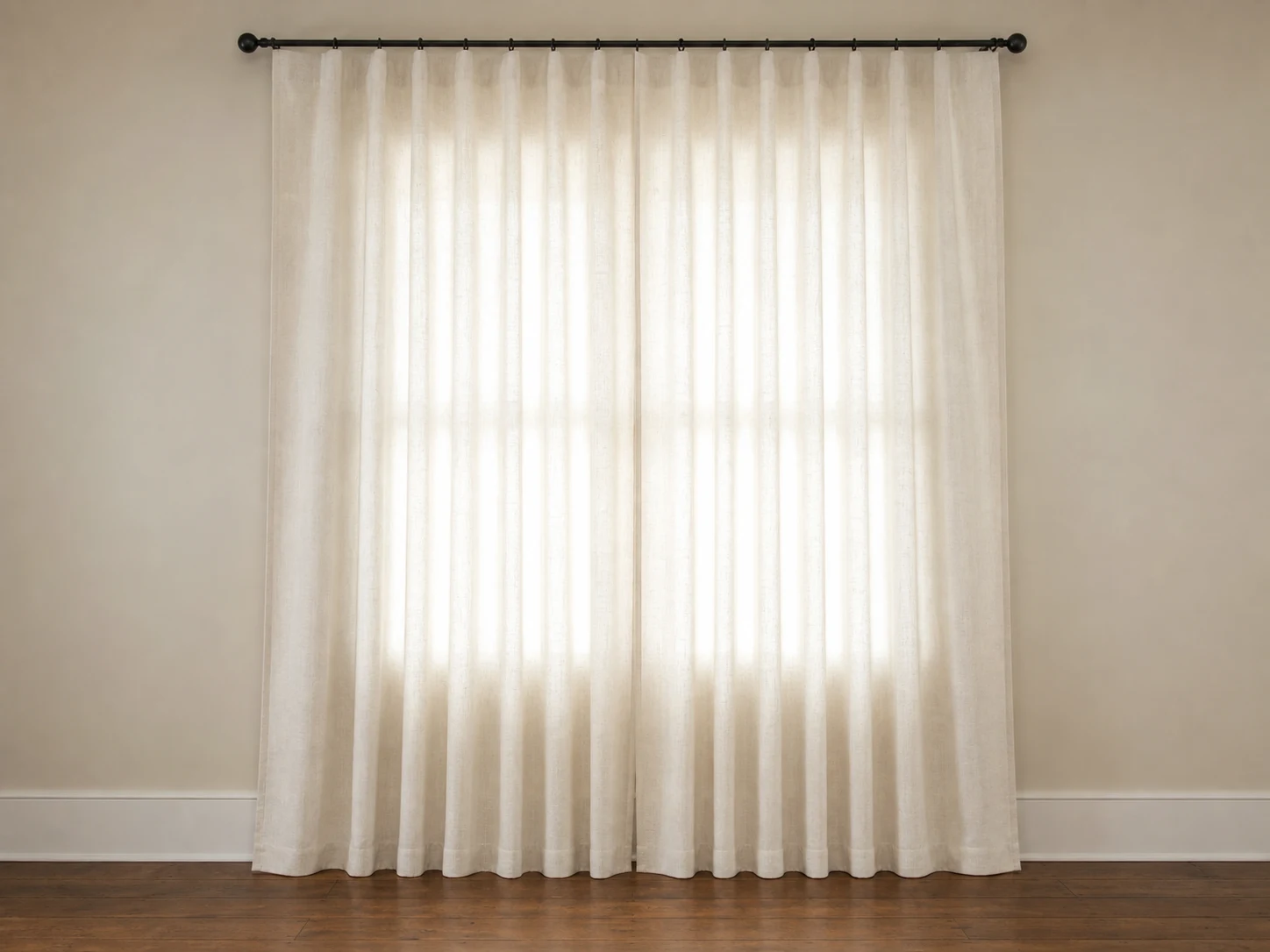 Look for
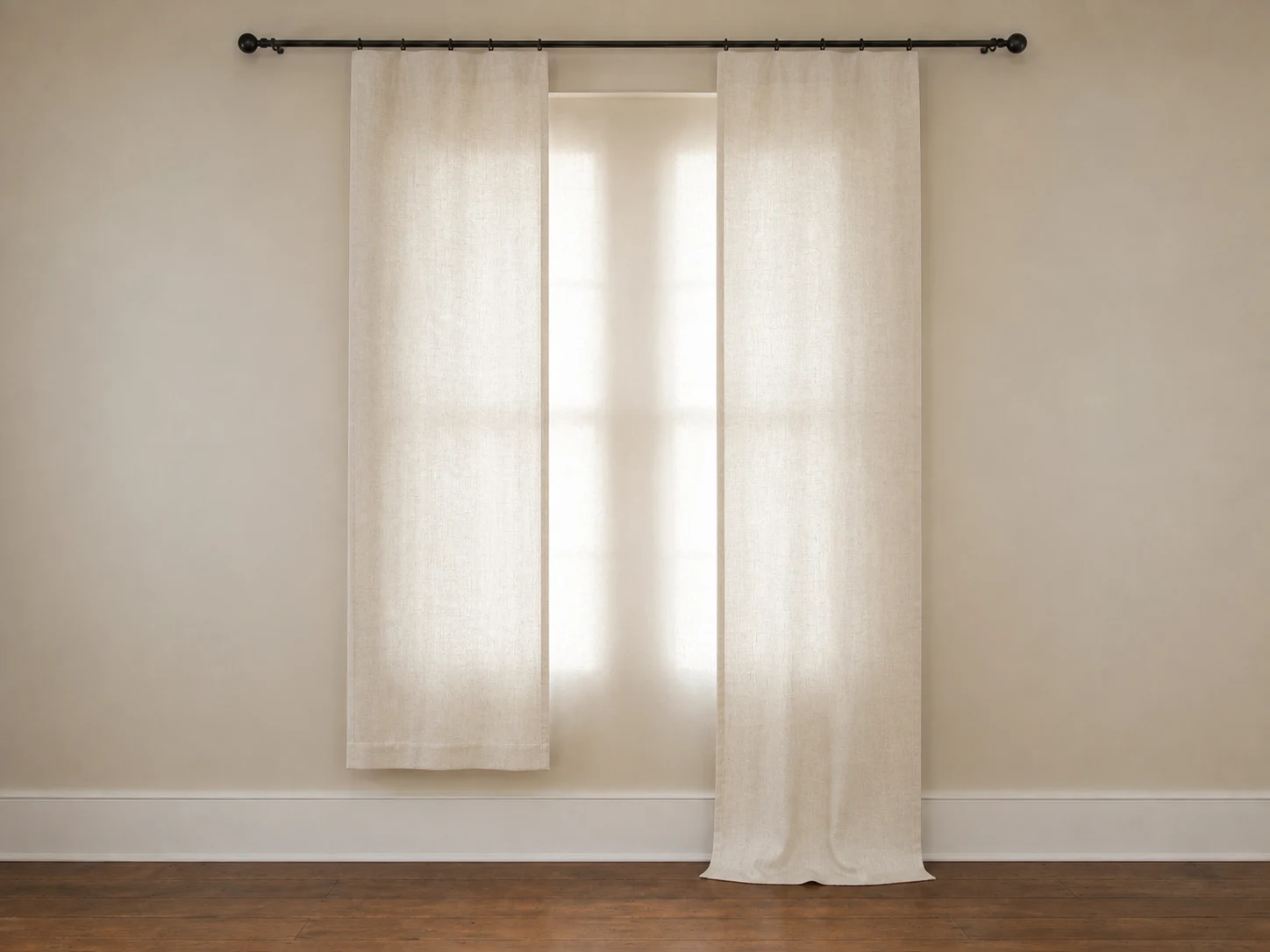 Skip
SkipRead panel count, individual panel width, length, shrinkage guidance, header type, and care instructions. Measure from the actual rod or ring position to the finished floor, not from the top of the window.
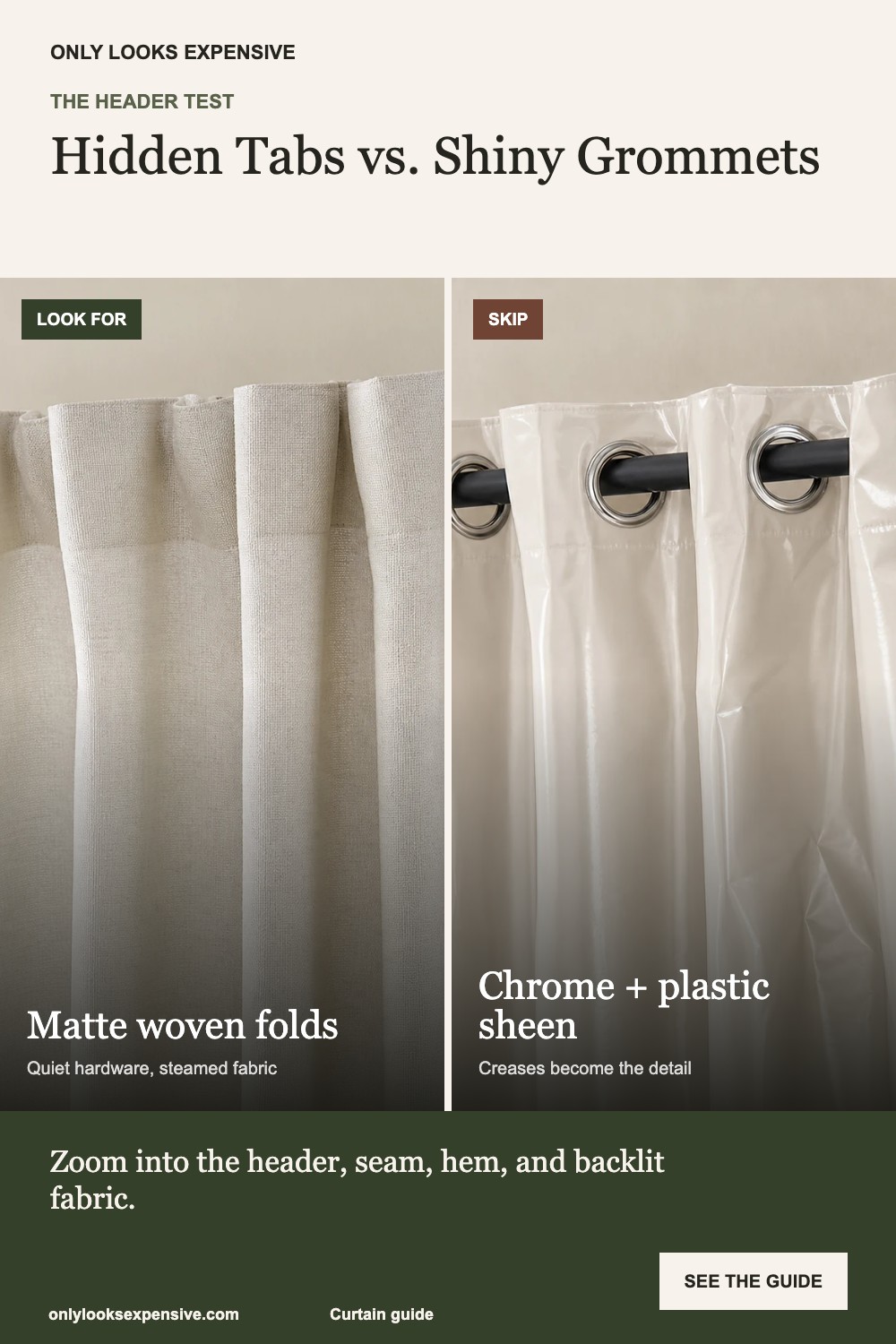
Quiet hardware and steamed texture beat shiny shortcuts.
Back tabs, heading tape with hooks, or small rings can create softer folds and hide more hardware than large shiny grommets. Matte woven fabric photographs and lives better than reflective polyester because light reveals texture instead of every packaging crease.
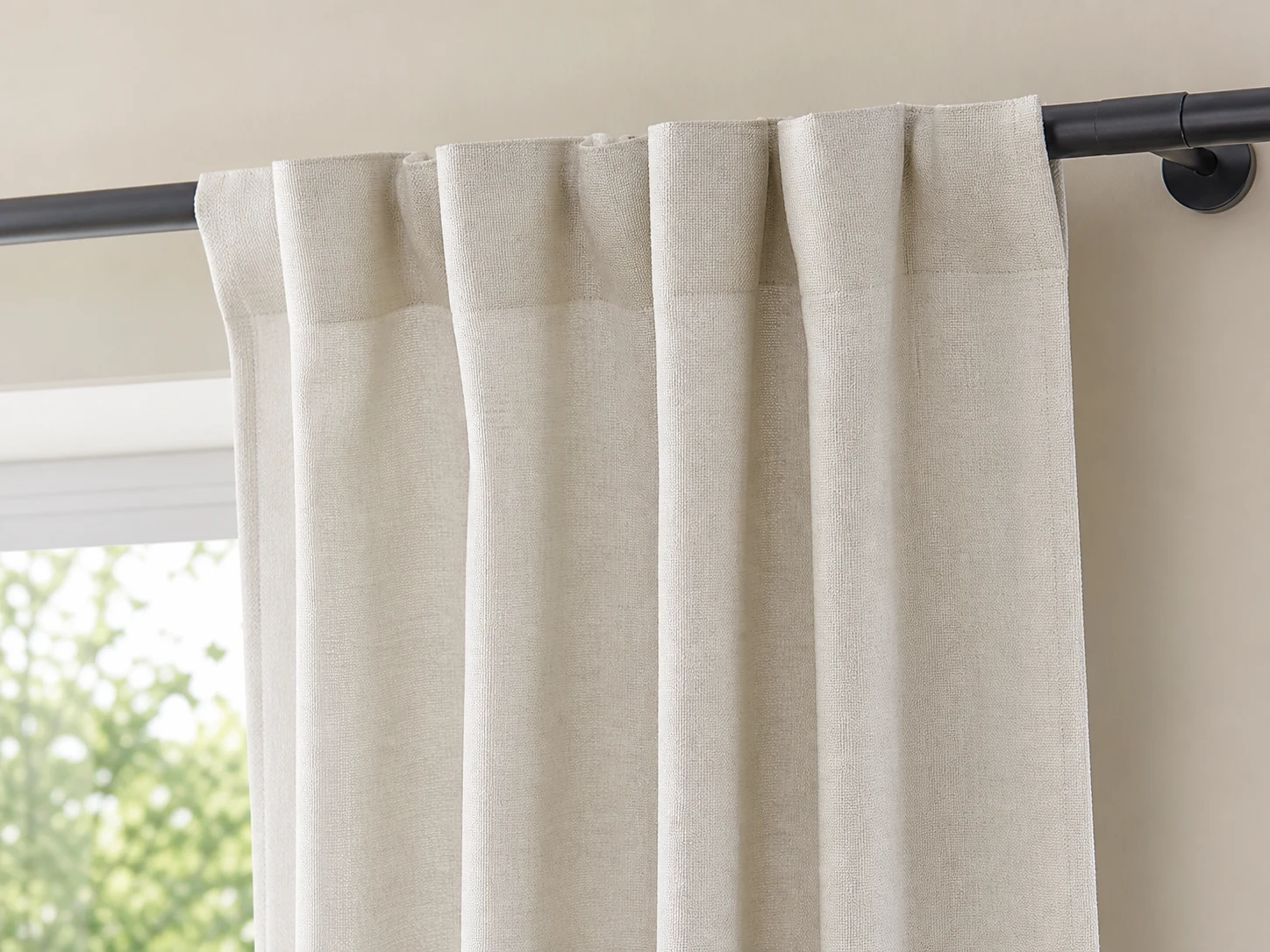 Look for
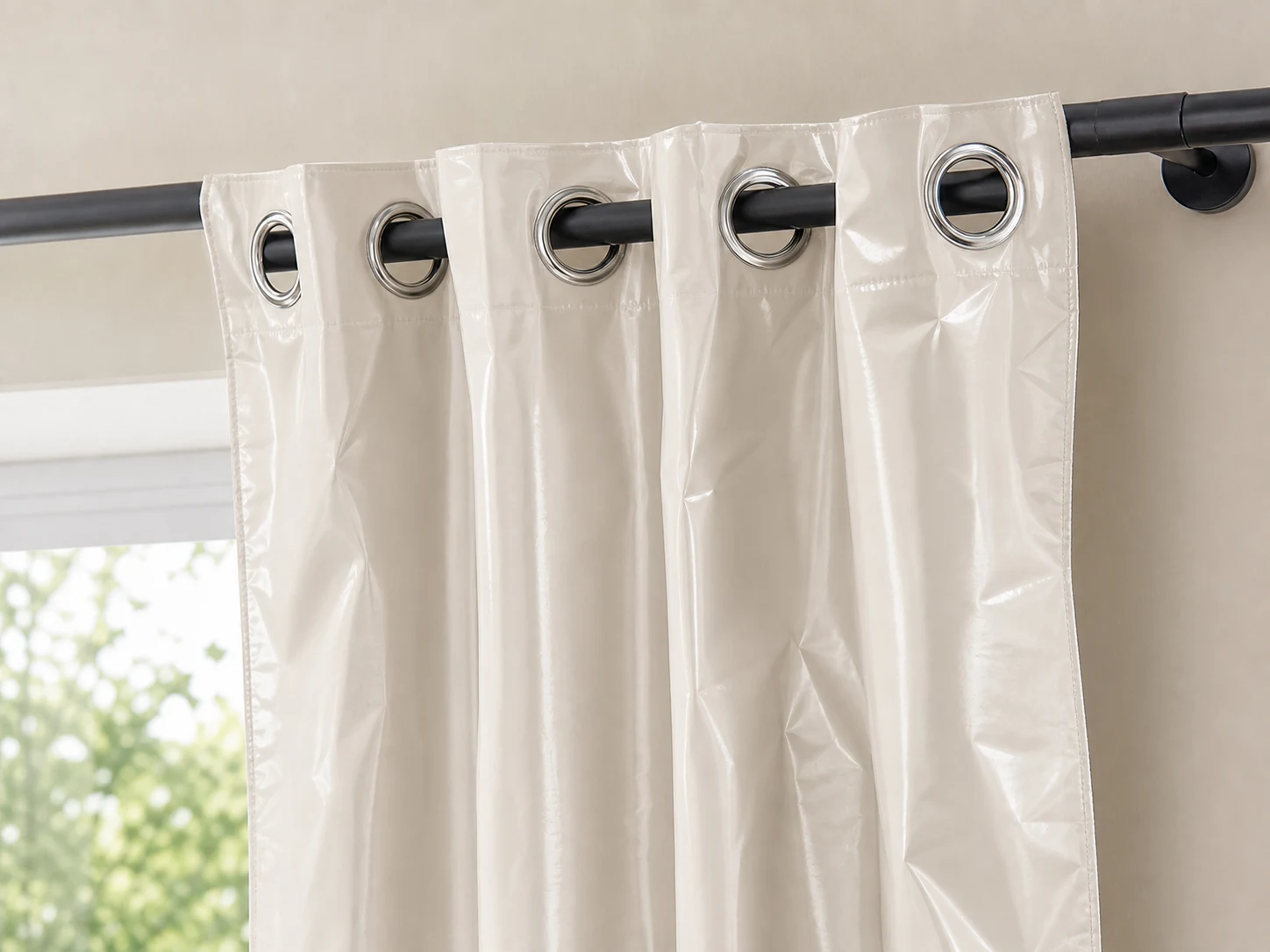 Skip
SkipZoom into backlit customer photos, the side seam, header stitching, and hem. Check opacity in daylight and at night. A light-filtering panel can become transparent after sunset when the room is lit.
The fabric is rarely the first failure.
Panel count is not fullness. Multiply the installed rod width, then divide by one panel width.
Follow the care label first so shrinkage and creases do not change the finished line.
The panel must clear the sill, blind, radiator, or handle without bending around it.
Follow the rod's span and bracket guidance; a sagging center ruins the vertical effect.
This is a planning ceiling for a standard window, not a live retailer quote. Wide windows, blackout linings, special wall conditions, or extra panels can change the budget. Verify current dimensions, included pieces, prices, and returns.
How we screen a curtain setup
We measure the full wall treatment, including side stack space and support points.
We calculate 1.5-2x fullness using the individual panel width and actual rod width.
We compare daylight, night privacy, lining, care, and backlit customer images.
We flag wall type, rod span, anchor requirements, radiator clearance, shrinkage, and cord safety.
We have not physically tested every item in these searches. Confirm current panel count, dimensions, materials, care, hardware, mounting, safety information, price, shipping, and returns on the retailer page.
Start with length and total width.
Choose the mounting plan first, then compare the complete listing.
Selection guidance last reviewed July 12, 2026. Product availability and retailer details can change.
Curtain measurements that matter
How high should the rod sit?
About 4 to 6 inches above the frame is a reliable starting range, or closer to the ceiling when the proportions, wall, and hardware allow.
How much panel width do I need?
Multiply the installed rod width by 1.5 for full folds or by 2 for deeper folds. Divide that total by one panel's listed width and round up.
Where should the hem finish?
For an everyday clean line, let it skim the floor or finish within roughly one-half inch after washing or steaming according to the care label.
Install the affordable panel correctly.
Save the overview, then keep the mounting, fullness, and header checks.